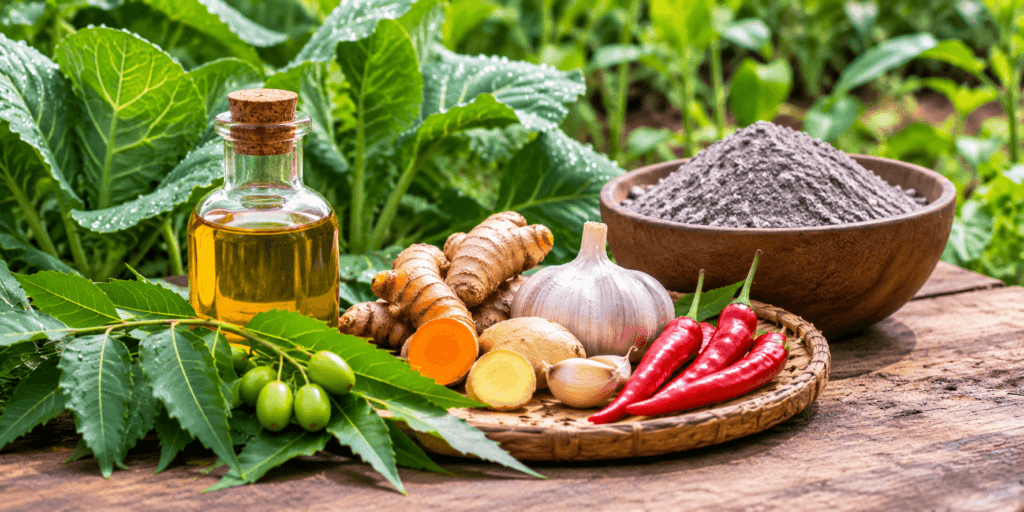
Aphids on vegetable leaves. Caterpillars eating through young plants. Whiteflies settling underneath leaves. For vegetable farmers, pest attacks can quickly turn a promising harvest into a disappointing one. The usual response is often to reach for chemical pesticides. But what if some of the resources farmers need to manage these pests are already available around them?
Organic agriculture and agroecology encourage farmers to look beyond conventional approaches to crop protection. This includes exploring plant-based preparations and other locally available materials that can help manage pests and diseases while making better use of resources within the farming environment.
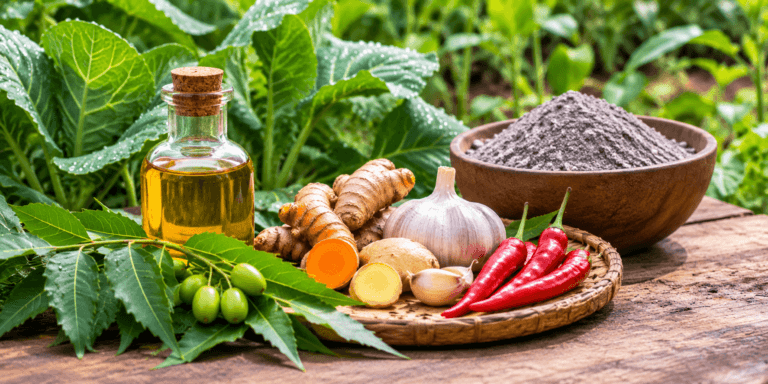
Neem oil, everyday kitchen spices and wood ash are three examples worth exploring. Each offers a different approach to natural pest management and provides farmers with additional options for protecting their vegetable crops.
Here is what farmers should know about these methods.
1. Using Neem Oil for Biological Pest Control in Vegetable Farms

Neem (Azadirachta indica) is widely recognised for its natural insecticidal properties and has been used in traditional agricultural practices for pest management. Neem oil contains bioactive compounds that can interfere with insect feeding, growth and reproduction, making it a useful option for managing certain vegetable pests.
It can be used to manage common pests such as aphids, whiteflies, mealybugs, caterpillars and other insects that damage vegetable crops. Its application offers farmers an opportunity to explore plant-based pest management while reducing dependence on synthetic pesticides.
Download the procedure: Biological Control of Pests on Vegetable Plants Using Neem Oil
2. Using Turmeric, Ginger, Garlic and Chilli Pepper for Pest and Disease Control
Common kitchen ingredients can also play a role in natural agricultural pest management. Turmeric, ginger, garlic and chilli pepper contain natural compounds with properties that make them useful ingredients in plant-based pest and disease control preparations.
These materials offer farmers an accessible approach to crop protection, particularly where locally available resources can be used to prepare alternative pest management solutions. The combination of these four ingredients provides another option for farmers interested in reducing their reliance on conventional chemical pesticides.
Download the procedure: Control of Pests and Diseases Using Turmeric, Ginger, Garlic and Chilli Pepper
3. Using Wood Ash to Control Larvae, Thrips and Locusts in Vegetable Farms
Wood ash is a readily available farm resource that has potential applications in natural pest management. Traditionally, farmers have used wood ash in different agricultural practices, including crop protection and soil management.
In vegetable production, wood ash can be used against certain pests, including larvae, thrips and locusts. Its use also demonstrates how materials that might otherwise be discarded can be put to productive use in farming.
For smallholder farmers, exploring locally available resources such as wood ash can contribute to more diversified and sustainable crop protection strategies.
Download the procedure: Use of Wood Ash as Pesticide Against Larvae, Thrips and Locusts in Vegetable Farms
Conclusion
Managing pests and diseases is essential for successful vegetable production. However, effective crop protection does not always have to depend entirely on synthetic pesticides. Neem oil, common kitchen spices and wood ash demonstrate how locally available natural materials can provide alternative approaches to managing agricultural pests.
To learn how to prepare and apply these natural pest management solutions, download the full KCOA knowledge products linked in each section. They provide practical guidance that farmers can explore and adapt to their local farming conditions.

Author: Hepzibah Ebe
Experienced and results-driven Communications expert with over nine (9) years of expertise in developing and executing effective communication strategies, including more than two (2) years of specialization in agroecology