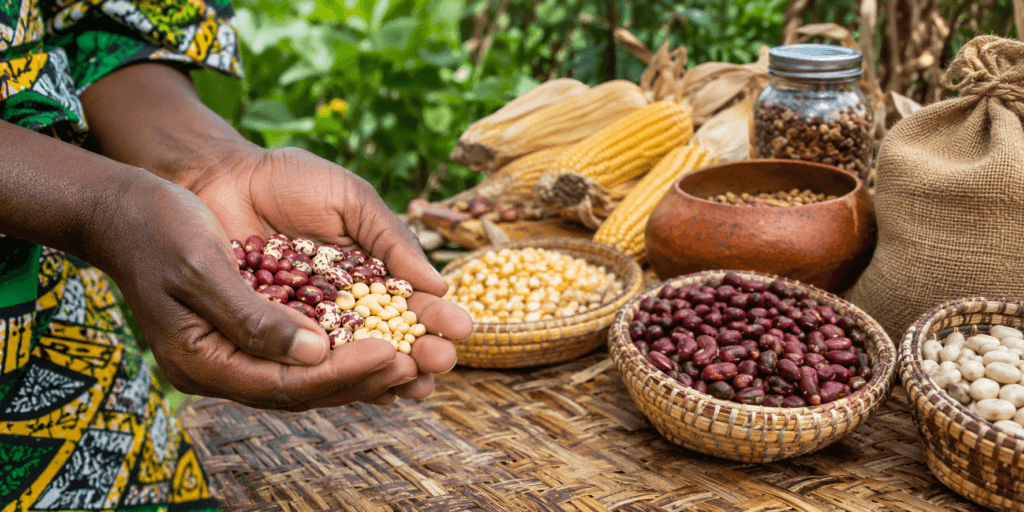
Picture a farmer who has prepared her field, applied compost and developed an intercropping plan for the coming season. She plants seeds purchased at the market, only to discover that germination is uneven and many seedlings are weak. By the time she replants, valuable weeks of the growing season have been lost.
The problem may not be the soil, rainfall or farm management. It may have started with the seed.
Access to quality seeds is fundamental to successful organic agriculture. Yet, finding suitable planting materials, maintaining seed quality and preserving indigenous varieties remain challenges for many farming communities.
Across Africa, farmers have developed seed systems over generations, selecting, saving, exchanging and multiplying varieties suited to their local environments. However, these systems need continuous attention to prevent valuable crop diversity from being lost.
So, where can farmers find quality organic seeds? How can they preserve seeds for the next planting season? And what can communities do to protect indigenous varieties?
This practical guide explores these questions, drawing on farmer experiences and knowledge products available on the KCOA Multipliers Platform.
Understanding the Issue: Are All Seeds the Same?
Before exploring where to source seeds, it is important to understand some commonly confused terms.
- Organic seeds: Seeds produced in accordance with applicable organic production standards.
- Untreated seeds: Seeds that have not been coated or treated with synthetic chemical substances. They may, however, come from conventional production systems.
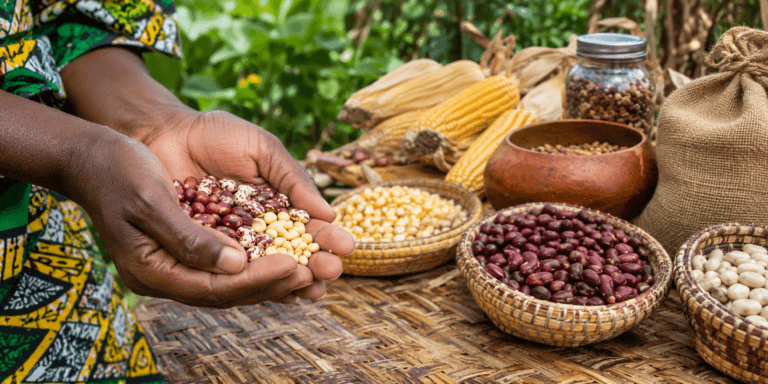
- Farm-saved seeds: Seeds selected and preserved by farmers from their own harvests or obtained through farmer-to-farmer exchanges.
- Indigenous or locally adapted varieties: Crop varieties maintained and selected by farming communities over generations, often possessing characteristics suited to local environmental conditions.
These distinctions matter because a seed can be locally sourced and untreated without necessarily meeting all the requirements for certified organic production.
Farmer-managed seed systems remain important across African agriculture. For example, ESAFF Uganda reports that 70 to 80 per cent of farmers in Uganda rely on farmer-managed and farmer-saved seeds.
The challenge is ensuring that these systems continue to provide quality planting materials while protecting local crop diversity.
Frequently Asked Questions
1. What Makes a Seed Suitable for Organic Agriculture?
Organic agriculture encourages the use of seeds produced in accordance with organic standards and farming principles.
Ideally, farmers should prioritise organically produced seeds that have not been subjected to prohibited synthetic chemical treatments or genetic modification.
Beyond their production history, farmers should consider the following quality characteristics:
- Germination and vigour: Seeds should be capable of sprouting and producing strong, healthy seedlings.
- Physical purity: They should be free from excessive dust, stones, broken seeds and unwanted materials.
- Seed health: They should not show visible signs of mould, insect damage or disease.
- Appropriate dryness: Seeds should be sufficiently dry for safe storage.
- Farm suitability: The variety should perform well under the farm’s soil, rainfall, temperature and growing conditions.
A seed may look healthy but still have poor germination capacity. Similarly, a high-yielding commercial variety may not necessarily perform well under low-input organic farming conditions.
What if organically produced seeds are unavailable?
Some organic standards allow the use of non-organic seeds under specified conditions when suitable organic alternatives are unavailable. Farmers working towards certification should consult the applicable standard and their certification body before using such seeds.
They should also maintain records of seed varieties, suppliers, purchase dates and any permitted exceptions.
2. Where Can Farmers Get Quality Organic Seeds?
Farmers do not always have to depend on commercial seed suppliers. Several sources can provide access to suitable planting materials.
Community seed banks: These are farmer-managed initiatives that collect, conserve, multiply and distribute local crop varieties. They help communities maintain access to planting materials while preserving agricultural biodiversity.
Farmer networks and cooperatives: Established networks provide opportunities to source seeds, exchange varieties and share experiences on seed selection, multiplication and storage.
Agricultural exhibitions and seed fairs: These provide opportunities to discover indigenous varieties, meet seed producers and exchange information about locally adapted planting materials.
National agricultural research institutions and genebanks: These institutions conserve plant genetic resources and may provide access to seeds or planting materials through appropriate research and distribution arrangements.
Reputable seed producers and dealers: When purchasing packaged seeds, farmers should check the variety name, supplier details, batch information, treatment history and relevant quality assurance information.
A Farmer’s Experience: How Joy Katabaire Built a Community Seed Bank
An inspiring example of community-led seed conservation comes from Joy Katabaire, an organic farmer in Uganda.
Her journey began with small quantities of indigenous seeds sourced from agricultural exhibitions. Through careful cultivation and multiplication over several planting seasons, these small quantities increased significantly.
Today, her community seed bank provides access to different indigenous varieties for farmers from several communities. Some purchase seeds, while others access them through a seed-sharing arrangement.
Her experience demonstrates how farmers can move from preserving seeds for household use to establishing community resources that strengthen local seed availability.
Explore the full story:
The publication also documents the varieties conserved in her seed bank and the characteristics that make them valuable to farming communities.
3. How Can Farmers Save and Store Seeds for the Next Planting Season?
Seed saving allows farmers to maintain access to planting materials, preserve desirable crop varieties and reduce dependence on external suppliers.
Successful seed saving requires proper selection, harvesting, cleaning, drying, grading and storage.
Here is a practical process farmers can follow.
Step 1: Select healthy plants in the field
Identify vigorous plants with desirable characteristics such as good growth, appropriate maturity, productivity and tolerance to common pests and diseases.
The ESAFF Uganda community seed bank guide recommends selecting seed crops from the middle of the field rather than the boundaries, particularly where neighbouring crops of the same species could cause unwanted cross-pollination.
Step 2: Harvest at the appropriate maturity
Seeds should be harvested when they have reached physiological maturity.
For example:
- Maize: Select fully matured cobs when the stalks and leaves have dried.
- Cowpea and beans: Harvest mature, dry pods.
- Tomato: Collect seeds from fully ripe, healthy fruits.
- Pepper: Collect seeds from mature fruits.
The appropriate harvesting stage varies by crop, so farmers should follow crop-specific recommendations.
Step 3: Clean and sort the seeds
Remove damaged, diseased, undersized, broken and discoloured seeds. Separate different varieties to avoid accidental mixing.
Step 4: Dry the seeds properly
Spread seeds on clean mats or tarpaulins rather than directly on bare ground. Allow them to dry adequately, taking account of the crop and prevailing moisture conditions.
Proper drying helps prevent mould development and seed deterioration during storage.
Step 5: Grade the seeds
Not every harvested seed should be retained for planting.
The Joy Katabaire community seed bank uses a three-grade system:
- Poor-quality seeds are removed and discarded.
- Medium-grade seeds may be used for household consumption or sold.
- First-grade seeds are retained for storage and future planting because of their superior quality.
Step 6: Package and store properly
Store sufficiently dried seeds in clean, suitable containers such as glass jars, calabashes or other appropriate storage materials.
Keep them in a cool, dry environment, protected from moisture, insects, rodents and direct sunlight.
Step 7: Label and maintain records
Record the crop name, variety, source, harvest date, quantity stored and germination performance.
For community seed banks, these records help track seed movement, monitor quality and manage seed loans and reimbursements.
Download the practical guide:
Community Seed Banks: A Practical Guide for Small-scale Farmers
This KCOA Knowledge Product by ESAFF Uganda provides additional guidance on seed selection, grading, storage, monitoring, record management and community seed bank sustainability.
4. How Can Farmers Protect Seeds Against Storage Pests Using Locally Available Materials?
Insects and other storage pests can damage seeds, reduce their quality and affect their ability to germinate.
Organic agriculture encourages approaches that are compatible with ecological principles and make appropriate use of locally available resources.
The ESAFF Uganda community seed bank guide documents traditional storage approaches, including the use of wood ash, fine sand, inert dust and certain botanical materials to manage storage pests.
Another example documented on the KCOA platform comes from The Gambia.
Traditional Seed Dressing Using Mamakonkoyo Leaf Powder
This knowledge product documents a traditional practice from the indigenous community of Foni Bondali in The Gambia.
The practice was collected through a survey, verified at a community assembly and validated against organic farming principles by an external committee of agroecology experts.
The preparation process involves:
- Collecting Mamakonkoyo leaves, neem leaves and neem seeds.
- Drying the materials in the shade until they are completely dry.
- Mixing the dried materials.
- Pounding the mixture using a traditional mortar and pestle to obtain a powder.
- Applying the prepared powder as a seed dressing during sowing.
The quantity used depends on the size of the field.
This example demonstrates how traditional knowledge and locally available botanical resources can contribute to seed protection in agroecological farming systems.
Explore the full preparation process:
DOWNLOAD: Seed Dressing Made with Mamakonkoyo Leaf Powder
Note: This is a documented practice from a specific community in The Gambia. Farmers should seek local technical guidance on crop suitability, preparation and safe application rather than assuming that the same formulation works for every crop or location.
5. Why Are Indigenous and Locally Adapted Varieties Important?
Indigenous and locally adapted varieties are valuable agricultural resources. They represent generations of farmer selection, adaptation and traditional knowledge.
Their conservation matters for several reasons:
Agricultural biodiversity: Maintaining different crop varieties helps conserve genetic diversity and provides valuable resources for future crop improvement and adaptation.
Adaptation to local conditions: Some indigenous varieties possess characteristics that allow them to perform under specific local conditions, including irregular rainfall, high temperatures and other environmental stresses.
Food culture and traditional knowledge: Many indigenous crops are closely connected to local cuisines, food preferences and cultural practices. Preserving their seeds also helps maintain the knowledge associated with cultivating and using them.
Food and nutritional security: Different crop varieties offer different nutritional and culinary qualities. Maintaining crop diversity provides households with more food options and reduces overdependence on a narrow range of crops.
Farmers’ control over seed systems: When farmers can save, multiply and exchange seeds, they have greater control over their planting materials and can reduce dependence on external suppliers.
Joy Katabaire’s community seed bank provides practical examples of these benefits.
Among the varieties she conserves is a deep red bean variety known for its tolerance to varying weather conditions, including excessive rainfall and prolonged sunshine. Another climbing bean variety produces both edible beans and tender shoots, while mucuna is used as a cover crop and mulch in banana plantations, helping with moisture conservation and weed suppression.
How can farming communities preserve indigenous varieties?
- Identify and document indigenous varieties within their communities.
- Encourage farmers to continue cultivating varieties that are becoming rare.
- Establish and strengthen community seed banks.
- Organise seed fairs and exchange programmes.
- Encourage older farmers to share traditional seed knowledge with younger generations.
- Promote collaboration between farming communities, researchers and agricultural organisations.
Preservation should involve more than storing seeds. It requires continued cultivation, exchange, documentation and transmission of the knowledge associated with them.
Learn more about farmers’ seed rights and community conservation:
This KCOA policy brief by ESAFF Uganda examines how community seed banks can help small-scale farmers conserve local plant varieties, maintain seed diversity and strengthen their ability to save, sell and exchange seeds.
6. How Can Farmers Identify Quality Seeds and Avoid Poor Germination?
One of the most frustrating experiences for farmers is planting seeds only to discover that very few germinate.
Poor germination can result in wasted resources, additional labour, delayed planting and reduced yields.
Farmers can carry out a simple germination test before committing an entire field to a batch of seeds.
How to conduct a 100-seed germination test
The ESAFF Uganda community seed bank guide provides a straightforward method:
- Randomly select 100 seeds from the batch.
- Plant them on a suitable seedbed.
- Water as necessary, keeping the soil adequately moist.
- Observe the seeds over the appropriate germination period for the crop.
- Count the number of seeds that germinate.
Calculate the germination percentage using this formula:
Germination percentage = (Number of seeds germinated ÷ Total seeds tested) × 100
For example, if 85 out of 100 seeds germinate, the germination rate is 85%.
The ESAFF Uganda guide provides the following interpretation:
- Below 80%: Poor germination.
- Above 80%: Good germination.
- Above 90%: Excellent germination.
These are the guide’s recommended assessment thresholds. They should be interpreted alongside the crop, seed lot and applicable seed quality requirements.
Actual field emergence may be lower because of soil conditions, pests, moisture availability and other environmental factors.
Other things to check before planting:
- Inspect seeds for mould, insect holes, damage and discolouration.
- Ask suppliers about the seed’s storage and handling history.
- Check packaging, variety name and batch information where applicable.
- Confirm that the variety is suitable for your location and growing season.
- Conduct a small trial planting before committing the entire field.
For more detailed guidance, consult the ESAFF Uganda Community Seed Banks Practical Guide.
Practical Application: How Can Your Community Start a Seed Bank?
Individual farmers can preserve seeds on their farms, but communities can achieve more by organising collective seed conservation initiatives.
Here are seven steps to get started:
1. Bring farmers together. Organise community meetings to discuss seed access challenges and identify local crop diversity.
2. Identify the seeds to conserve. Prioritise indigenous, neglected and underutilised varieties, as well as crops important for household food security.
3. Establish a management committee. Assign responsibilities for managing the bank, distributing seeds and maintaining records.
4. Develop seed management procedures. Agree on how seeds will be collected, selected, cleaned, dried, stored and monitored.
5. Establish a seed-sharing system. Communities can develop arrangements for seed exchange, loans or sales, with clear conditions and responsibilities.
6. Maintain records. Document crop varieties, sources, quantities, storage dates and germination performance.
7. Organise regular training. Train farmers, including women and young people, on seed selection, multiplication, storage and seed bank management.
A community seed bank is not simply a storage facility. It is a collective initiative that depends on participation, good management and continuous seed multiplication.
Common Mistakes Farmers Should Avoid
| Common mistake | What to do instead |
|---|---|
| Saving seeds from weak or diseased plants | Select healthy plants with desirable characteristics. |
| Storing seeds before they are sufficiently dry | Ensure seeds are adequately dried before packaging. |
| Drying seeds directly on bare ground | Use clean mats or tarpaulins to reduce contamination. |
| Mixing different varieties | Store and label varieties separately. |
| Planting old seeds without testing germination | Conduct a germination test before planting. |
| Ignoring storage pests and moisture | Inspect stored seeds periodically. |
| Saving hybrid seeds without understanding their characteristics | Understand the differences between open-pollinated and hybrid varieties before saving seeds. |
Key Takeaways
- Prioritise seed quality, organic suitability and adaptability to local conditions.
- Explore community seed banks, farmer networks, seed fairs and reputable suppliers.
- Save seeds carefully through proper selection, drying, grading and storage.
- Preserve indigenous varieties through continued cultivation, exchange and documentation.
- Test germination before planting to reduce avoidable losses.
- Strengthen community seed systems through collective action and knowledge sharing.
Conclusion: Preserving Seeds Means Preserving Our Agricultural Future
The future of sustainable agriculture depends not only on how farmers cultivate their crops but also on the seeds they select, preserve and pass on to future generations.
Through household seed saving, community seed banks, seed exchange programmes and the documentation of traditional knowledge, farming communities can maintain access to quality planting materials while protecting Africa’s agricultural biodiversity.
Farmers are not merely consumers of seeds. They are also custodians of valuable agricultural genetic resources and knowledge.
The question is not simply where we can find quality seeds today. It is what we are doing to ensure that future generations of farmers will have access to them.
Continue learning. Explore the KCOA Knowledge Products. Share the knowledge within your farming community.
Share techniques you use in preserving seed, we look forward to reading from you.
The Seed-Balling Technique: How to Do It
This KCOA resource explains how to use seed balls for tree establishment and the restoration of degraded landscapes. It is particularly relevant to practitioners working on agroforestry and ecological restoration.

Author: Hepzibah Ebe
Experienced and results-driven Communications expert with over nine (9) years of expertise in developing and executing effective communication strategies, including more than two (2) years of specialization in agroecology