Through his own family farm and his work as a trainer, TAFITARISON Georges Judicaël is showing farmers in Madagascar how agroecology can support self-reliance, improve livelihoods and create lasting change.
A Commitment to Lasting Change
Since 2017, TAFITARISON Georges Judicaël, a KHEA Multiplier at CARITAS Antsirabe in Madagascar, has been guided by a clear ambition: to make a lasting difference in the lives of farming communities.
For Judicaël, sharing knowledge and supporting farmers goes beyond his professional responsibilities. It is a personal commitment to helping people improve their livelihoods and become more self-reliant.
“Since 2017, I have set myself one goal: whatever I do, I want to leave a lasting legacy.”
His journey took another step forward when he received agroecology training at the Centre d’Expérimentation et de Formation en Fruits et Légumes (CEFFEL) through the KCOA-KHEA project’s Training of Trainers of Farmers (ToToF) approach. Equipped with new knowledge and practical skills, he went on to train 15 lead farmers.
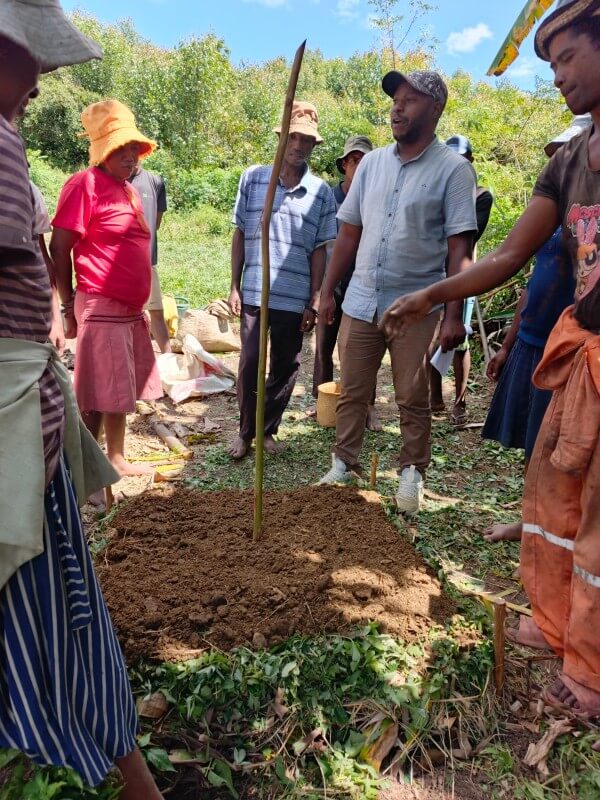
Yet Judicaël understands that knowledge alone may not always convince farmers to change their practices. For him, the most effective way to demonstrate the value of agroecology is to practise what he teaches, starting with his own family farm.
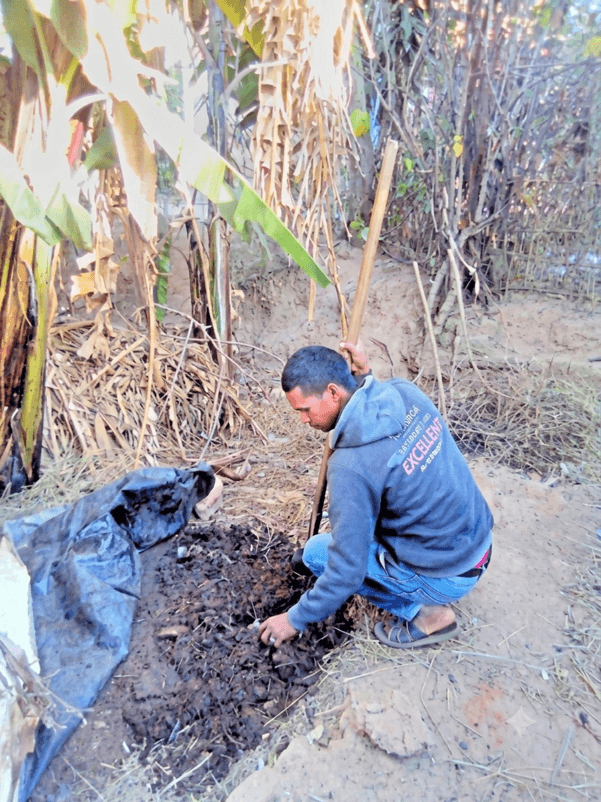
Caption: Judicaël demonstrates agroecology on his own farm, using practical experience to inspire other farmers.
Leading by Example: A Family Farm That Supports Self-Reliance
Alongside his professional responsibilities, Judicaël manages an income-generating family farm. By applying agroecological principles and combining them with his own experience, he has steadily developed a production system that supports his household’s food needs while generating income.
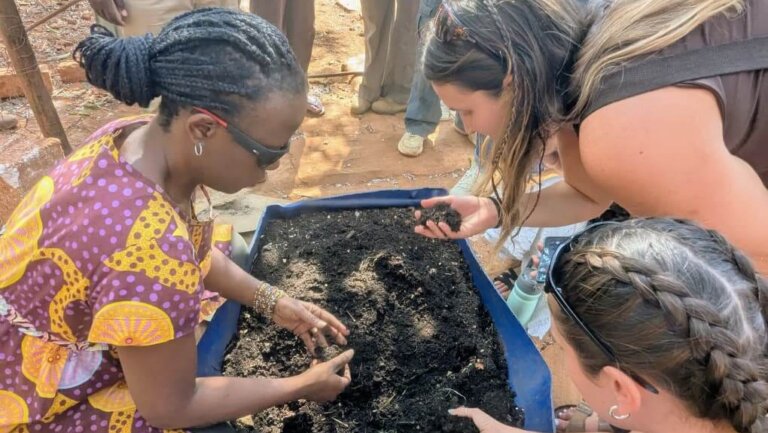
Despite cultivating a relatively small area, he produces enough to feed his family and earn additional income. He attributes much of this success to his use of vermicompost, which helps improve soil fertility and supports crop production.
He also maximises the use of his land through off-season cropping. This allows him to produce crops during periods that might otherwise be unproductive, while preparing the land for subsequent rice cultivation.
Livestock farming further strengthens his production system. By raising local Malagasy chickens, Judicaël diversifies his income sources and creates opportunities to complement crop production with livestock keeping.
Together, these practices demonstrate how farmers can make better use of available resources, diversify their livelihoods and reduce their reliance on a single source of income.
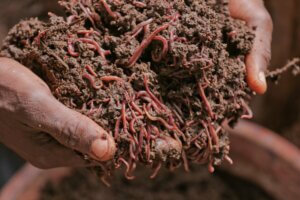
Caption: Vermicomposting is central to Judicaël’s approach to improving soil fertility and reducing reliance on external agricultural inputs.
Explore Related Knowledge: VERMICOMPOSTING AND SOIL FERTILITY]
Soil fertility info: https://kcoa-africa.org/wp-content/uploads/2025/11/Management-of-soil-fertility-4.pdf
Vermicomposting info:Determination-of-phytotoxicity-of-vermicomposts-from-agricultural-waste-on-seed-germination-and-seedling-growth-of-tomato-6.pdf
Overcoming Scepticism Through Practical Demonstration
Despite the results he has achieved on his farm, Judicaël has encountered scepticism from some members of his community. His productivity has occasionally raised questions among farmers who find it difficult to believe that such results can be achieved without chemical fertilisers.
“Some people even spy on my farm to find out how I manage to produce so much. They accuse me of secretly using chemical fertilisers.”
For some farmers, the time and labour required to produce vermicompost can also discourage adoption, even when the long-term benefits are promising.
Rather than allowing these doubts to discourage him, Judicaël continues to demonstrate the practices and share what he knows. He provides earthworms to fellow farmers and teaches them how to produce their own vermicompost, encouraging them to develop the skills needed to manage their farms independently.
However, he has learned that changing attitudes sometimes requires a different approach.
“I charge them 500 Ariary so they understand that what they receive has value—and that they truly need it. More importantly, I want to change their mindset by showing them that they are fully capable of doing it themselves.”
For farmers who are not yet ready to produce their own vermicompost, Judicaël also sells part of his production at a price below the prevailing market rate. This gives them an opportunity to try the input while providing an additional source of income for his household.
His experience illustrates an important lesson in farmer engagement: practical demonstrations, patience and approaches that respond to farmers’ circumstances can help build confidence in agroecological practices.
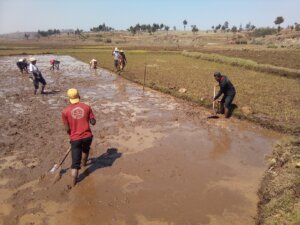
Caption: By sharing practical skills and resources, Judicaël helps farmers take their first steps towards more self-reliant production systems.
Seeing Change Take Root in Farming Communities
Judicaël is beginning to see encouraging results from his continued engagement with farmers. He estimates that at least half of the farmers he has supported have adopted agroecological practices.
Regular field visits allow him to observe how farmers are responding to the knowledge shared and where further guidance may be needed.
One notable change is the growing use of farming methods that reduce or eliminate reliance on chemical inputs. These practices can support soil fertility management and help address land degradation when appropriately applied.
Off-season cropping is also becoming more common among the farmers he supports. By making greater use of their land throughout the year, farmers can improve land utilisation and create additional production and income opportunities.
Livestock keeping, particularly the rearing of local Malagasy chickens, has also gained interest among farming households, providing another avenue for income diversification.
Perhaps the most encouraging development is the change in farmers’ attitudes towards learning. According to Judicaël, farmers who were previously hesitant to engage with trainers are increasingly seeking his advice, asking questions and showing interest in further training.
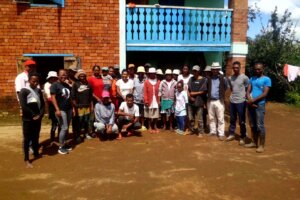
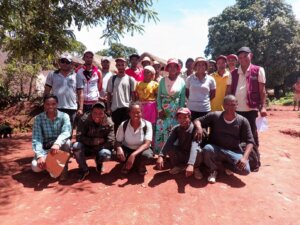
Caption: Growing interest in practical agroecological methods reflects the importance of continued engagement and farmer-to-farmer learning.
Explore Related Knowledge: AGROECOLOGICAL FARMING AND CROP DIVERSIFICATION
Explore practical approaches to diversified agroecological farming.
- Towards sustainable food systems – Exercise book
- https://kcoa-africa.org/wp-content/uploads/2025/10/Agroecology_Road-to-Belem_Policy-Brief-4.pdf
- https://kcoa-africa.org/wp-content/uploads/2025/10/Exercisebook-Towards-sustainable-food-systems-4.pdf
- https://kcoa-africa.org/wp-content/uploads/2025/10/Organic-Crop-Production-for-Animal-Feed-2.pdf
Building a Legacy Beyond the Project
For Judicaël, the progress made so far is encouraging but sustaining it beyond the project period remains a priority.
“ As trainers, we currently provide our support free of charge. But when the project comes to an end, that will no longer be possible. At that point, you may have to pay for this kind of training—something you might not be able to afford. If you wait until then to take action, it could already be too late.”
His message to farmers is clear: make the most of available training and coaching opportunities, and turn the knowledge gained into practices that can continue delivering benefits long after project support ends.
This is also where he sees the potential of the Participatory Guarantee System (PGS). For farmers committed to agroecology, PGS can provide a participatory approach to verifying production practices and building trust between producers and consumers. Where local arrangements and markets support it, this can also help farmers differentiate their products and explore better market opportunities.
For Judicaël, the wider objective is to help farmers build the knowledge, confidence and networks they need to continue improving their livelihoods independently.
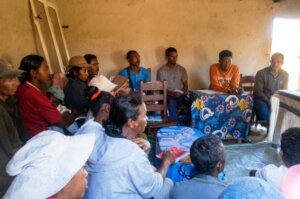
Caption: Farmer networks and continued knowledge exchange can help sustain agroecological practices beyond the life of a project.
Explore Related Knowledge: PARTICIPATORY GUARANTEE SYSTEMS AND MARKET TRUST
Discover how participatory guarantee systems support agroecological markets.
- https://kcoa-africa.org/wp-content/uploads/2025/10/PGS-GUIDE-FOR-SMALL-SCALE-FARMERS-3.pdf
- https://kcoa-africa.org/wp-content/uploads/2025/10/PGS_User_Guide_Kinyarwanda.pdf
- https://kcoa-africa.org/wp-content/uploads/2025/10/KHSA_SAOSO_How-to-run-a-PGS-farm-visit-Co-operative-farming-operations-6.pdf
A Legacy Measured in Others’ Success
Judicaël’s commitment extends beyond his work with CARITAS Antsirabe and his involvement in KCOA-KHEA. At the heart of his motivation is his family, whose well-being reinforces his determination to make a difference.
“Rather than seeing myself as just another component of the project, I always keep my greatest source of motivation in mind: my family.”
That motivation also extends to the wider community.
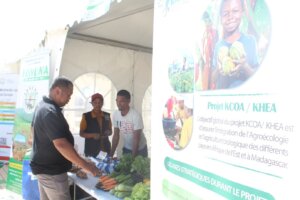
“I look beyond my own personal benefits. My goal is to contribute to the development of rural communities.”
By sharing knowledge, supporting fellow farmers and encouraging them to pass on what they learn, Judicaël is helping build a culture of learning and self-reliance.
For him, success is not measured solely by the income generated on his farm or the number of farmers trained. It is reflected in farmers who believe in their own abilities, apply what they have learned and help others improve their livelihoods.
“When people truly understand and embrace the message I am trying to share, that is the kind of reward that brings me the greatest joy.”
Through his example, Judicaël is demonstrating how practical knowledge, personal commitment and farmer-to-farmer learning can contribute to lasting change. His journey reflects the broader ambition of KCOA-KHEA: to make agroecological knowledge accessible, encourage its application and empower farming communities to carry that knowledge forward.
For Judicaël, the legacy he set out to build in 2017 is taking shape—not simply in the practices adopted on individual farms, but in the growing confidence of farmers to take charge of their own development and share what they learn with others.
Explore More Knowledge
Discover practical resources on agroecology, vermicomposting, soil fertility, diversified farming systems and participatory guarantee systems through the KCOA Knowledge Database: https://kcoa-africa.org/kcoa-knowledge-database/
Learn. Apply. Share.