Through KCOA-KHEA training, Gérald and MC Ingredients are helping farmers strengthen their agroecological practices, improve production and access market opportunities.
Can agroecology deliver both environmental benefits and economic opportunities for farmers? In Madagascar, MC Ingredients (MCI) is working to demonstrate how sustainable agricultural practices can create value for farmers while meeting the demands of local and international markets.
At the centre of this effort is Gérald Mamisoa RANDRIANIRIANA, MCI’s Producer Partnership and Technical Manager, who works closely with farmers to strengthen production, improve product quality and connect them to commercial opportunities.
Gérald joined MCI in 2017, when the company was preparing to translate years of research into field trials in agroecology and organic farming. Its ambition was to make better use of local resources while developing products for national and international markets.
By 2021, MCI had begun engaging potential producers through a contract farming system known locally as the système paysannat. Through this arrangement, the company established working relationships with farmers, supporting them to meet the quality and quantity requirements of the market.
For Gérald, this work also involves helping farmers understand the different pathways to sustainable production.
“There is what we call certified organic production, but there is also agroecology, which is already organic — it just hasn’t been certified yet for some producers,” he explains.
Through these partnerships, MCI is working to bring the results of its research closer to farmers, making practical knowledge and market opportunities more accessible.
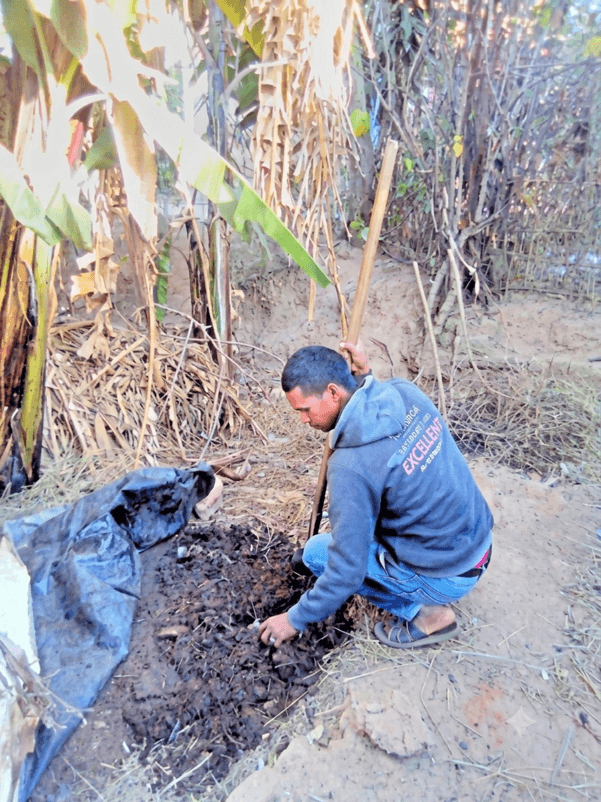
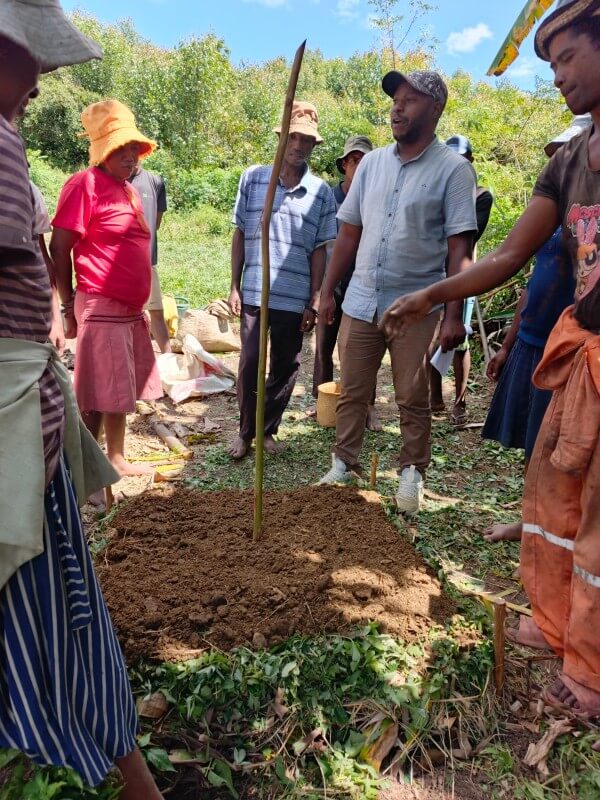
Caption: Connecting farmers to knowledge and market opportunities is central to advancing agroecology in Madagascar.
Turning Knowledge into Practical Skills
MCI’s engagement with the organic agriculture sector opened another opportunity for Gérald to strengthen his technical knowledge.
As a member of SYMABIO (Syndicat Malgache de l’Agriculture Biologique), a Country Implementing Partner under the KCOA-KHEA project, MCI learned about a training programme designed to strengthen knowledge and skills in organic agriculture and agroecology.
Implemented in Madagascar through a consortium involving GSDM and SYMABIO, the KCOA-KHEA project promotes the adoption and dissemination of sustainable agricultural practices. Its multiplier approach enables trained participants to share their knowledge with other farmers, extending the reach of the training beyond those who attend directly.
Through an agreement between MCI and SYMABIO, the company sent two representatives to participate in the training. Gérald was among them, becoming a KCOA-KHEA multiplier with a responsibility to share the knowledge acquired with other producers.
For MCI, the opportunity aligned with its efforts to improve agricultural production while strengthening relationships with its farmer networks.
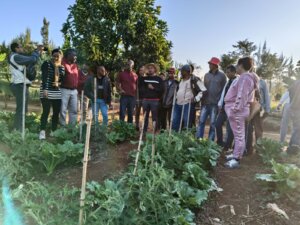
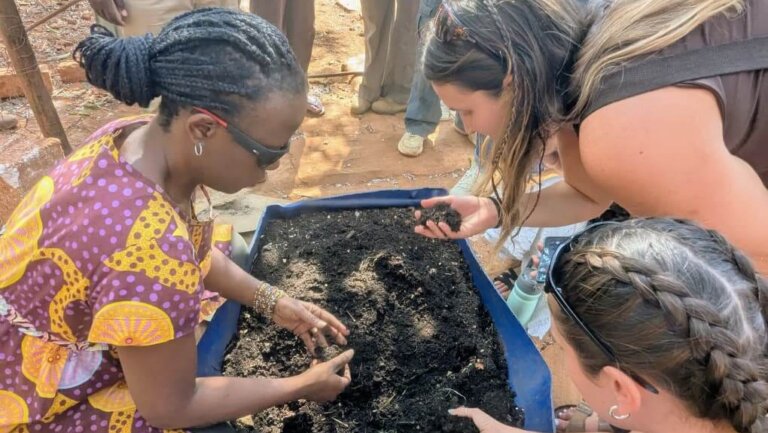
Caption: KCOA-KHEA training equips multipliers with practical knowledge they can share with other farmers.
Explore related knowledge: ORGANIC AGRICULTURE AND AGROECOLOGY TRAINING MATERIALS
- https://kcoa-africa.org/wp-content/uploads/2026/09/Can-Agroecology-empower-women-and-youth.pdf
- https://kcoa-africa.org/wp-content/uploads/2025/11/Biological_agroecological-plant-health-protection.pdf
- https://kcoa-africa.org/wp-content/uploads/2025/10/Compost-making-with-plant-materials-2.pdf
- https://kcoa-africa.org/wp-content/uploads/2025/11/KHSA-Factsheet_Organic-agriculture-and-soil-health-3.pdf
Learning, Sharing and Reaching More Farmers
Delivered by GSDM and SYMABIO, the training brought together participants from different parts of the agricultural value chain, including representatives of MCI and Huilerie de Melville, part of Savonnerie Tropicale, alongside other agricultural exporters.
The sessions exposed participants to practical approaches that could be adapted to their respective production contexts. One of Gérald’s key learning experiences involved discovering a new variant of Ady Gasy, a local Malagasy agroecological practice used to support agricultural production. The approach introduced alternative combinations of natural products and methods for managing pests and diseases.
Following the training, each multiplier was expected to share the knowledge with 15 farmers. Together, MCI’s two multipliers reached 30 farmers.
Gérald worked with farmers from Association Tsinjo, a chilli-pepper producer group linked to MCI. The knowledge-sharing sessions were supported by GSDM master trainers, who provided methodological guidance and accompanied the multipliers during field implementation.
The impact of this approach extended beyond the 30 farmers directly reached through the planned training. Through his day-to-day engagement with MCI’s wider producer network, Gérald also had opportunities to share the practices and lessons with other farmers and their surrounding communities.
The experience demonstrated how partnerships between knowledge-sharing organisations and private-sector actors can help extend the reach of agroecological training.
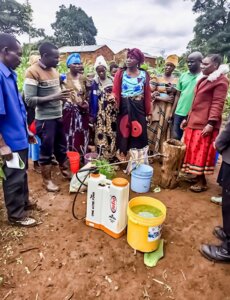
Caption: Practical agroecological approaches can help farmers explore locally relevant ways of managing pests and diseases.
Explore related knowledge : AGROECOLOGICAL PEST AND DISEASE MANAGEMENT
- https://kcoa-africa.org/wp-content/uploads/2025/10/Homemade-organic-pesticides-based-on-local-plant-materials-for-pests-control-for-strawberry-farming-2.pdf
- https://kcoa-africa.org/wp-content/uploads/2025/10/KATC-PostcardBooklet_Pesticides_TR.pdf
- https://kcoa-africa.org/wp-content/uploads/2026/01/006-Disease-and-Pest-Control-in-Organic-Farming-Mode-4.pdf
- https://kcoa-africa.org/wp-content/uploads/2025/10/Control-of-Pests-and-Diseases-using-Turmeric-Ginger-Garlic-and-Chilli-Pepper-2.pdf
Making Agroecology Work for Farmers
Adopting new agricultural practices takes time. While some farmers are beginning to apply what they have learned, others remain attached to familiar methods and need more support before making changes.
Gérald’s experience has shown that environmental awareness alone may not always be enough to convince farmers to change how they produce. Practical benefits, including improved production and access to reliable markets, can be equally important incentives.
Through its relationships with producers, MCI helps connect agricultural practices with commercial opportunities. Formal agreements between the company and its farmers provide a framework for meeting market requirements while creating opportunities for farmers to benefit from their production.
However, successful knowledge transfer also depends on how the training is delivered and whether farmers can adapt what they learn to their own circumstances.
“There are many possible approaches, and it’s easier for farmers to make the knowledge and practices their own when they can adapt them to what suits them best. That way, they can truly take ownership of this new knowledge,” Gérald says.
This flexibility is important because farmers operate in different conditions and progress at different rates. Enabling them to understand, test and adapt new approaches can help make agroecological practices more relevant to their everyday farming decisions.
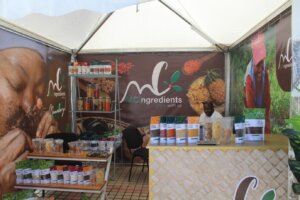
Caption: Market partnerships can help link sustainable production with buyers’ quality and quantity requirements.
Explore related knowledge : FARMER–MARKET LINKAGES AND VALUE CHAINS
- https://kcoa-africa.org/wp-content/uploads/2025/11/Participatory-Market-Chain-Approach-5.pdf
- https://kcoa-africa.org/wp-content/uploads/2025/10/PESA-MODEL-GUIDE-web-2-2-3.pdf
- https://kcoa-africa.org/wp-content/uploads/2025/10/%D8%AA%D8%AD%D8%B6%D9%8A%D8%B1-%D8%AA%D8%AD%D9%88%D9%8A%D9%84-%D9%88%D8%AA%D8%B3%D9%88%D9%8A%D9%82.pdf
- https://kcoa-africa.org/wp-content/uploads/2025/10/3.-Marketing-strategique.pdf
Building Relationships for Lasting Change
For Gérald, one of the most valuable outcomes of participating in the KCOA-KHEA training has been the relationships he has developed with other multipliers and agricultural professionals.
These connections have expanded his understanding of rural communities, their aspirations and the practical challenges they face. They have also created opportunities to exchange experiences and explore new ways of supporting farmers.
“The biggest benefit is the relationships. It let me build connections with many multipliers, to build a network,” he reflects.
He believes that supporting farmers is central to rural development, but lasting change requires patience, consistent engagement and an understanding of the factors that influence farmers’ decisions.
“There’s a shift happening in how they think. Attachment to old practices means you have to work on changing their outlook — and that takes time.”
For this reason, Gérald sees training as the beginning of a longer process rather than an end in itself. Continued engagement, practical guidance and regular follow-up visits are essential to helping farmers apply new knowledge and sustain the changes they make.
Projects such as KCOA-KHEA help create the conditions for this process by equipping multipliers with knowledge, strengthening networks and encouraging the wider dissemination of agroecological practices. Maintaining that momentum, however, requires continued collaboration and support beyond the initial training.
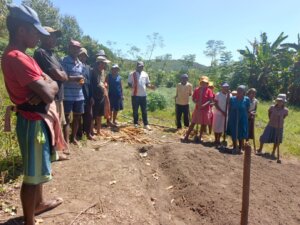
Caption: Lasting change grows through continued learning, farmer relationships and collaboration.
Explore related knowledge : FARMER TRAINING AND THE MULTIPLIER APPROACH
- https://kcoa-africa.org/wp-content/uploads/2025/10/Training-guide-on-gender-mainstreaming-6.pdf
- https://kcoa-africa.org/wp-content/uploads/2025/10/Organic-Farming-training-curriculum-1-3.pdf
- https://kcoa-africa.org/wp-content/uploads/2023/07/KHEA_Handbook_IFOAM-QUALITY-ASSURANCE-GUIDE-FINAL-SIGNED-OFF-BY-DAKTARI-2.pdf
- Corporate Video KCOA-KHEA – SYMABIO GSDM English: https://www.youtube.com/watch?v=t3o1kedRVeM
- Corporate Video KCOA-KHEA – SYMABIO GSDM French: https://www.youtube.com/watch?v=hCVlF58Pbjw&pp=0gcJCRAIAYcqIYzv
From Individual Learning to Collective Progress
Gérald’s experience illustrates the role that private-sector actors can play in connecting agroecological knowledge with viable markets. By combining farmer partnerships, practical training and commercial relationships, MCI is creating opportunities for producers to strengthen their practices while responding to market demands.
The KCOA-KHEA multiplier approach has further enabled this knowledge to reach farmers who might otherwise have limited access to specialised training.
For Gérald, the ultimate goal is not simply to introduce new farming techniques, but to help farmers understand their value, adapt them to their circumstances and continue using them over time.
His journey highlights an important lesson: the transition to agroecology depends not only on the knowledge shared, but also on the relationships, market opportunities and sustained support that enable farmers to put that knowledge into practice.
Through continued collaboration, these efforts can help build stronger farmer networks and more resilient agricultural systems in Madagascar.
Explore More Knowledge
Discover practical resources on organic agriculture, agroecological crop management, farmer training and sustainable market linkages through the KCOA Knowledge Database: https://kcoa-africa.org/kcoa-knowledge-database/
Learn. Apply. Share.

Author: Ismaël Harinifaly
As a Communication officer and digital influence in the GSDM, I value my studies and skills to promote its different form of communications. Working alongside with its projects, partners and members, I use different channels and tools to reach my goals, including the promotion of agroecological transition in Madagascar, mainly