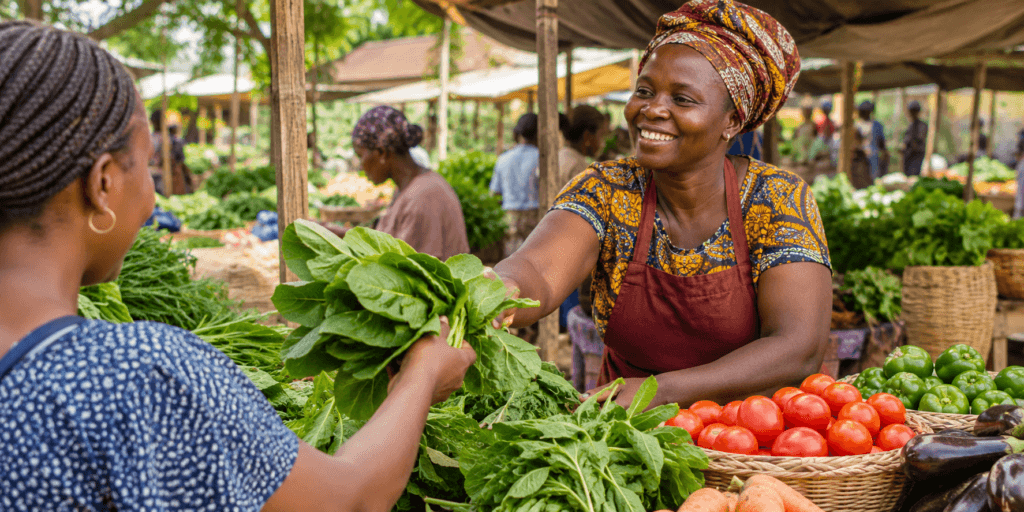
Producing healthy food is important. But what happens when the harvest is in and nobody is willing to pay a fair price? A farmer can spend months preparing the soil, planting, managing pests and nurturing crops, only to struggle when it is time to sell. Produce spoils before buyers are found, prices come in lower than expected, or customers do not understand the value of organically produced food.
For many organic agriculture and agroecology practitioners, the challenge is not simply growing more. It is connecting production to profitable markets. Growing organically is not the same as selling organically. Building a profitable farming business requires farmers to understand their customers, manage production costs, establish reliable market relationships and communicate the value of their products.
So, where can smallholder farmers sell their produce? How can they identify consumers who value organic food? Do organic products always command higher prices? And how can cooperatives, certification, branding and value addition improve their income?
This practical guide explores these questions, drawing on African experiences, research and knowledge resources from the KCOA Multipliers Platform.
Understanding the Issue: Production Is Only Half the Business
Organic production concerns how food is grown. Marketing concerns how farmers connect their products with buyers. They are related, but they require different skills. Similarly, proving that a product has been produced organically is different from simply describing it as organic.
Three common approaches to organic assurance include:
- Third-party certification: An independent certification body assesses whether production meets specified organic standards. This is particularly important for many formal and export markets.
- Group certification through an Internal Control System (ICS): Farmers organise an internal system for monitoring compliance, while an external certification body assesses the group under the applicable certification framework.
- Participatory Guarantee Systems (PGS): Locally focused assurance systems involving farmers, consumers and other stakeholders in verifying organic production practices through participation, transparency and shared responsibility.
The appropriate system depends on the target market, applicable standards and buyer requirements. Another important consideration is that organic production does not automatically guarantee higher profits. Profitability depends on the relationship between production costs, yields, selling prices and post-harvest losses. Understanding these differences is the first step towards building a viable agricultural business.
Frequently Asked Questions
1. Where Can Smallholder Organic Farmers Sell Their Produce?
One of the most important steps towards profitability is identifying potential buyers before scaling production. Many farmers produce first and search for markets afterwards. This can result in surplus produce, post-harvest losses and distress sales, particularly with perishable crops. Rather than depending on a single market, farmers should explore different channels and identify those that match their production capacity.
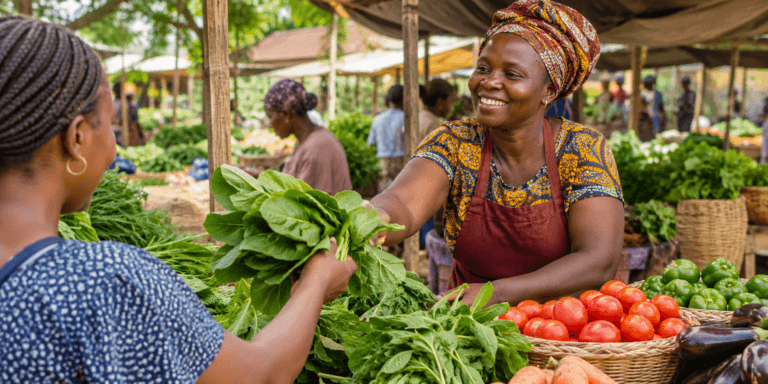
- Direct sales to consumers: Farm-gate sales, farmers’ markets, household deliveries, WhatsApp orders and regular customer subscriptions allow farmers to establish direct relationships with consumers. For example, a vegetable farmer could introduce a weekly produce basket containing ugu, tomatoes, peppers and other seasonal vegetables. Customers place their orders in advance, allowing the farmer to plan harvesting and reduce unsold produce.
- Organic farmers’ markets: Dedicated organic farmers’ markets connect producers with consumers who are specifically interested in organically produced food. In Nigeria, initiatives such as the organic farmers’ market previously supported by NOAN in Ibadan have created opportunities for organic farmer groups in Oyo state, Osun State and most recently with the establishment of the agroecology centre in Akwa, Anambra state. Farmers should investigate existing market opportunities, their operating arrangements and participation requirements.
- Restaurants, hotels and caterers: Restaurants, hotels and catering businesses may require regular supplies of fresh vegetables, fruits, herbs and other agricultural products. Farmers can approach these businesses with product samples, price lists and information about their production capacity. Consistency is important. Buyers need to know that farmers can supply the required quantities, quality and delivery schedules.
- Food processors: Food processors provide opportunities for farmers to supply raw materials for products such as garri, cassava flour, dried fruits, juices, spices and other processed foods.
- Supermarkets, specialised retailers and institutional buyers: These channels may offer opportunities for farmers who can meet requirements relating to quality, packaging, labelling, traceability, delivery and consistent supply. However, larger markets often require volumes that individual smallholder farmers may struggle to provide. Working through cooperatives or producer organisations can help address this challenge.
Practical tip: Identify two or three potential market channels, compare their requirements and begin with the one that offers the best balance of demand, costs and expected returns.
2. How Can Farmers Identify Consumers Who Value Organic Food?
Not every consumer buys food for the same reason. Some prioritise affordability, while others value freshness, convenience, traceability, environmental sustainability or the way food is produced. Farmers must therefore understand their potential customers instead of assuming that everyone interested in healthy eating will automatically purchase organic produce.
Potential customer groups include:
- Health-conscious households: Consumers interested in food quality, safety and production practices.
- Busy urban households: Customers who value convenience, reliable supplies and home delivery.
- Restaurants and caterers: Buyers who require consistent quality and dependable supply.
- Specialised food retailers: Businesses serving customers interested in organic and sustainably produced products.
- Environmentally conscious consumers: People interested in supporting farming systems that protect soil, biodiversity and natural resources.
However, identifying potential customers is only the beginning. Farmers must find out what these buyers actually want.
A simple customer discovery exercise
Before expanding production, speak with at least 10 potential customers.
Ask:
- Which agricultural products do you buy regularly?
- Where do you currently purchase them?
- What matters most when choosing where to buy?
- Would information about how food is produced influence your purchasing decision?
- What quantities, prices and delivery arrangements would suit you?
Farmers can also visit local markets, observe competing products, speak with retailers and restaurants, offer product samples and test demand through pre-orders. For example, a vegetable farmer may discover that nearby households are more interested in reliable weekly deliveries than purchasing individual vegetables at a market stall.
Importantly, do not build your marketing strategy around assumptions. Listen to potential buyers, test demand and adjust your offer accordingly.
3. Do Organic Products Always Command Higher Prices?
No. Organic products do not automatically attract higher prices, and farmers should not build their business plans around premiums they have not confirmed. Organic price premiums depend on factors such as consumer demand, purchasing power, product availability, certification, quality, seasonality and competition.
Research from long-term farming trials in Kenya provides an interesting example. A six-year study comparing organic and conventional maize-based farming systems found that, from the fifth year, the high-input organic system attracted price premiums of 20 to 50 per cent. These premiums made the organic system significantly more profitable than its conventional counterpart.
However, the research also found that profits from the two systems became similar from the third year onwards, even when organic produce was sold at regular market prices. The study further demonstrated that farming practices matter. In the low-input systems, maize yields were considerably lower under organic management when grown alone, but yields were similar when maize was intercropped with beans.
These findings show that profitability depends on more than the price farmers receive. Production costs, yields, crop combinations and market opportunities all matter. The results are specific to the Kenyan research sites and should not be treated as guaranteed outcomes for farmers elsewhere.
So, how can farmers determine whether they are making a profit?
The starting point is understanding the cost of production.
Consider this hypothetical example of a vegetable farmer.
| Production and marketing expenses | Amount |
|---|---|
| Seeds and planting materials | ₦5,000 |
| Compost and other inputs | ₦10,000 |
| Labour | ₦20,000 |
| Water and farm maintenance | ₦5,000 |
| Packaging and transportation | ₦10,000 |
| Total cost | ₦50,000 |
Assume the farmer harvests 100kg of marketable vegetables.
If all 100kg are sold at ₦700 per kilogram:
- Cost per kilogram: ₦500
- Total revenue: ₦70,000
- Surplus: ₦20,000
But what happens if 15kg spoil before they are sold?
The farmer now sells only 85kg:
- Total revenue: ₦59,500
- Total cost: ₦50,000
- Surplus: ₦9,500
The difference is significant. The farmer loses more than half of the expected surplus simply because some produce could not be sold.
These figures are illustrative and exclude any additional costs not included in the example. They are not actual market prices.
Practical recommendations
- Keep records of production and marketing expenses for each crop.
- Calculate the cost of producing a marketable unit.
- Monitor post-harvest losses.
- Compare prices across different market channels.
- Confirm buyer prices before committing to large-scale production.
- Review costs and returns after each production cycle.
For additional insights, read KCOA’s article: Is Organic Farming More Expensive? Understanding the Real Cost of Farming in Nigeria This resource explores production costs, resource management and the economics of organic farming within the Nigerian context.
4. How Can Farmer Cooperatives Improve Market Access?
Smallholder farmers often face difficulties supplying large buyers because their individual production volumes are limited. A farmer harvesting 30kg of vegetables weekly may struggle to meet a restaurant’s requirement for 200kg. However, several farmers working together may be able to fulfil the order. This is one reason cooperatives and producer organisations can play an important role in improving market access.
What can farmers gain from collective marketing?
- Aggregating produce and improving bargaining power: Farmers can combine their harvests to meet buyer requirements and negotiate collectively.
- Sharing transportation and logistics costs: Instead of arranging separate deliveries, members can organise collective transportation and distribution.
- Maintaining consistent supply: Cooperatives can coordinate production schedules to meet buyers’ quantity and delivery requirements.
- Improving quality management: Groups can establish common standards for harvesting, sorting, grading, packaging and handling.
- Sharing certification costs: Eligible farmer groups can explore group certification arrangements and Internal Control Systems to reduce the cost of certification per farmer.
- Accessing training and market information: Organised groups may find it easier to connect with extension services, development organisations, financial institutions and potential buyers.
However, forming a cooperative does not automatically guarantee better market access. Successful collective marketing requires transparent leadership, clear membership responsibilities, proper financial records and reliable systems for managing produce and payments. Farmers should also establish whether members can meet agreed quality standards and are genuinely committed to selling collectively.
Practical tip: A small group of farmers with consistent production and clear agreements may achieve better results than a larger cooperative without effective coordination.
5. What Role Do Certification, Branding, Processing and Value Addition Play in Profitability?
Finding buyers is important, but farmers must also build consumer trust, differentiate their products and identify opportunities to create additional value. Four areas deserve attention.
A. Certification: Building credibility and consumer trust: One challenge in organic markets is that consumers cannot always determine whether products described as organic were produced according to recognised organic standards. Certification and credible verification systems help address this information gap. Common approaches include:
- Third-party certification: An independent certification body assesses production against applicable organic standards. This is important for many formal and export markets.
- Group certification through an Internal Control System: Organised farmers operate an internal monitoring system, while an external certification body assesses the group under the applicable framework.
- Participatory Guarantee Systems (PGS): Locally focused assurance systems involving farmers, consumers and other stakeholders in verifying organic production practices through participation, transparency and peer review. PGS can be particularly relevant to smallholder farmers supplying local markets where buyers recognise and accept the system. The appropriate certification or assurance pathway depends on the target market, applicable standards and buyer requirements. Farmers should therefore investigate what their buyers expect before investing in certification.
Learn more about organic certification in Nigeria: Organic Certification in Nigeria: How Farmers Can Get Certified Through NOAN’s PGS This KCOA article explains how the Participatory Guarantee System works and how Nigerian organic farmers can participate.
B. Branding: Giving consumers a reason to choose your produce: Branding is more than a farm name or logo. It is how farmers communicate the identity, quality, origin and value of their products. For example, a farmer selling vegetables can strengthen product recognition through consistent packaging, clear contact information, reliable quality and a compelling farm story.
Effective branding should help answer:
- Where does this produce come from?
- What makes it different?
- How was it produced?
- Why should consumers trust it?
- How can customers purchase it again?
However, branding must be supported by consistent quality and truthful claims. Farmers should not use organic certification marks or make certification claims unless they meet the relevant requirements.
C. Processing and value addition: Creating additional market opportunities: Selling raw produce can expose farmers to seasonal price fluctuations, perishability and post-harvest losses. Processing can create opportunities to extend shelf life, reach different customers and develop new products.
Consider these examples:
| Raw agricultural produce | Possible value-added products |
|---|---|
| Cassava | Garri, flour, starch, biscuits |
| Mango | Dried mango and fruit pulp |
| Tomatoes | Dried tomatoes and tomato paste |
| Ginger | Dried ginger and ginger powder |
| Groundnuts | Groundnut paste and oil |
| Moringa | Dried leaves and powder |
However, a processed product selling at a higher price does not necessarily generate more profit.
Processing involves additional expenses such as equipment, energy, labour, packaging, quality control and distribution. Farmers should confirm market demand and calculate the expected returns before investing in processing equipment. They must also understand applicable food safety, registration and labelling requirements. In Nigeria, packaged and processed food businesses should establish the applicable NAFDAC requirements for their products before commercial distribution.
D. Marketing: Understanding the Four Ps: A useful framework for farmers is the Four Ps of Marketing, highlighted in a KCOA lecture on marketing organic and indigenous products.
- Product: What are you selling, and what makes it valuable?
- Price: What will customers pay, and will that price cover your costs?
- Place: Where and how will customers access your products?
- Promotion: How will potential buyers discover your products and understand their value?
These elements must work together. For example, a farmer offering weekly vegetable baskets must decide which vegetables to include, what price to charge, how orders will be delivered and how customers will discover the service. A good product without an accessible market may struggle. Similarly, effective promotion cannot compensate indefinitely for poor quality or unreliable delivery.
Practical Application: Develop a Simple Market Access Plan
Understanding market opportunities is useful, but farmers also need to translate this knowledge into action. The following exercise can be used by individual farmers, farmer groups, extension officers and KCOA multipliers.
Activity: My Farm, My Market
Suggested duration: 45 to 60 minutes
Objective: Help farmers identify potential buyers, understand market requirements and develop a simple plan for selling their produce profitably.
Step 1: Identify your products: List the crops or agricultural products available on your farm, including estimated quantities and harvesting periods.
Step 2: Identify potential buyers: List at least three possible buyers or market channels. These could include households, restaurants, retailers, processors or institutional buyers.
Step 3: Understand buyer requirements: Find out the quantities, quality standards, prices, packaging and delivery arrangements expected by each buyer.
Step 4: Calculate your costs: Include production, harvesting, transportation, packaging and marketing expenses.
Step 5: Compare your options: Consider the demand, expected returns, payment arrangements, transport costs and risks associated with each market.
Step 6: Test one market: Begin with a manageable quantity, gather customer feedback and monitor sales performance.
Step 7: Review and improve: After the sales cycle, compare actual revenue and expenses, identify challenges and adjust your strategy.
Expected outcome: A simple market access plan that helps farmers make informed production and marketing decisions.
Common Mistakes Farmers Should Avoid
| Common mistake | What to do instead |
|---|---|
| Producing before identifying buyers | Research demand and buyer requirements before scaling production. |
| Assuming organic products always attract higher prices | Confirm what customers are willing to pay and calculate your costs. |
| Depending entirely on one buyer | Explore alternative market channels to reduce risk. |
| Investing in certification without a market plan | Understand buyer requirements before choosing an assurance system. |
| Joining poorly organised cooperatives | Establish clear rules, accountability and shared responsibilities. |
| Processing without confirming demand | Calculate processing costs and investigate market opportunities first. |
| Neglecting record-keeping | Track expenses, sales, losses and customer feedback. |
Key Takeaways
- Find the market before scaling production. Market demand should guide farming and investment decisions.
- Understand your customers. Consumers have different needs, purchasing power and reasons for choosing organic products.
- Know your costs. Higher selling prices do not automatically mean higher profits.
- Explore collective marketing. Well-managed cooperatives can improve bargaining power, supply consistency and cost-sharing.
- Build consumer trust. Appropriate certification, credible verification, branding and consistent quality can strengthen market opportunities.
- Add value strategically. Processing should respond to genuine demand and generate returns that justify its additional costs.
Conclusion: Profitable Farming Goes Beyond Production
Organic and agroecological farming does not end at harvest. Building a profitable farm requires understanding the market, managing costs, establishing reliable buyer relationships and identifying opportunities to create value. Whether through direct sales, collective marketing, certification, branding or processing, farmers can improve their market position by making informed business decisions. The goal is not simply to sell produce at a higher price. It is to build an agricultural business that rewards farmers’ efforts, meets consumer needs and remains financially sustainable. Growing good food is important. Building a market that values it is equally essential.
Explore these additional resources on organic market development and agribusiness opportunities:
- Southern African Farmers Unlock New Opportunities in the Expanding Organic Market
- Organic Certification in Nigeria: How Farmers Can Get Certified Through NOAN’s PGS
- Beyond Production: Exploring Markets and Adding Value to Organic and Indigenous Products
- Boosting the Organic Trade in Africa: Market Brief

Author: Hepzibah Ebe
Experienced and results-driven Communications expert with over nine (9) years of expertise in developing and executing effective communication strategies, including more than two (2) years of specialization in agroecology