Soil fertility is the lifeblood of any successful farm. Instead, organic farmers work with nature, not against it, to nourish the soil and grow healthy crops. This approach is not only better for the environment but also for long-term productivity, food safety, and farmer livelihoods.
In this post, we’ll explore the natural methods used by organic farmers particularly in Nigeria and across Africa to build and maintain fertile soils. Whether you’re a farmer, policymaker, or student, you’ll discover practical insights you can apply or advocate for.
1. What Makes Soil Fertile and Why It Matters in Organic Agriculture
Fertile soil isn’t just “dirt that grows things.” It’s a living, breathing ecosystem full of minerals, organic matter, beneficial microbes, and physical structure that holds water and air. In organic farming, managing this ecosystem is key because:
- Synthetic fertilizers are not allowed (or very limited).
- Soil health directly impacts plant health and yield.
- Good fertility reduces pests and diseases naturally.
Organic agriculture practitioners aim to build fertility over time, not just for the current crop but for future ones too. This is why fertility management is deeply tied to agroecology principles; working with the ecological processes of the farm.
2. Crop Rotation and Cover Crops: Nature’s Soil Boosters
One of the most powerful tools in an organic farmer’s toolkit is crop rotation (the practice of planting different crops in a planned sequence across seasons or years). Why does it matter?
- Different crops use and return different nutrients.
- Some crops, especially legumes like cowpea or groundnut, fix nitrogen from the air into the soil.
- Rotation helps break pest and disease cycles.
Cover Crops (otherwise known as Green Manure), is a climate smart fertiliser process that involves growing plants (mainly legumes) and distributing uprooted or sown crop-parts to wither and cover soil. It provides soil coverage to enhance biological, physical and chemical properties of soil while mitigating soil erosion, supressing weed growth, adding biomass to soils, improving soil structures, promoting biological soil preparation, and reducing pests, diseases and weed growth. These functions can increase economic return, reduce the need for herbicides and pesticides, while increasing productivity and potentially the quality of crops. It can also increase soil nitrogen, improve soil fertility, conserve soil humidity and reduce fertiliser costs. Green manure also has low management costs, presents good conservation characteristics, and improves biodiversity. Green manure is a feasible and sustainable option for farmers to improve soil quality and productivity, depending on local context and availability of different leguminous plants that best fit for farmers’ cropping systems.
Example:
In northern Nigeria, many farmers are adopting cowpea-sorghum rotations and using lablab as a cover crop. These combinations improve nitrogen levels, reduce weeds, and increase maize yields the following season—without adding synthetic fertilizers.
3. Compost and Organic Matter: Feeding the Soil Life
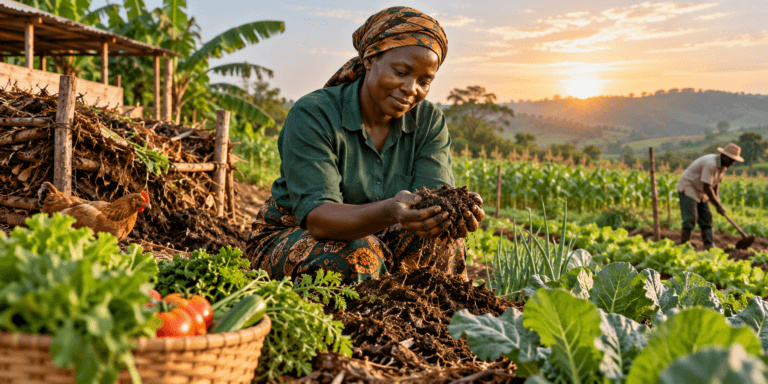
Organic farms thrive on composted plant and animal materials. This includes:
- Crop residues
- Animal manure (properly composted to avoid pathogens)
- Kitchen and market waste
- Agro-industrial by-products like rice husks or palm fronds
Adding compost does more than just feed plants:
- It improves soil structure, making it easier for roots to grow.
- It increases the organic matter content, which helps soil hold moisture.
- It boosts microbial life, which makes nutrients available to crops.
Composting is especially valuable for smallholder farmers because it uses what they already have—turning waste into a resource.
Tip: Want to make compost faster? Mix high-nitrogen (green) and high-carbon (brown) materials, turn regularly, and keep it moist but not soggy.
4. Appropriate Tillage: Balancing Soil Health and Farm Needs
Tillage, turning the soil, is a tricky topic in organic farming. Done too much, it can:
- Break down soil structure
- Reduce microbial life
- Increase erosion
But done appropriately, it can help incorporate compost, manage weeds, and prepare seed beds without harming the soil.
Appropriate tillage means:
- Avoiding deep, aggressive ploughing unless necessary
- Using tools like broadforks or ripper tines to loosen soil without inversion
- Timing tillage to avoid working wet soils (which causes compaction)
Conservation tillage practices, including mulching and minimum tillage, are gaining ground in African organic systems. These help build up organic matter and improve soil structure over time.
5. Minerals and Approved Inputs: When Natural Isn’t Enough
Sometimes, even the best organic practices need a little help. Organic standards allow a few natural minerals and inputs, but with strict rules. Examples include:
- Rock phosphate for phosphorus
- Lime for pH adjustment
- Wood ash for potassium
- Seaweed extracts or approved microbial inoculants
These must be used responsibly, making sure they don’t contaminate soil, water, or crops.
Before applying any input, farmers are encouraged to test their soils and apply only what’s truly needed.
Final Thoughts: Healthy Soil, Healthy Harvests
Managing fertility in organic farms isn’t just about growing crops, it’s about regenerating the land, working with agroecology, and creating resilience in food systems.
Across Nigeria and Africa, more farmers are turning to these sustainable practices not only for environmental reasons but also for economic and health benefits. When soils are managed well, yields go up, input costs go down, and the land stays productive for generations.
🌱 Ready to Dig Deeper?
If you’re a farmer, student, or policymaker, here’s how you can take action:
- Farmers: Start small, try a compost pile or introduce a legume into your rotation.
- Students: Share this article and start a school garden or agroecology project.
- Policymakers: Support extension services that train farmers in composting and cover cropping.
➡️ Join the conversation: What fertility practices work best for you? Have questions or success stories? Share them in the comments below and let’s grow together.
🔁 Don’t forget to share this article with others in your network who care about sustainable farming!

Author: Hepzibah Ebe
Experienced and results-driven Communications expert with over nine (9) years of expertise in developing and executing effective communication strategies, including more than two (2) years of specialization in agroecology