From scattered information to a national database for Participatory Guarantee Systems
Across Kenya, an increasing number of smallholder farmers are embracing agroecological and organic farming practices. However, many farmer groups continue to face challenges in accessing markets, demonstrating the integrity of their production systems, and connecting with certification and technical support. To better understand these needs, PELUM Kenya developed a standardized data collection tool to support the mapping of Participatory Guarantee Systems (PGS) farmer groups across the country.
The mapping aimed to identify farmer groups practising agroecology, assess their readiness for PGS certification, identify capacity gaps, and establish a centralized database to guide technical support, certification and market development interventions.
By May 2026, 55 farmer group submissions had been received for PGS certification consideration. The information was synthesized and consolidated into a centralized database containing group profiles, locations, production systems, agroecological practices, certification readiness and capacity gaps. This has strengthened PELUM Kenya’s ability to identify priority groups for support, monitor progress, improve planning and reporting, and facilitate market linkages.
From mapping to field assessment
 The mapping was complemented by field verification. From 25–27 November 2025, PELUM Kenya conducted field assessments of seven farmer groups across Kisumu, Bungoma and Busia counties. The assessment validated data collected through the Kobo survey, assessed farmers’ understanding of agroecology and PGS, determined readiness for certification, identified capacity gaps, and explored opportunities for value addition and market access.
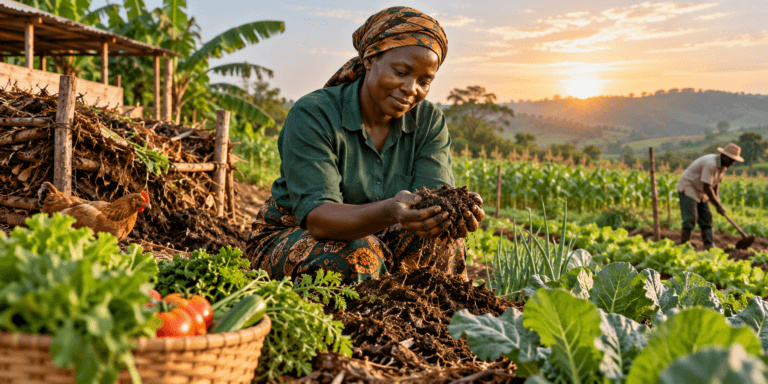
The assessment revealed growing interest in PGS as a pathway towards improved market access, stronger consumer confidence and greater visibility of organic products. Most groups demonstrated practical application of agroecological practices, including composting, use of organic manure, crop diversification, black soldier fly farming, vermiculture and ecological pest management.
However, the assessment also demonstrated that practicing agroecology does not automatically mean a group is ready for certification. Only a small number of groups were considered ready for PGS certification, highlighting the need for continued training, technical assistance and organizational strengthening.
Strengthening Kenya’s PGS information base
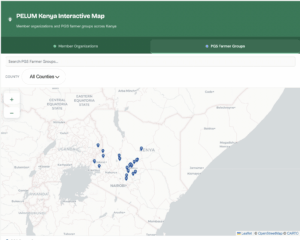 The mapping also supported technical review and prioritization of farmer groups for PGS training and certification. Importantly, the process helped identify geographical gaps and opportunities to ensure that PGS support reaches different regions of Kenya.
To strengthen the national PGS database, PELUM Kenya liaised with the Kenya Organic Agriculture Network (KOAN) to obtain information on PGS groups already certified across Kenya. This contributes to a more comprehensive understanding of the national PGS landscape.
An interactive map has also been integrated into the revamped PELUM Kenya website, providing greater visibility of PGS farmer groups and the wider network. The map will be updated as additional groups are supported and certified.
The mapping exercise has therefore gone beyond data collection. It has created an evidence base for targeted technical support, certification planning, market development, monitoring and reporting.
Ultimately, the initiative provides a strong foundation for scaling PGS across Kenya, strengthening farmer organizations, improving market access and building consumer confidence in organically produced food.

Author: Ratemo
At PELUM Kenya Association, my role as KHEA Project Officer for four and a half years has centered on enhancing knowledge sharing in Agroecolology and promoting ecological land use. My competencies in environmental science ensuring that our initiatives in agroecology are grounded in sound environmental practices