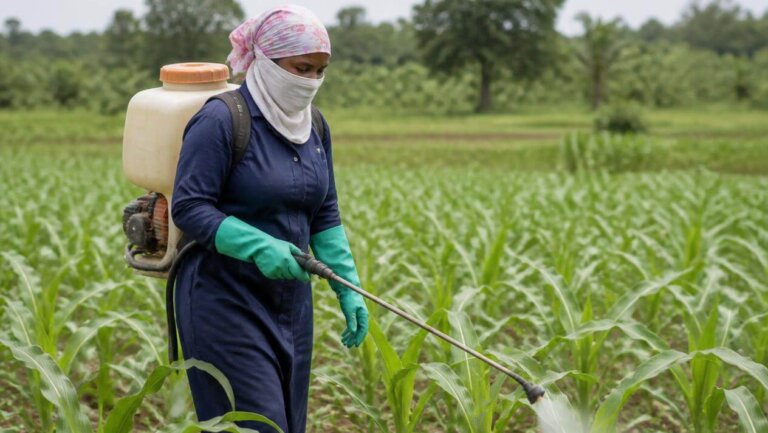
There is a farmer in Oyo State, Nigeria, let’s call her Ma Eyo, she wakes at 4 a.m. every day, tends her vegetable plot through the heat of two seasons, loses sleep over pests and rainfall, and at the end of the harvest sells her products for less than it cost her to grow them. She does this not because she is foolish, but because she has been told, in a hundred quiet ways, that her job is to feed people and that profit is somehow secondary to that calling. By the end of the season, she has sold everything, but there is little money left.
Her story is not unique.
Across Africa, many farmers carry the biggest risks in the food system, yet earn the smallest rewards. They invest their labour, money, knowledge, and time into producing food, only to sell at prices that barely cover their costs. Many farmers say: “At least I recovered my expenses”. Others say: “I sold because the produce would have spoiled.” But farming was never meant to be an exercise in survival. Farming is not charity. It is a business. And every business must price for profit.
If agroecology and organic farming are to be sustainable, farmers must not only produce healthy food. They must also build profitable enterprises that can support their families, invest in their farms, and withstand future shocks.
Then the big question becomes, Why do many Farmers Underprice their produce?
- Most farmers do not calculate their prices. They copy them. They ask what other farmers are charging, accept whatever a buyer or aggregrator offers, or sell quickly because they fear losses. The problem is that if everyone else is underpricing, copying them only guarantees that you will underprice too. Several factors contribute to this challenge:
- Dependence on middlemen who dictate prices.
- Fear of spoilage due to the perishable nature of fresh produce.
- Poor record-keeping and limited knowledge of production costs.
- Pressure to sell quickly to meet immediate financial needs.
- Social expectations that farmers should prioritize feeding people over making a profit.
These challenges are real, but they can be overcome. The first step is understanding the true cost of production.
2. Know Your Costs Before Setting Your Price. If you do not know your costs, the market will decide your price, and it will rarely work in your favour. Many farmers only consider visible expenses such as seeds, manure, or labour. However, the true cost of production goes much further. Lets break them down to direct, indirect and hidden cost.
Direct Costs: These include:
- Seeds or planting materials
- Compost, manure, biofertilisers, and biopesticides
- Irrigation and water costs
- Hired labour
- Packaging materials
- Transportation
Indirect Costs: These often goes unnoticed:
- Land rent or land value
- Equipment maintenance and depreciation
- Loan interest and repayment costs
- Farm management expenses
Hidden Costs: These can quietly reduce profits:
- Post-harvest losses
- Pest and disease damage
- Produce rejected by buyers
- Time spent managing the farm and marketing produce
Now lets make it more practical. For example, a vegetable farmer spends:
- Land preparation: ₦50,000
- Seeds: ₦25,000
- Organic inputs: ₦40,000
- Labour: ₦80,000
- Irrigation: ₦20,000
- Packaging and transport: ₦35,000
Total production cost = ₦250,000
If the farm produces 1,000 kilograms of vegetables:
Cost per kilogram = ₦250,000 ÷ 1,000 = ₦250
This means selling below ₦250 per kilogram results in a loss.
A simple formula every farmer should remember is: Cost per Unit = Total Production Cost ÷ Total Yield
Once you know your cost per unit, you can make informed pricing decisions.
3. Price for Profit, Not Just Survival: Recovering your costs is not the same as making a profit. Profit is what allows a farm business to grow, improve, scale, survive difficult seasons and stay sustainable.
A profitable farm can:
- Invest in better production practices.
- Improve soil fertility.
- Purchase better tools and equipment.
- Expand into new markets.
- Build savings for emergencies.
A practical target for many smallholder farmers is a profit margin of 30% to 50% percent, depending on the crop and market conditions.
For example:
- Cost per kilogram = ₦250
- Desired profit margin (40%) = ₦100
- Selling price = ₦350 per kilogram
That additional amount is not greed. It is what keeps the business alive.
Why Selling Below Cost Is Dangerous
Many farmers knowingly sell below cost because they fear losing everything. While this may solve an immediate problem, it creates long-term challenges:
- Buyers become accustomed to low prices.
- Farmers struggle to reinvest.
- Debt increases.
- Farm productivity declines.
- Farming becomes unsustainable.
Selling below cost may save today’s harvest, but it can threaten next season’s production.
4. Produce for Demand, Not Hope. The market does not pay more because a farmer worked hard. It pays based on demand, timing, quality, and availability. One of the most common mistakes farmers make is producing without understanding the market. This often leads to situations where many farmers harvest the same crop at the same time, causing prices to crash.
Before planting, ask:
- What crops are buyers demanding?
- When are prices usually highest?
- Which markets offer better returns?
- Are there opportunities for off-season production?
Practical actions include:
- Monitoring prices across different markets.
- Talking to offtakers and buyers before planting.
- Joining farmer groups and cooperatives.
- Diversifying crops to spread risk.
Successful farmers do not simply grow what grows well. They grow what sells well.
5. Improve Your Negotiation Power. Many farmers lose money at the point of sale, not in the field. An offtaker or buyer arrives and says: “The market is poor today. Take this price or leave it.” Because the produce is perishable, the farmer accepts. This happens every day. Farmers often negotiate from a position of weakness because:
- They do not know current market prices.
- They are selling individually.
- They need immediate cash.
- They have no storage options.
To negotiate more effectively:
- Know your minimum profitable price.
- Check prices in multiple markets.
- Sell collectively through farmer groups. Check my previous post on PGS groups, its easiler to form a froup with same minded people and then scale together.
- Explore storage options where possible.
- Focus on quality and consistency.
Confidence in pricing comes from preparation. Stop selling from a position of desperation. If you cannot walk away from a deal, you have already lost the negotiation.
6. Add Value and Grade Your Produce. Not all produce should be sold at the same price. Organic products already give you an advantage, plus the market rewards quality, consistency, and presentation. Two farmers may harvest the same crop, but one earns significantly more because the produce is properly sorted, graded, and packaged.
Examples include:
- Clean, well-packaged vegetables attracting premium buyers.
- Graded fruits earning higher prices than mixed-quality produce.
- Properly sorted grains reducing rejection rates.
- Dried fruits, herbs, and spices earning more than fresh produce in some markets.
Simple value addition can increase income without increasing production. Instead of competing only on volume, farmers should focus on creating value. So continue to find creative ways to add value to out produce.
7. Communicate the Value of Agroecological Produce. Agroecological and organic farmers offer something unique. Their products are often grown without synthetic chemicals, produced using environmentally friendly methods, and contribute to healthier soils and ecosystems. These benefits have value. However, many farmers fail to communicate that value to buyers. Consumers cannot pay for what they do not understand. Simple ways to communicate value include:
- Sharing how the produce was grown, highlighting organic or agroecological practices.
- Using appropriate labels and packaging.
- Building direct relationships with customers.
- Participating in local farmers’ markets and community-supported agriculture initiatives.
People do not only buy food. They buy trust, quality, safety, and consistency.
A Quick Pricing Checklist
Before selling your next harvest, ask yourself:
- ✓ Have I calculated all my production costs?
- ✓ Have I included labour, transport, and packaging?
- ✓ Have I accounted for losses?
- ✓ Do I know my cost per unit?
- ✓ Have I added a profit margin?
- ✓ Have I researched alternative markets?
- ✓ Am I communicating the value of my produce?
If the answer to any of these questions is ‘NO’, there may be an opportunity to improve your profitability.
The Bigger Picture
When farmers earn fair profits, everyone benefits. Families enjoy better livelihoods. Farms become more resilient. Young people see agriculture as a viable career. Communities become more food secure. Agroecological practices become economically sustainable, not just environmentally desirable. Every seed planted carries a cost. Every harvest carries a risk. Every market day reflects months of labour and investment.
So before accepting the next price offered by a buyer, ask yourself:
Does this price cover my costs, reward my effort, and help my farm grow?
If the answer is no, it is time to rethink your pricing. Start by knowing your costs, understanding your market and the value you bring, then negotiating with confidence. Farming is not charity. It is a business and every successful business deserves a profit.

Author: Hepzibah Ebe
Experienced and results-driven Communications expert with over nine (9) years of expertise in developing and executing effective communication strategies, including more than two (2) years of specialization in agroecology