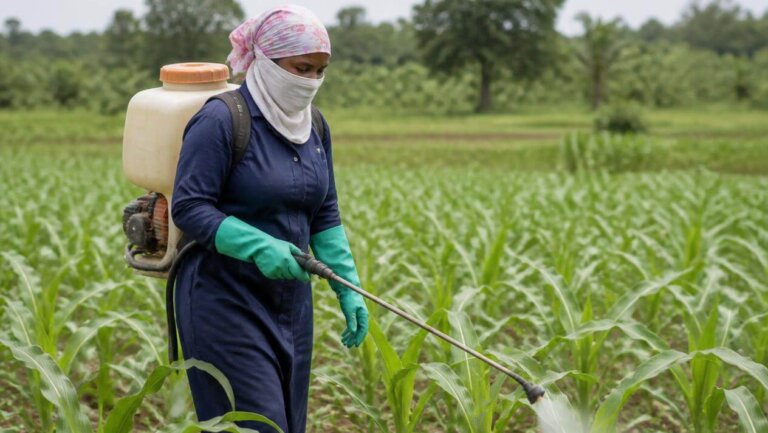
Once a region known for its degraded and abandoned farmlands, Shibuyunji District is now slowly turning into a beacon of hope for climate-smart agriculture in Zambia. A growing number of smallholder farmers in this rural district are turning to agroecology, a sustainable and environmentally friendly farming practice, to restore soil health, increase resilience, and reduce their dependence on chemical inputs.
One of these farmers is Hendrix Sambole, who bought his farm a year ago, only to find the land barren and exhausted.
“Many people had deserted this area because the soil was poor,” Sambole recalls. “But I decided to stay and try something different.”
That “something different” turned out to be agroecology, a method of farming that works with nature by using organic manure, local seeds, crop diversification, and natural pest control.
Sambole credits Community Technology Development Trust (CTDT) for introducing the method to his community.
“We have never used synthetic fertilisers at this farm,” he explains proudly. “Only animal manure and organic materials. The soil is already improving, and in a few years, this land will be more fertile than those places where others moved to.”
Restoring the Land with Local Knowledge
In contrast to conventional farming that relies heavily on synthetic fertilisers and pesticides, agroecology promotes natural solutions that are healthier for the land, the farmers and consumers. Farmers in Shibuyunji are embracing age-old wisdom supported by modern ecological science, to care for their fields.
One of the key practices is intercropping, growing different crops together to support soil health, increase biodiversity and improve nutrition. Sambole now grows a variety of crops, contributing to food security and economic stability.
“It’s not just about farming,” he says. “It’s about farming smart.”
Another local farmer, Bwalya Katongo, shared his success during the tough 2023-2024 farming season, when rainfall was below average.
“Despite poor rains, I harvested maize and other crops because of agroecology,” Katongo says. “After harvesting, we don’t burn crop residues. We use them to make bokashi, a type of organic compost to enrich the soil.”
He also maintains a year-round vegetable garden that brings in income consistently, thanks to crop diversity and sustainable soil practices.
Natural Pest Control: A Local Solution
Chemical pesticides are not part of the agroecological toolkit in Shibunji. Instead, farmers are reviving natural pest control methods passed down through generations.
At Sambole’s farm, chili water is sprayed on crops to deter insects. He also uses a homemade mixture made from soaking banana peels in water to repel pests.
Katongo adds his own innovations. By planting a wide range of vegetables, he naturally repels pests through crop diversity. Additionally, marigold flowers are used as trap plants drawing pests away from the main crops.
“The pests are attracted to the marigolds because of their color,” Katongo explains. “They leave the vegetables alone.”
He also uses cassava leaves, pounded and soaked in water, as a spray to protect his crops from infestation.
Training and Tradition Hand in Hand
According to Mulife Likomelo, a field officer with CTDT, the spread of agroecological practices is not just helping to rehabilitate the land, it is also reviving indigenous knowledge and traditional farming systems that are aligned with the environment.
“Agroecology is helping farmers mitigate climate change, promote better health and preserve traditional farming methods,” says Likomelo.
In a time when the impacts of climate change are being felt across Zambia through erratic rainfall, longer dry seasons and increasing food insecurity, Shibuyunji’s farmers are proving that innovation doe not always mean high-tech. Sometimes, it means looking back to move forward.
As more smallholders like Sambole and Katongo lead the way, Shibuyunji could become a model for other communities seeking resilience through sustainable agriculture.
Download the Knowledge Product on Organic Agriculture by PELUM Zambia from the link below.