Organic food is often perceived as expensive. For many Nigerian farmers and consumers, the question is straightforward: If organic farming requires more labour and careful management, is it really worth the investment? The answer becomes clearer when we look beyond the price of seeds, fertilisers and pesticides.
The real cost of farming includes the health of the soil, productivity of the land, cost of external inputs, labour, environmental impacts, market access and the farmer’s ability to remain productive over the long term.
For farmers in Nigeria, where rising input costs, soil degradation, climate variability and access to affordable agricultural inputs continue to affect farm profitability, organic agriculture and agroecological approaches offer practical alternatives for building more resilient farming systems.
Rather than relying heavily on purchased external inputs, these approaches place greater emphasis on soil health, biodiversity, ecological processes, resource recycling, diversification and the productive use of locally available resources.
This does not mean organic farming has no costs. It does. But when the full production cycle is considered, organic agriculture can offer a viable pathway towards more sustainable and resilient farm production.
Why Does Organic Food Sometimes Cost More?
Walk into a Nigerian market and it is easy to understand why consumers may perceive organic food as more expensive. A farmer producing vegetables, eggs, poultry or other food products using organic practices may spend more time on soil preparation, weed management, pest control, record keeping, sorting and marketing. However, the price of food does not always tell the full story of its production.
Conventional farming can also involve costs that are not immediately visible in the price of food. These may include declining soil fertility, dependence on purchased inputs, environmental impacts and the long-term cost of maintaining productivity on degraded land.
Organic agriculture takes a different approach by working with ecological processes to build productive farming systems. This is closely connected to agroecology, which encourages farmers to apply ecological principles to the design and management of agricultural systems. Rather than treating soil, crops, livestock, trees and other farm resources as separate components, agroecological approaches look at how these elements can work together.
The hidden cost of declining soil health
Soil is one of a farmer’s most important assets. Repeated cultivation without adequate soil regeneration, excessive dependence on external inputs and poor soil management can contribute to declining soil fertility and structure. As soil quality declines, farmers may need to invest more in fertilisers and other inputs simply to maintain production.
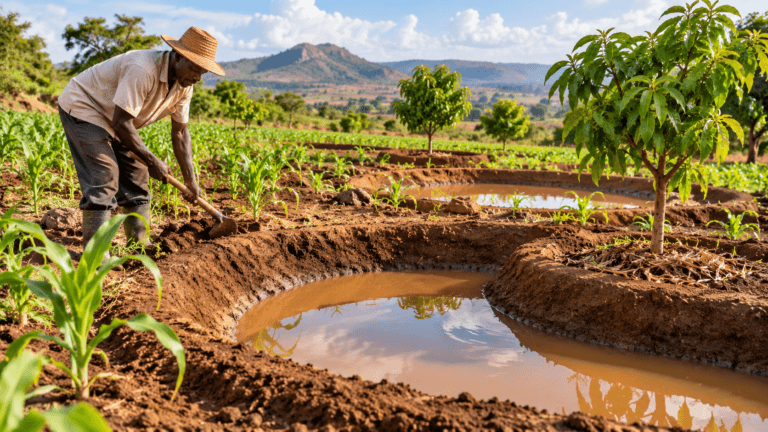
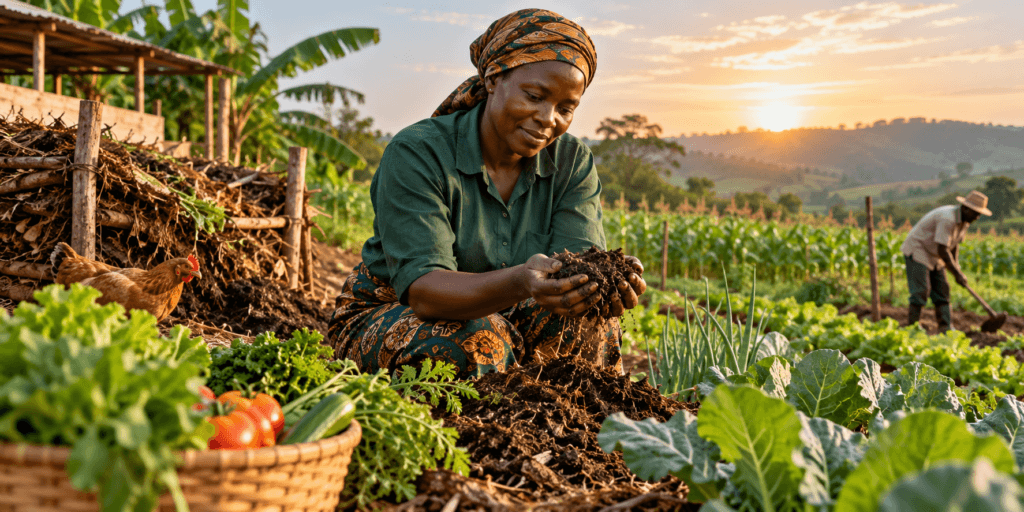
Organic farming takes a different approach. Practices such as composting, mulching, crop rotation, intercropping, cover cropping and the appropriate use of organic manure can help improve soil health and nutrient cycling. These practices are also examples of agroecological approaches that seek to strengthen the natural processes supporting agricultural production. The goal is not simply to feed a crop for one season, but to build a productive soil system that continues to support farming in future seasons.
Comparing the Cost of Organic and Conventional Farming in Nigeria
The economics of farming vary considerably across crops, locations and production systems. A smallholder vegetable farmer in Oyo State does not face exactly the same costs as a maize farmer in Kaduna or a cocoa farmer in Ondo. There is therefore no universal cost comparison that applies to every Nigerian farm. Nevertheless, some broad differences are worth considering.
Organic and agroecological approaches
Organic production may involve:
- Compost, animal manure and other locally available soil amendments
- Biological, cultural or mechanical approaches to pest management
- Mulching and other methods of conserving soil moisture
- Crop rotation and intercropping
- Greater use of locally available farm resources
- Integration of crops, livestock and trees where appropriate
- More labour for some activities, particularly during the transition period
- Training and record keeping
- Certification or verification costs where a farmer is targeting certified organic markets
One potential advantage is the opportunity to reduce dependence on purchased inputs by producing or sourcing some resources locally.For example, an integrated farm can potentially recycle crop residues, animal manure and other organic materials rather than treating them as waste. This resource recycling is an important principle of both organic agriculture and agroecology.
Conventional farming
Conventional production may involve:
- Synthetic fertilisers
- Commercial pesticides and herbicides
- Purchased seeds
- Mechanisation and fuel
- Irrigation and other infrastructure
- Repeated purchases of external inputs
- Transportation and distribution costs
These inputs can be useful tools for farmers, but their increasing cost can significantly affect farm profitability. For Nigerian farmers, fluctuations in the cost of agricultural inputs, fuel and transportation can make production planning particularly difficult.
The important question, therefore, is not simply: “Which farming system has cheaper inputs?”
It is:
“Which farming system allows the farmer to produce profitably while maintaining the health and productivity of the farm over several seasons?”
Where Can Organic and Agroecological Approaches Help Farmers Save?
One of the potential benefits of organic agriculture is reduced dependence on purchased external inputs over time. The extent of these savings will depend on the farm, available resources, crop and management practices. But several approaches can help farmers make better use of what they already have.
1. Making better use of farm resources
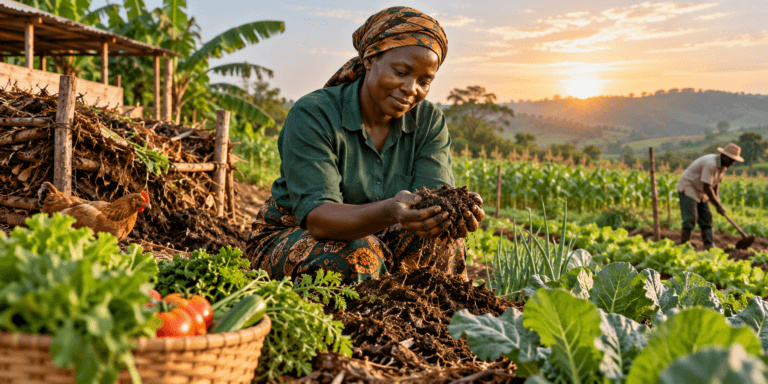
A farmer who keeps livestock and grows crops has an opportunity to connect different parts of the farm. Animal manure can contribute to compost production, while crop residues can be incorporated into soil management systems or used as part of livestock feeding strategies where appropriate. This creates a more circular farming system in which resources are reused rather than continually purchased.
2. Building healthier soils
Healthy soil is a long-term agricultural asset. Practices such as compost application, mulching, crop rotation, cover cropping and intercropping can support soil structure, nutrient cycling and biological activity. For Nigerian farmers facing declining soil fertility, investing in soil health can help reduce dependence on increasingly expensive external inputs while supporting the long-term productivity of the farm.
3. Supporting ecological pest management
Organic farming uses preventive and ecological approaches to pest and disease management. Depending on the crop and production system, farmers may use crop diversity, resistant varieties, field sanitation, biological control, physical barriers and other integrated approaches. This does not mean organic farming eliminates pest management, rather, it seeks to manage pests as part of a wider farm ecosystem and prioritise prevention and ecological balance.
4. Building resilience to climate variability
Nigerian farmers are increasingly dealing with irregular rainfall, flooding, drought, heat and other climate-related challenges. Practices that improve soil organic matter and ground cover can contribute to better water retention and help reduce soil erosion. Agroecological practices such as agroforestry, mulching, intercropping and diversified farming systems can also help spread production risks. A farmer who depends on several complementary crops may be less exposed to the failure of a single crop than one whose income depends entirely on one commodity. This is one of the reasons diversification is an important principle in resilient agroecological farming systems.
Does Organic Farming Require More Labour?
This is one area where the organic farming debate needs to be realistic. Some organic practices can require more labour, especially during the transition to a new production system. Manual or mechanical weed management, compost preparation, mulching and regular crop monitoring can require significant time and effort. However, labour should be considered alongside the cost of purchased inputs.
If a farmer spends less on external inputs but more on labour, the real question is whether the total cost of production per unit of output improves. Farmers can also reduce labour pressure through better planning, appropriate tools, training, suitable crop combinations and community-based approaches. Ultimately, the economics will differ from farm to farm. This is why farmers need reliable information, good record keeping and context-specific advice when making decisions about transitioning to organic or agroecological production.
What About Organic Certification?
Certification is another factor farmers considering organic production need to understand. A farmer using organic practices does not automatically have access to every organic market. Formal organic certification may be necessary when targeting certain markets, particularly premium or export markets. Requirements and costs depend on the applicable standard, market and certification system.
For farmers primarily serving local markets, alternative approaches such as Participatory Guarantee Systems (PGS), where available and appropriate, can provide a more accessible approach to demonstrating compliance with organic standards. This is particularly relevant for smallholder farmers because certification should not become a barrier that prevents smaller producers from participating in organic markets.
How Can Nigerian Farmers Start the Transition?
Farmers do not necessarily have to convert their entire farms at once. A gradual approach can help reduce financial risk and allow farmers to learn what works within their specific production systems.
1. Start with a manageable area
A farmer can begin with a portion of the farm, test organic and agroecological practices and compare production costs and results with existing practices. Keeping accurate records is essential.
Track:
- Seed costs
- Labour
- Soil amendments
- Pest management
- Water
- Transportation
- Harvest volumes
- Selling prices
- Post-harvest losses
This allows the farmer to determine whether the approach is economically viable rather than relying only on assumptions.
2. Make compost and organic inputs where practical
Where suitable materials are available, farmers can explore composting and other methods of producing farm inputs locally. Crop residues, animal manure and other organic materials can become valuable resources when properly managed. Instead of viewing these materials as waste, farmers can integrate them into a resource-recycling system that supports soil fertility and farm productivity.
3. Diversify production
Combining crops, livestock and trees where appropriate can improve resource use and spread risk. For example, an integrated farm may produce food crops while keeping livestock whose manure contributes to soil fertility. Agroforestry can also provide additional benefits, depending on the farming system, including biodiversity, soil protection and additional products or income streams.
4. Find the market before scaling up
Organic production should not be separated from marketing. Farmers need to understand what consumers are willing to pay for, what evidence they require before accepting an organic claim and which markets they can realistically access. Potential markets may include direct sales, farmers’ markets, specialised retailers, restaurants, food processors, community-supported agriculture models and other organised outlets. The lesson is simple: Do not produce first and look for a market later.
Is Organic Farming Worth It for Nigerian Farmers?
At the start, there is no single answer for every farmer. Organic farming can involve higher labour requirements, training needs and a transition period. Certification can also add costs where formal certification is required. But the economics should not be judged only by the price of organic inputs or the retail price of organic food.
A more complete assessment considers:
- Cost of purchased inputs
- Labour requirements
- Soil fertility over time
- Crop yields
- Water management
- Pest and disease management
- Post-harvest losses
- Market prices
- Certification or verification costs
- Climate-related risks
- Long-term farm productivity
For some Nigerian farmers, particularly those able to make good use of locally available resources and access markets that value sustainably produced food, organic agriculture and agroecological practices can offer pathways towards more resilient agricultural production.
The opportunity goes beyond reducing input costs. It lies in building farming systems that make better use of natural resources, strengthen soil health, support biodiversity, reduce unnecessary waste and improve farmers’ capacity to adapt to changing environmental and economic conditions.
Beyond the Price Tag
The debate about whether organic food is “too expensive” often focuses on what consumers pay at the point of purchase. Farmers need to ask a different question: What does it actually cost to keep producing food year after year? If a farming system gradually depletes soil, increases dependence on expensive external inputs and leaves farmers vulnerable to climate and market shocks, its low short-term cost may not tell the whole story.
Organic agriculture offers a different approach, centred on soil health, biodiversity, resource recycling, ecological processes and responsible management of natural resources. These principles also connect organic agriculture with the broader agroecological transition towards food and farming systems that are productive, sustainable and resilient.
For Nigeria, where millions of people depend directly or indirectly on agriculture, the conversation should move beyond whether organic farming is simply cheap or expensive. The more important question is whether farmers can build productive, profitable and resilient farms that work with nature, make efficient use of available resources and remain viable for future generations. That is where the true value of organic agriculture and agroecology deserves to be considered.
Frequently Asked Questions
Is organic farming more expensive than conventional farming in Nigeria?
It depends on the farm, crop and production system. Organic farming may reduce spending on purchased fertilisers and other external inputs, but it can require more labour, training and, in some cases, certification costs. Farmers may also experience changes in yields and costs during the transition period.
How can I get organic certification in Nigeria?
Farmers interested in organic production should first understand the requirements of the organic standard and the market they intend to serve. Joining the Assoiciation of Organic Agriculture Practitoners of Nigeria (NOAN) can help farmers access information, guidance and support on organic agriculture. For smallholder farmers, Participatory Guarantee Systems (PGS), where available, can provide a more accessible approach to demonstrating compliance with organic standards.
How much does NOAN membership cost?
NOAN membership fees vary according to membership category. Farmers should confirm the current applicable fees and requirements directly with NOAN before registering. Membership should also be distinguished from organic farm certification, which may involve separate requirements and costs.
How long does it take to convert a farm to organic production?
The transition period depends on the organic standard and the previous management of the farm. Some organic standards require a transition period of around two to three years before products can qualify as fully organic. Farmers should confirm the specific requirements that apply to their target market or certification system.
Will consumers pay more for organic produce?
Some consumers may be willing to pay a premium for organically produced food, particularly when they trust the claim and can verify how the food was produced. However, willingness to pay varies by consumer, product, location and market. Farmers should therefore identify their target market before investing heavily in organic production.
Can smallholder farmers afford organic farming?
Yes, but the approach matters. Smallholder farmers can start gradually by testing organic practices on a manageable portion of their farm, making use of locally available resources such as crop residues and animal manure, and keeping detailed records of costs and returns. Working through farmer groups can also help reduce some costs and improve access to knowledge and markets.

Author: Hepzibah Ebe
Experienced and results-driven Communications expert with over nine (9) years of expertise in developing and executing effective communication strategies, including more than two (2) years of specialization in agroecology