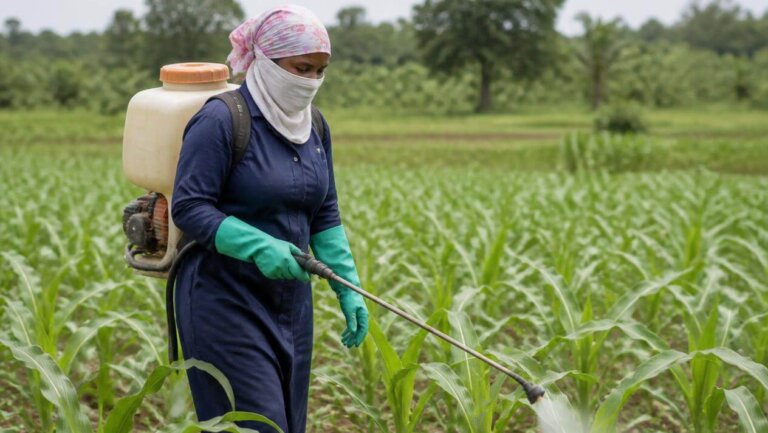
The fall armyworm (FAW) is a significant threat to maize crops in Africa, causing substantial losses in yield and quality. As part of the KCOA-KHEA project, Tanzania Organic Agriculture Movement (TOAM) a CIP on the KCOA-KHEA Project has developed a comprehensive guide on managing FAW, offering farmers practical solutions to protect their maize. This guide emphasizes a combination of prevention, monitoring, and control strategies to manage this invasive pest effectively.
Prevention Measures: Keeping Fall Armyworms at Bay
Prevention is the first line of defense in managing FAW infestations. According to the Management of Fall Armyworm guide, farmers should focus on practices that reduce the likelihood of pest outbreaks. One key prevention strategy is crop rotation. Planting maize in fields that have not hosted maize in previous seasons helps disrupt the life cycle of the fall armyworm.
Proper field sanitation is crucial—removing crop residues from the field after harvesting reduces places where the pest can hide and reproduce. Planting maize at different times can also help avoid peak FAW activity, as staggered planting creates crops at the different stages, making it harder for the pest to affect all plants simultaneously.
Monitoring: Catching Infestations Early

Monitoring plays a critical role in effective FAW management. The guide emphasizes the importance of regular field inspections to detect early signs of infestation.

Farmers should closely observe the leaves and stems of their maize plants for the characteristic signs of FAW, such as holes in the leaves, and the presence of larvae. Early identification allows farmers to take prompt action before the infestation spreads.
Control Measures: Managing Existing Infestations
Once an infestation is detected, timely control measures are essential to prevent further damage. The guide outlines several options, from biological controls, such as introducing natural predators (e.g., parasitoid wasps), to chemical treatments like organic insecticides.
Another effective biological control is the use of neem-based products that have been shown to repel and control fall armyworm populations without harming the environment.


By incorporating prevention, monitoring, and control measures, farmers can manage fall armyworm infestations in maize more effectively. The TOAM’s Management of Fall Armyworm guide provides valuable insights for sustainable and practical pest management. Implementing these strategies will not only protect maize yields but also contribute to a more resilient agricultural system in Africa.
Other Resources on maize seed production and management;
- https://www.infonet-biovision.org/crops-fruits-vegetables/maize-seed-production-revised
- https://www.accessagriculture.org/killing-fall-armyworms-naturally?cat_id=53
- https://www.accessagriculture.org/scouting-fall-armyworms?cat_id=53
- https://www.icipe.org/news/fall-armyworm-natural-enemies#:~:text=Cotesia%20icipe%20(Hymenoptera%3A%20Braconidae),Neotropical%20and%20the%20Nearctic%20regions.
Disclaimer:
- To learn about the KCOA Project: https://kcoa-africa.org/
- To learn about the KHEA Project: https://khea-africa.org/
- For more details on information in this article, please reach out to pmagino@biovisionafrica.org
- See license statement of all KCOA Content: https://kcoa-africa.org/licence-statement/ which also applies to all content from hubs implementing the KCOA project.
Blog story formulation – done by Magino Pamella-KHEA Communications Officer-PELUM Uganda and Biovision Africa Trust Kenya
Edited, reviewed&uploaded by Magino Pamella-KHEA Communications Officer-PELUM Uganda and Biovision Africa Trust Kenya

Author: Pamella Magino
Ms. Magino Pamella joined PELUM Uganda on 1st Oct 2021 as Communications Officer for the KCOA-KHEA project. With 9+ years in Communications and Marketing, she specializes in Public Relations, Business Development, and Marketing. Pamella holds a Bachelor’s in Mass Communication (Public Relations) and is a Certified Member of PRAU. She has worked with organizations like The Nile Basin Initiative and Victoria University Kampala, crafting strategies that drive positive change