There is a quiet truth that generations of farmers understood long before science gave it a name: when bees thrive, farms thrive too. Across Africa and much of the world, bees have always been more than honey producers. They are pollinators, ecosystem builders, and biological indicators of environmental health. They are among the smallest workers on the farm, yet they support some of the largest processes that keep food systems alive.
Today, that partnership is under pressure. Pollinator populations are declining because of pesticide use, habitat destruction, monocropping, and climate variability. Yet World Bee Day 2026 is not only asking us to recognise the problem. It is asking whether farmers, consumers, institutions, and communities are willing to rebuild that partnership in practical ways. For organic and agroecological farmers, the answer should be yes. Because beekeeping is not an isolated side activity. It is one of the clearest expressions of farming with nature instead of against it.
Why bees matter to agroecology
About 75% of the world’s flowering crops depend to some extent on pollinators, and bees are among the most important of them. Fruits, legumes, vegetables, oil crops, and forage plants all benefit from pollination. On many farms, stronger pollination directly translates into higher yields and better crop quality.
Agroecology is built on biodiversity, ecological balance, and self sustaining natural systems. Bees sit at the centre of all three. A healthy bee colony depends on flowering diversity, clean water, healthy soils, and the absence of toxic chemicals. In return, bees strengthen the productivity and resilience of the farm ecosystem itself.
A thriving hive is often one of the strongest signs that a farm is ecologically alive and a collapsing colony is often a warning. Experienced beekeepers know this well. Bees respond to environmental stress faster than most farm indicators. If a colony suddenly weakens, fails to build comb, or struggles to store honey during flowering seasons, it may be signalling pesticide exposure, declining plant diversity, poor forage availability, or ecological imbalance within the surrounding environment. In this way, bees become more than producers. They become biological messengers.
Start where you are: beekeeping does not need to be expensive
One of the biggest myths about beekeeping is that it requires large capital, imported equipment, or specialised infrastructure. It always does not!
For most smallholder farmers in Africa, the best starting point is the Kenya Top Bar hive, commonly known as the KTB hive. Developed specifically for African farming conditions, the KTB hive is affordable, practical, and easy to construct using locally available materials like timber, bamboo, or reclaimed wood.
Unlike more industrial hive systems, the KTB hive works with the natural behaviour of African bee colonies. Bees build their comb naturally downward from the top bars, while the beekeeper learns to observe and manage the colony through careful inspection rather than rigid mechanical systems. This matters because agroecology is fundamentally about understanding natural systems and cooperating with them.
The KTB hive reflects that philosophy perfectly. It is low cost, repairable, adaptable to local conditions, and accessible enough that farmers quickly lose their fear of trying beekeeping for the first time.
Choosing the right location for your hive
Good beekeeping begins with good placement. Your hive should be positioned somewhere sheltered from strong winds and direct afternoon heat while still receiving morning sunlight. Bees become active earlier when warmed by the morning sun, but excessive afternoon temperatures can stress the colony.
Place hives away from constant human or livestock traffic to reduce disturbance and conflict. Bees are naturally defensive of their colony, but when left undisturbed, they are usually calm and productive.
Clean water is equally important. A shallow container filled with water and small stones or pebbles gives bees a safe place to drink without drowning. Many new beekeepers underestimate how essential water access is for colony health, especially during hotter periods.
The farm itself must feed the bees
A beehive without forage is not an investment. It is a burden. The good news is that many of the plants that support bees are already central to agroecological farming systems. Tithonia, often used as green manure, is highly attractive to pollinators while also improving soil fertility. Calliandra supports bees during dry seasons while functioning as a nitrogen fixing agroforestry species and livestock fodder. Mucuna suppresses weeds, contributes nitrogen to the soil, and provides seasonal forage for pollinators. Sunflowers, flowering herbs, fruit trees, legumes, and cover crops all contribute to a stronger pollinator ecosystem.
This is where the beauty of agroecology becomes visible. The same diversified planting system that improves soil health also feeds bees. The same bees then improve pollination and increase crop productivity. More plant diversity creates more organic matter, which feeds soil microorganisms and strengthens long term fertility. So basically,the system reinforces itself! Every flowering plant added for soil health is also an investment in bee health. Every bee supported becomes a worker contributing to future harvests.
Managing your hive with consistency and care
Successful beekeeping depends less on force and more on observation. Hives should be inspected gently every 10 to 14 days. During inspection, look for healthy brood patterns, eggs, signs of an active queen, honey storage, and any indication of disease or pest pressure. A smoker using dry grass, leaves, or wood shavings can help calm the colony before opening the hive. Consistency matters. Small problems become large problems when ignored. Regular inspection allows farmers to understand colony behaviour and intervene early when needed.
Over time, experienced beekeepers begin to “read” the hive almost instinctively. The colour of comb, the smell inside the hive, bee movement patterns, and honey storage behaviour all provide information about colony health. This observational approach is deeply aligned with agroecological thinking. Rather than dominating the system, the farmer learns from it.
The pesticide problem cannot be ignored
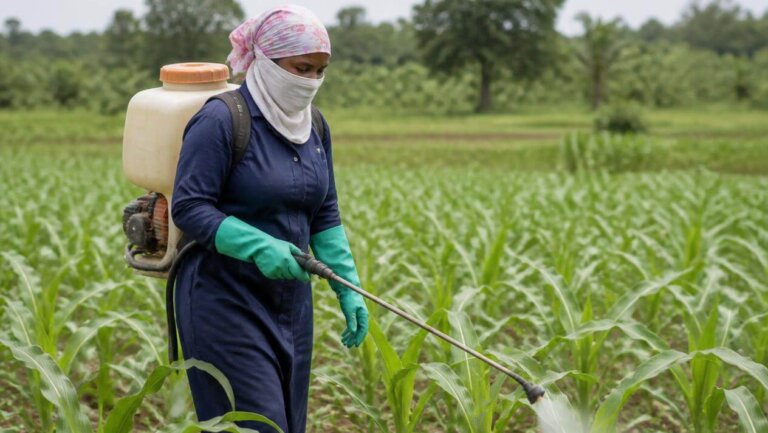
No discussion about bees and agroecology can avoid one uncomfortable reality: synthetic pesticides are devastating pollinator populations. Chemical pesticides do not only target pests. They also harm beneficial insects, contaminate forage, weaken colonies, disrupt pollination, and damage broader biodiversity. For agroecological farmers, protecting bees means committing to ecological pest management strategies.
Neem extracts, fermented plant solutions, ash barriers, companion planting, trap cropping, crop rotation, and biodiversity based pest control methods all help reduce pest pressure without poisoning pollinators. Protecting bees is not separate from protecting soil, food, water, or human health. These are all connected systems.
Beekeeping as a livelihood opportunity
For many farming households, especially women beekeeping is also a powerful economic opportunity. Honey, beeswax, propolis, pollen, and other bee products command relatively high market value compared to their weight and production costs. Unlike many agricultural enterprises, beekeeping requires little land and can be integrated into existing farming systems without competing heavily for space. Across multiple agroecology initiatives in Africa, women have consistently emerged as some of the strongest and most committed beekeepers.
Beekeeping is accessible. It does not require heavy land preparation or large land ownership. It can be started gradually and expanded over time. Products can be sold raw or processed into value added goods such as candles, soaps, skin care products, and lip balms. In fact, many farmers are already demonstrating this innovation locally. Organic lip balms, beeswax products, and natural skin care items are increasingly finding markets among consumers looking for healthier and environmentally responsible alternatives. Beekeeping is not only ecological work. It is economic empowerment.
The partnership we cannot afford to lose
World Bee Day is more than a symbolic date on the calendar. It is a reminder that food systems depend on relationships: between soil and microorganisms, crops and pollinators, farmers and ecosystems. Bees are part of that living partnership. The question is whether modern agriculture will continue destroying the very organisms that sustain it, or whether more farmers will choose a different path. Agroecology offers that alternative. It asks farmers to observe nature carefully, reduce dependence on harmful external inputs, rebuild biodiversity, and create systems where productivity comes from ecological balance rather than chemical intensity. Bees fit naturally within that vision because they reward healthy ecosystems and expose unhealthy ones.
For farmers beginning their agroecological journey, starting a hive may seem like a small act, but it is not small. It is a commitment to partnership with nature. A decision to rebuild ecological relationships. A practical step toward healthier farms, stronger biodiversity, diversified income, and more resilient food systems.
The partnership between people and pollinators is not seasonal. It is the quiet, daily work of farmers choosing to farm with nature rather than against it and that is exactly the partnership World Bee Day 2026 asks us to protect.
HAPPY WORLD BEE DAY!

Author: Hepzibah Ebe
Experienced and results-driven Communications expert with over nine (9) years of expertise in developing and executing effective communication strategies, including more than two (2) years of specialization in agroecology