
On farms, in forests, and even in small backyard gardens, bees are quietly doing one of the most powerful jobs on Earth: pollination. Without them, food systems would collapse, biodiversity would shrink, and ecosystems would lose their balance.
Yet, these tiny creatures are facing big threats.
As we commemorate World Bee Day 2026, we are reminded that protecting bees is not just an environmental conversation, it is a survival conversation.
The Silent Workers Behind Our Food
Bees are responsible for pollinating a significant portion of the crops we depend on daily from fruits and vegetables to nuts and oilseeds. Without them, our plates would look very different.

But beyond food, bees also sustain:
- Biodiversity in natural ecosystems
- Soil regeneration cycles through healthy plant reproduction
- Rural livelihoods that depend on pollinator-friendly farming
In short, no bees, no food security.
A Pollinator in Crisis
Despite their importance, bees are under pressure like never before.
Across many landscapes, their survival is threatened by:
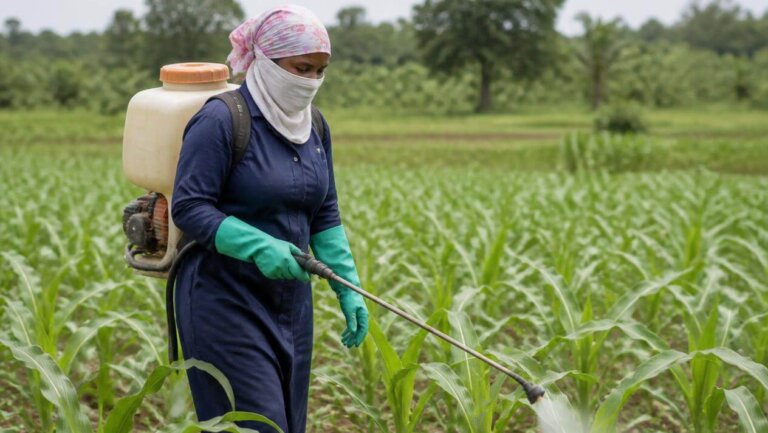
- Excessive use of chemical pesticides
- Habitat loss due to land-use change
- Climate variability affecting flowering seasons
- Monocropping systems that reduce floral diversity
The result is a quiet but dangerous decline, one that often goes unnoticed until yields start to drop.
Agroecology: A Pathway Back to Balance
The good news is that solutions already exist and they are rooted in nature.

Agroecological and sustainable farming systems offer a way forward by:
- Reducing harmful chemical inputs
- Promoting crop diversity and intercropping systems
- Supporting flowering plants and natural habitats for pollinators
- Encouraging organic pest management practices
These approaches don’t just protect bees , they strengthen entire farming systems.
From Awareness to Action: World Bee Day 2026 in Focus
This year’s World Bee Day commemoration is more than a symbolic event. It is a call to action.

Across communities, farmers, youth groups, and agricultural partners are coming together to:
- Raise awareness on pollinator protection
- Showcase agroecological practices that support bees
- Share knowledge on sustainable farming systems
- Strengthen partnerships for biodiversity conservation
At Mama Ngina Waterfront in Mombasa, the commemoration (17–20 May 2026) brings together voices committed to building food systems that work with nature, not against it.
Why This Matters Now
Protecting bees is not just about conservation.

- Food on our tables
- Income for farmers
- Climate resilience
- The future of agriculture in Africa and beyond
Every action counts from the farmer reducing pesticide use, to the consumer supporting sustainably produced food.
Two key knowledge resources help deepen understanding of sustainable beekeeping and pollinator-friendly systems:
Biological Beekeeping and Emerging Standards
 As the world moves toward more sustainable food systems, biological beekeeping aligned with evolving European standards offers important lessons for global apiculture.
This approach emphasizes:
- Reduced chemical intervention in hive management
- Strengthening natural bee health systems
- Aligning production with ecological principles and market standards
Reference: https://kcoa-africa.org/wp-content/uploads/2023/07/Abeille-Revue-N%C2%B037.pdf
This is especially relevant for African beekeeping systems seeking to balance productivity with ecological integrity and emerging export market requirements.
Valorisation of Bee Hive Products and Pollinator Ecosystems
Looking ahead to World Bee Day 2027, the focus expands beyond honey production to the broader value of the hive.
 The knowledge product on “Valorisation des sous-produits de la ruche” highlights:
- The importance of promoting bee-friendly plants and habitats
- Sustainable use and value addition of hive products (wax, propolis, pollen, royal jelly)
- Strengthening apiculture as a diversified livelihood system
- Enhancing ecosystem services through pollinator conservation
Read more: https://kcoa-africa.org/wp-content/uploads/2024/09/Valorisation-des-sous-produits-de-la-ruche.pdf
This knowledge reinforces a key message: beekeeping is not just about honey, it is about ecosystem resilience, income diversification, and biodiversity protection.
How This Strengthens the World Bee Day Message

By integrating these knowledge resources into practice, we move from awareness to action ensuring that:
- Farmers adopt pollinator-friendly systems
- Beekeeping becomes more sustainable and market-oriented
- Ecosystems are protected through informed agricultural practices
A Final Thought
Bees may be small, but their impact is enormous.
As we mark World Bee Day 2026, the question is not whether bees matter, it is whether we are doing enough to protect what protects us.

Because when bees thrive, life thrives.


Disclaimer:
– To learn about the KCOA Project: https://kcoa-africa.org/
– To learn about the KHEA Project: https://khea-africa.org/
– For more details on this article, please reach out to pmagino@biovisionafrica.org
– See the license statement of all KCOA content: https://kcoa-africa.org/license-statement/ , which applies to all content from hubs implementing the KCOA project.

Author: Pamella Magino
Ms. Magino Pamella joined PELUM Uganda on 1st Oct 2021 as Communications Officer for the KCOA-KHEA project. With 9+ years in Communications and Marketing, she specializes in Public Relations, Business Development, and Marketing. Pamella holds a Bachelor’s in Mass Communication (Public Relations) and is a Certified Member of PRAU. She has worked with organizations like The Nile Basin Initiative and Victoria University Kampala, crafting strategies that drive positive change




































2 Responses
Dear Pamella, What a powerful and necessary piece. The framing of bees as a “survival conversation” rather than just an environmental one is exactly the kind of reframing that cuts through to farmers and policymakers alike. The section connecting agroecology as a pathway back to balance is particularly well done; it doesn’t just diagnose the crisis, it points to the exit.
The inclusion of the two KCOA knowledge resources (biological beekeeping standards and hive product valorisation) gives readers something concrete to act on, which is what good multiplier content should always do. The Mombasa commemoration grounding also gives the piece a real sense of place and momentum.
Thank you for this; it sets a strong tone for how we should be telling the bee story in 2026 and you have also inspired me, I’m off to write a piece on world bee day. Happy celebration to us all.
Dear Hepzibah,
Thank you so much for your thoughtful and encouraging feedback. I truly appreciate your reflections on the piece and I’m glad the framing resonated with you, especially positioning bees not just as an environmental issue, but as a broader survival and food systems conversation.
I’m also happy the agroecology angle and the inclusion of the KCOA knowledge resources added practical value to the story. It was important for the article to not only raise awareness, but also point readers toward actionable pathways and solutions.
Your words are deeply motivating, and I’m especially excited to hear that the piece has inspired you to write your own World Bee Day article. I look forward to reading it!
Happy World Bee Day celebrations to us all, and thank you once again for the support and encouragement.