Africa stands at a crossroads. With a rapidly growing population, changing food habits, and the pressures of climate change, the question of how to feed ourselves sustainably has never been more urgent.
For years, Genetically Modified Organisms (GMOs) have been presented as the answer. They are promoted as modern, scientific solutions capable of producing higher yields, resisting pests, and tackling hunger. But the reality is far more complex. Behind the promise of GMOs lie hidden costs that Africa’s farmers, consumers, and ecosystems cannot ignore.
On the other side is agroecology and organic farming not yet the mainstream approach, but one that aligns with Africa’s soils, traditions, and health needs. Agroecology is not simply “anti-GMO”; it is a comprehensive farming system rooted in diversity, independence, and ecological balance. While its adoption remains slow, it represents the pathway toward a healthier, more food-secure Africa.
The GMO Promise and Its Limits
At first glance, GMOs seem attractive. Seeds are engineered to withstand pests or tolerate herbicides. Some are designed to grow faster or survive harsh conditions. But these “solutions” often come with strings attached:
Seed dependency:– Farmers are not allowed to save or replant GMO seeds. Instead, they must purchase new seeds each season from multinational companies. This undermines seed sovereignty and increases production costs.
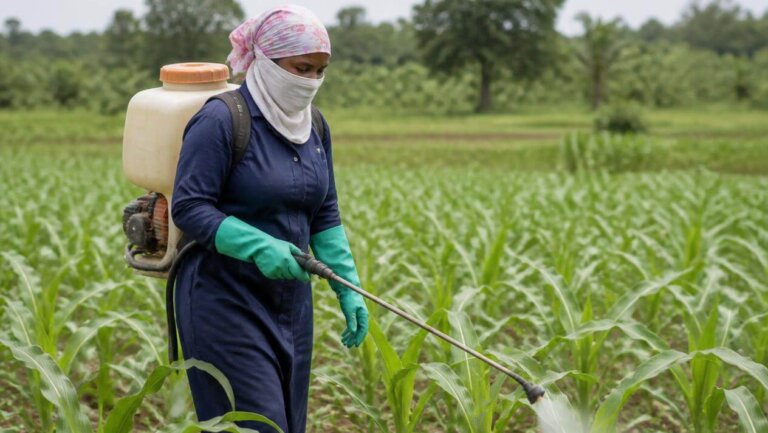
Chemical reliance:– Many GMO crops are paired with synthetic herbicides and pesticides. Farmers who adopt them often find themselves trapped in cycles of buying both seeds and chemicals, with rising costs and health risks.
Erosion of biodiversity:– GMO monocultures push aside indigenous African crops like sorghum, millet, cowpea, and cassava, weakening resilience and reducing dietary diversity.
Health and environment concerns:– Long-term effects of GMO foods are still debated, while the overuse of chemicals tied to GMO farming harms soil fertility, water sources, and farmer health.
In short, GMOs do not solve hunger at the root; they often deepen dependency and undermine resilience.
Agroecology: What Makes It Different
Agroecology offers a very different vision. It is not just about avoiding chemicals or GMOs but it is about redesigning farming systems based on ecological principles and traditional wisdom. It combines indigenous African practices with modern ecological science to build systems that are productive, sustainable, and people-centered.
Here is what sets agroecology apart:
1. Seed Sovereignty:– Farmers keep control of their seeds, saving, sharing, and improving local varieties adapted to their environments.
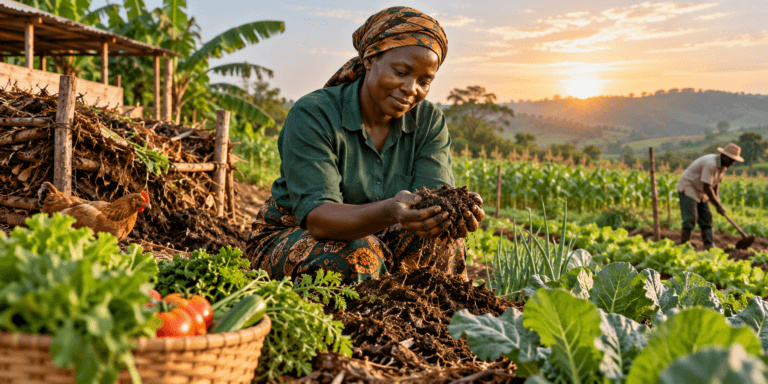
2. Diversity Over Monoculture:– Instead of single-crop farming, agroecology promotes intercropping, crop rotation, and integration of livestock. This strengthens resilience against pests and climate shocks.
3. Healthier Food:– By avoiding synthetic chemicals, agroecological foods are safer and often richer in nutrients, reducing risks of pesticide-related illnesses.
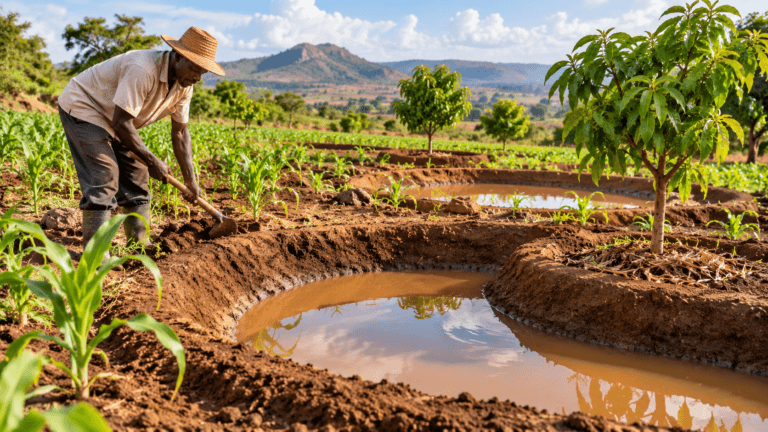
4. Climate Resilience:– Agroecological soils retain more water, store more carbon, and recover faster from droughts and floods.
5. Community Empowerment:– It restores dignity to farmers, creates local jobs, and strengthens community food systems.
Why Adoption Is Still Slow
Despite its promise, agroecology has not yet become the dominant choice across Africa. Several challenges stand in the way:
Policy gaps:– Governments often prioritize industrial farming models tied to GMOs and synthetic inputs, offering little support for agroecology.
Limited training:– Many farmers are unaware of agroecological practices or lack access to extension services and farmer-to-farmer learning networks.
Market pressures:– Modern markets reward high volumes of uniform crops, not diverse agroecological produce. Farmers may fear they won’t find buyers.
Perception issues:– Some see agroecology as “backward” or “subsistence-only,” failing to recognize its innovative and scientific aspects.
Yet, wherever agroecology is tried, its success is visible. In Senegal, farmer cooperatives reviving millet and sorghum have increased food security while resisting drought. In Uganda, school gardens based on agroecology are improving children’s nutrition. In Nigeria, youth-led initiatives are proving that agroecology can be both profitable and sustainable.
Moving From Margins to Mainstream
For agroecology to move from the margins to the mainstream, action is needed at multiple levels:
Governments must create supportive policies, invest in agroecological research, and redirect subsidies away from chemical inputs.
Farmers’ groups and cooperatives should promote farmer-to-farmer training, ensuring local knowledge is shared widely.
Consumers need to understand the health and cultural value of agroecological foods, creating demand in markets.
Youth and women must be empowered as leaders in agroecology, bringing energy, innovation, and inclusivity to the movement.
Africa has the potential to lead the world in showing that healthy, climate-resilient farming is possible but only if agroecology is scaled up and supported.
- Conclusion
The choice between GMOs and agroecology is about more than farming. GMOs may look like a quick fix, but they come with long-term costs that Africa cannot afford. Agroecology, though not yet mainstream, offers a different path: one that empowers farmers, nourishes communities, and protects the land.
Africa’s future food system will depend on the choices we make today. Will we walk a path of dependency on imported seeds and chemicals, or will we choose sovereignty, resilience, and health through agroecology?
The answer is clear. Agroecology may not yet be the dominant choice, but it is the
right choice for Africa’s future.

Author: Olusola Oludayo Sunday
Sunday Olusola Oludayo is an agriculture extensionist, health practitioner, and passionate advocate of organic and sustainable farming. She promotes agroecology as a pathway to healthier communities and resilient food systems. Through her work, she blends practical agricultural knowledge with health awareness to inspire positive change across Africa