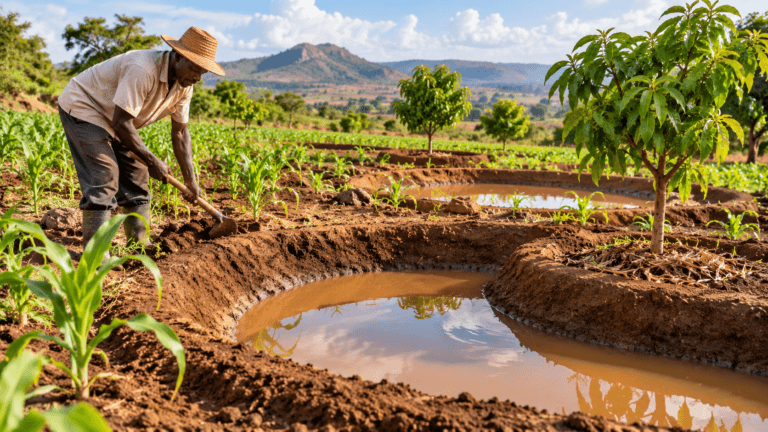
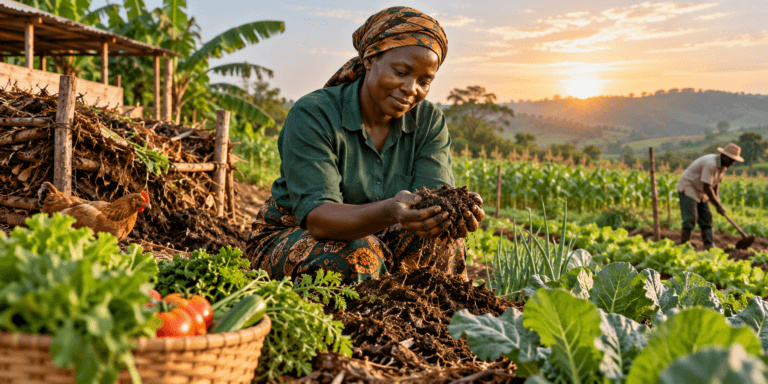
As the world contends with the challenges of climate change, environmental degradation, and food security, organic agriculture has emerged as a vital practice that can help mitigate these issues. Nigeria’s agricultural sector is crucial for food production, economic stability, and livelihoods. Organic agriculture, a farming system that avoids the use of synthetic fertilizers, pesticides, and genetically modified organisms (GMOs), instead relying on natural methods to control pests and diseases and improve soil health have proved to be of numerous benefits.
These benefits includes;
- Environmental Protection: Organic agriculture promotes environmental stewardship by reducing pollution, conserving water, and protecting biodiversity. Organic farms tend to have healthier soil, which absorbs more carbon dioxide and reduces greenhouse gas emissions.
- Improved Food Quality: Organic produce is free from synthetic pesticides, herbicides, and fertilizers, making it a healthier option for consumers. Organic farming also tends to promote more nutritious food, as crops are grown in well-balanced soil.
- Increased Crop Yields: Organic farming methods like crop rotation, composting, and cover cropping can improve soil fertility, leading to increased crop yields and reduced soil erosion.
- Supports Biodiversity: Organic agriculture promotes biodiversity by maintaining ecological balance, protecting beneficial insects, and conserving water.
- Economic Benefits: Organic farming can be more profitable than conventional farming, as organic produce often commands a higher price in the market.
The continuous practice of conventional farming methods in Nigeria have led to environmental degradation, soil erosion, and reduced crop yields. To address these challenges, organic agricultural practices offer a sustainable solution. Scaling up these practices requires effective digital communication strategies to reach and engage farmers, policymakers, and other stakeholders. Hence, the use of digital technologies in agriculture has the potential to transform the Agricultural sector by increasing efficiency, productivity, and profitability. In Nigeria, digital communication strategies can play a critical role in scaling up organic agricultural practices by providing farmers with access to information, training, and markets.
Some Digital Communication Strategies for Scaling up Organic Agricultural Practices in Nigeria Includes;
- Mobile-Based Extension Services for Organic Farming: Mobile phones have become ubiquitous in Nigeria, with over 180 million subscribers (NCC, 2022). Mobile-based extension services can provide farmers with access to: Organic farming practices such as information on best practices, case studies, and research findings; soil conservation and management such as tips on soil testing, conservation, and management and; integrated pest management such as advice on natural pest control methods and integrated pest management.
- Online Platforms and Websites for Organic Agriculture: Online platforms and websites can provide a centralized hub for information, resources, and services. These platforms can: provide information on organic agricultural practices such as best practices, case studies, and research findings; offer online training and capacity building courses, webinars, and workshops on organic agriculture and; facilitate market access for organic produce such as online marketplaces, e-commerce platforms, and social media groups. Some examples of these online platforms and websites for scaling up organic agriculture includes; Association of Organic Agriculture Practitioners of Nigeria (NOAN) (https://noanigeria.net/ which is a key player in promoting organic agriculture and offers digital resources, including the KCOA (Knowledge Centre for Organic Agriculture) project, which houses a digital database of validated organic farming knowledge), IFOAM Organic Europe (https://www.organicseurope.bio/news/organic-farm-knowledge-free-online-knowledge-exchange-for-organic-food-farming/ whom through their Organic Farm Knowledge platform provides recent, relevant and tried solutions to farmers and advisors active in organic or wanting to make their practices more sustainable, AccessAgriculture (https://www.accessagriculture.org/ a non-profit organisation that supports organic farming and agroecology that provides global and local access to quality training videos in local languages) amongst others.
- Social Media for Promoting Organic Agriculture: Social media platforms, such as Facebook, Twitter, and Instagram, can be used to: disseminate information on organic agricultural practices, share updates, news, and best practices, engage with farmers and stakeholders, respond to questions, provide support, gather feedback, and promote organic agricultural practices by Sharing success stories, case studies, and research findings.
- Digital Payments and Financial Services for Organic Farmers: Digital payments and financial services can provide farmers with access to: Financial inclusion (such as Mobile money, online banking, and digital wallets); Insurance services (such as crop insurance, livestock insurance, and weather insurance); and credit facilities (such as digital credit platforms, online loans, and crowdfunding).
In general, the importance of digital communication strategies for scaling up organic agricultural practices includes:
- Increased adoption of organic agricultural practice: Digital communication strategies can increase awareness and adoption of organic agricultural practices.
- Improved productivity and efficiency: Digital communication strategies can provide farmers with access to information, training, and markets, improving productivity and efficiency.
- Enhanced market access: Digital communication strategies can facilitate market access for organic produce, improving the livelihoods of farmers.
- Scalability: Digital communication strategies can be scaled up to reach a large number of farmers. Hence, increasing the adoption of organic farming.
Notwithstanding the benefits of digital communication strategies in scaling up organic agriculture, some constraints still abounds which includes: limited access to digital technologies (as many farmers in Nigeria lack access to digital technologies, such as smartphones and computers); limited digital literacy (as many farmers in Nigeria especially those in rural areas lack the digital literacy skills needed to effectively use digital communication strategies); and limited internet connectivity (as many rural areas in Nigeria lack reliable internet connectivity).
In conclusion, digital communication strategies have the potential to transform the agricultural sector in Nigeria by increasing the adoption of organic agricultural practices. Therefore, by taking advantages of mobile-based extension services, online platforms and websites, social media, and digital payments and financial services, individuals, groups or government can scale up organic agricultural practices and promote sustainable agriculture.
Its therefore recommended that individuals, groups, government and non-governmental bodies should: invest in digital infrastructure, such as internet connectivity and digital payment systems; provide and motivate farmers, extension agents, and other stakeholders; access trainings and capacity building programmes in organic agriculture; and promote digital literacy among farmers and other stakeholders.