In the Sahel, climate change is exacerbating the threat of desertification to farmers. Regenerating the soil is crucial, but organic matter is scarce, particularly during the dry season when livestock compete for every scrap of vegetation. Yet nature offers a captivating solution. Even in the harshest of soils, hardy local shrubs flourish. Meet a farmer who is using these underrated plants to restore her land and boost her harvests.
You are currently viewing a placeholder content from YouTube. To access the actual content, click the button below. Please note that doing so will share data with third-party providers.
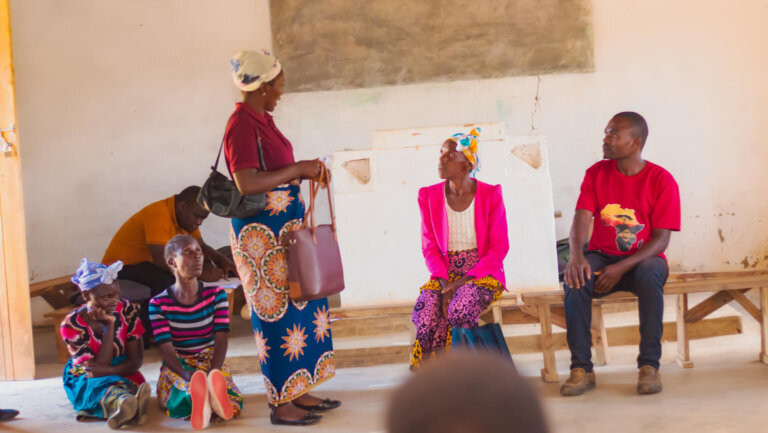
Sokhna Faye draws our attention during the workshop discussions by sharing interesting observations from her village. She trained 10 farmers in composting, and they all saw increased yields. So, what is her recipe for success? We don’t have to wait long, as she invites us to her farm.
At the heart of her success lies a local and resilient shrub called Guiera. “Guiera grows naturally and is highly beneficial for farmers, providing forage during the dry season when food is scarce for animals,” she explains. She continues to describe various ways Guiera can be utilized to improve soil quality.
What she describes is a complex and holistic approach that doesn’t focus on just one practice – such as mulching or composting – but rather combines several techniques based on resources that are easily accessible, like the resilient shrub Guiera. The combination of both rapidly and slowly decomposing materials also proves beneficial, as Sokhna Faye highlights. Moreover, the existence of the shrub itself provides numerous advantages to soil and crops.
Dr. Hassna Founoune shares some research results from ISRA, noting that the proximity to Guiera suppresses weeds, enhances the quality of millet grains, and increases soil activity. Dr. Moussa Gnissien, who conducted research in Burkina Faso, adds that there are other local shrubs, such as Piliostigma, which also offer many benefits integrated in fields. Dr. Hassna Founoune comments that through participatory trials, farmers were encouraged to use shrubs whichever grew well in their area for composting and mulching and observed beneficial effects on yields and soil.
This opens up a rich and untapped source of valuable biomass that can transform poor soils into healthy, nutrient-rich soils filled with beneficial soil life. This transformation can increase resilience to climate change, conserve precious rainwater, and boost yields.
Below the bare soil a web of roots from local shrubs acts like an underground forest—a potential dryland forest waiting to be awakened. This is what farmers achieve through assisted natural regeneration. They have successfully encouraged the growth of emerging seedlings not only from Guiera but also the highly useful tree Faidherbia. Fortunately, we have the opportunity to visit farmers from who are successfully regenerating these shrubs and trees and produced a video for you.
Stay tuned and sign up for our YouTube channel so you don’t miss the video when we upload it!
Video: Sokhna Faye showing multiple ways to use Guiera
In French with English subtitles:
You are currently viewing a placeholder content from YouTube. To access the actual content, click the button below. Please note that doing so will share data with third-party providers.
Find the video on Guiera in Wolof here:
You are currently viewing a placeholder content from YouTube. To access the actual content, click the button below. Please note that doing so will share data with third-party providers.

Author: Lilian Beck
Through videos and creative outreach materials, Lilian shares the transdisciplinary knowledge of the Sustain Sahel project on agroforestry with the wider community. Lilian has been facilitating co-creation processes in Agroecology for more than seven years, mostly in Cambodia, living there for 5years as well as collaborating with stakeholders on the African continent and in Central Asia with organizations such as CIAT, FAO, CIFOR-ICRAF, Uni Kassel, and Uni Hohenheim. She holds an MSc in Agroecology and is currently conducting her Ph.D. on agroforestry dissemination in Cambodia