Across Southern Africa, a new reality is setting in. Unpredictable droughts, devastating floods and extreme heat threaten the very foundation of our food systems. Yet, amidst these challenges, a hopeful solution is taking root, agroecology. More than just an alternative method, it is a climate-smart strategy that builds resilience, restores land and secures livelihoods.
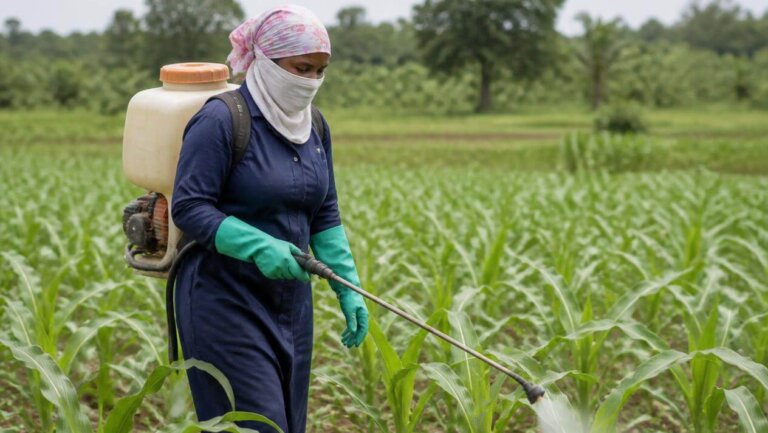
This vision is already alive in Zambia’s Choma district, 300 kilometres from Lusaka, where Jennipher, a smallholder farmer, is proving what agroecology can do.
Trained by PELUM Zambia and the Knowledge Hub for Organic Agriculture and Agroecology in Southern Africa (KHSA), Jennipher learned how to make bokashi, an organic fertiliser that improves soil health and retains moisture.
“For me, the most important lesson during the training was on how to make bokashi because I had struggled with sourcing fertilisers due to their high cost,” she said.
Within two weeks, she had produced her own, used it on her seedlings and vegetables, and the results were striking: stronger plants, disease-free crops and less need for water, even under Zambia’s harsh weather conditions.
Jennipher didn’t stop there. She invited her neighbours to learn, shared her knowledge, and began selling bokashi at K50 ($1.80) per 25kg bag. “I was very surprised at how much money I kept making from the bokashi sales. I was able to meet most of my daily needs,” she explained.
Demand grew quickly, proving not only that bokashi lowers farming costs, but also that it boosts community resilience by improving soil fertility and reducing dependence on expensive chemical inputs and building climate resilience.
Her story echoes the broader findings of the Agroecological & Ecological Multi-Ministerial 2024 Policy Briefing Pack, which shows that agroecology strengthens climate resilience, captures carbon, conserves water and reduces reliance on fossil fuel-based fertilisers. It is a win for both farmers’ livelihoods and the planet.
Jennipher’s journey is a clear example of how agroecology is more than theory, it is a practical, profitable and climate-smart pathway that smallholder farmers can use to thrive in the face of climate change.
Download the Agroecological & Ecological Multi-Ministerial 2024 Policy Briefing Pack for more insights.


Author: Rabecca Mwila
Rabecca Mwila is a passionate advocate for sustainable agriculture and environmental stewardship. With a background in climate change and communications, she has spent years telling the untold stories of the realities of climate change, environmental and climate injustices and how they affect vulnerable communities in Africa and beyond