The Language Barrier Holding Back Your Farm
Picture this: You are at a farming workshop and the speaker mentions “vermiculture,” “green manure,” and “regenerative agriculture” in rapid succession. Everyone nods knowingly, but you are left wondering if these are just fancy buzzwords or actual techniques that could transform your farm.
Many successful farmers struggle with agricultural terminology that seems designed to confuse rather than clarify. Nevertheless, here’s the truth: behind every soil science term lies a practical technique that could transform your farming results.
The Cost of Confusion
When farmers do not understand soil terminology, they make costly mistakes:
- Spending money on expensive fertilisers when simple composting could achieve better results
- Missing opportunities to build long-term soil fertility
- Failing to implement climate-resilient farming practices
- Following advice without understanding why certain methods work
The agricultural world is full of technical terms, but the farmers who translate this language gain a significant advantage in productivity, cost savings and environmental sustainability.
Translating the Soil Success Language
Let us break down the most important soil terms every farmer should know and understand how they can transform your farm:
1. Soil Fertility: Your Farm’s Bank Account
What it means: The soil’s ability to provide plants with essential nutrients when they need them.
Beyond the buzzword: Think of soil fertility as your farm’s savings account. Just like money in the bank, fertile soil provides resources when crops need them most.
Practical application:
- Test your soil to understand current fertility levels
- Build fertility through organic matter additions
- Monitor plant performance to gauge fertility success
2. Compost vs. Mulch: Understanding the Difference
Many farmers use these terms interchangeably, but they serve different purposes:
Compost:
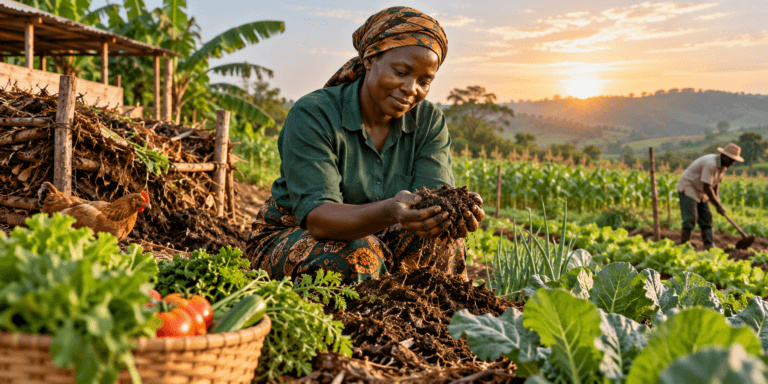
- Decomposed organic matter made from farm waste, food scraps, leaves and manure that feeds soil life
- Applied to soil and worked in
- Primary benefit: Nutrient supply and soil structure improvement
Mulch:
- Fresh or partially decomposed materials (dry grass, crop residue, leaves) placed on the soil surface
- Left on top of soil
- Primary benefits: Moisture retention, weed suppression, temperature control
Smart strategy: Use both! Compost feeds your soil, mulch protects it.
3. Organic Matter: The Soil’s Life Force
What it means: All living and dead plant and animal materials in soil.
Why it matters:
- Improves water retention by up to 20%
- Increases nutrient availability
- Enhances soil structure
- Feeds beneficial microorganisms
How to increase it:
- Add crop residues to soil
- Practice cover cropping
- Apply compost regularly
- Reduce tillage
4. Green Manure: Crops That Work While You Rest
Simple definition: Plants grown specifically to be incorporated into soil for fertility improvement.
Practical benefits:
- Fixes nitrogen (if using legumes)
- Adds organic matter
- Breaks disease cycles
- Improves soil structure
5. Vermiculture: Earthworms as Farm Workers
What it means: Using earthworms to convert organic waste into high-quality fertiliser.
Why it works:
- Earthworms produce nutrient-rich castings
- Process occurs year-round
- Requires minimal space and investment
- Creates valuable soil amendment
Getting started:
- Use local earthworm species
- Feed kitchen scraps and farm waste
- Maintain proper moisture
- Harvest castings after 3-4 months
6. Regenerative Agriculture: Farming That Heals
Beyond the buzzword: Farming practices that rebuild soil health, increase biodiversity and enhance the land’s resilience.
Core principles:
- Minimise soil disturbance
- Maximise crop diversity
- Keep living roots in soil year-round
- Integrate livestock thoughtfully
- Cover soil surface
Climate tolerance benefits:
- Better drought tolerance
- Improved flood resistance
- Enhanced carbon storage
- Reduced input dependency
Transform Your Farm Through Understanding
When you understand soil terminology, you gain:
- Confidence in making farming decisions
- Ability to evaluate new techniques critically
- Skills to communicate effectively with extension officers
- Knowledge to adapt practices to your specific conditions
The Bigger Picture: Soil is the Foundation of Food Security
In Southern Africa, improving soil is not just about farming; it’s about climate resilience, youth employment, and local food systems. By learning how your soil works and applying natural, affordable practices, you become a soil steward, helping both your farm and your community thrive.

Author: Rabecca Mwila
Rabecca Mwila is a passionate advocate for sustainable agriculture and environmental stewardship. With a background in climate change and communications, she has spent years telling the untold stories of the realities of climate change, environmental and climate injustices and how they affect vulnerable communities in Africa and beyond