Confused by farming terms? You are not alone.
If you are a new or aspiring farmer in Southern Africa, you probably heard people talk about things like agroecology, green manure, vermiculture, or Participatory Guarantee Systems (PGS). And maybe you’ve asked yourself:
“What do these terms mean and how do they apply to my farm?”
The world of sustainable and organic farming is full of unfamiliar words that can feel overwhelming. Do not worry, we are here to simplify it for you.
Know the terms, grow your farm
Understanding the language of farming is your first step toward success. Whether you are growing vegetables, raising livestock or planning your first compost pile, these terms will help you:
- Make better farming decisions
- Access the right training and support
- Apply for certification and grants
- Improve your soil, yields and income sustainably
Let us unpack some of the most important words every new organic farmer in Southern Africa should know, taken from the KCOA Africa Food and Farming Systems Jargon Dictionary.
10 Key Organic Farming Terms – Simplified
1. Agroecology
A way of farming that works with nature, not against it. It combines traditional knowledge, local ecosystems, and scientific methods to build a sustainable, diverse, and climate-resilient farm system.
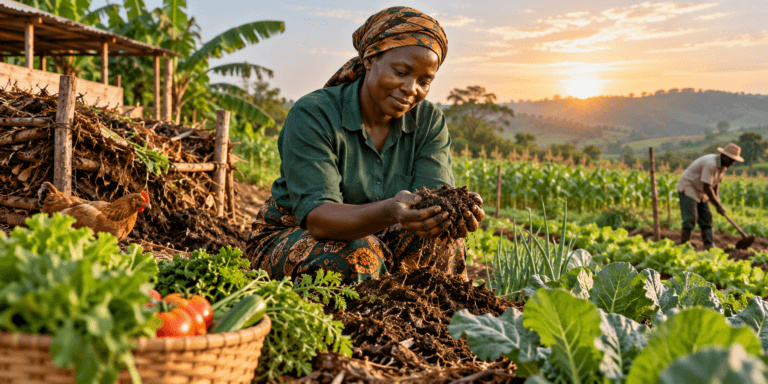
2. Compost
A natural fertiliser made from decomposed organic matter, like food scraps, manure, and crop waste. Compost feeds the soil, making it rich in nutrients without the need for chemicals.
3. Green Manure
These are legume crops like cowpeas or sunn hemp planted and then ploughed back into the soil to increase fertility and organic matter. They help the soil hold water and nutrients, and fix nitrogen naturally.
4. Mulch
A layer of organic material (dry grass, leaves, crop residue) is placed on top of the soil. Mulching keeps moisture in, blocks weeds, and protects soil from erosion.
5. Vermiculture
This means using earthworms to break down organic matter into nutrient-rich fertiliser (vermicompost). Worms boost soil life, help roots grow better, and make your compost even more powerful.
6. Organic Farming
Farming without synthetic chemicals, pesticides, or GMOs. Organic farmers use natural methods to improve soil, control pests, and grow healthy, chemical-free food.
7. Participatory Guarantee System (PGS)
A low-cost organic certification system where farmers inspect each other’s farms and follow shared standards. It’s ideal for smallholder farmers selling in local markets.
8. Soil Structure
Refers to how soil particles stick together. Good structure means better root growth, air flow, and water storage. Compost, mulch, and minimum tillage all improve it.
9. Agrobiodiversity
The variety of crops, animals, insects, and microbes on your farm. More diversity = fewer pests, better soil, and stronger resilience to droughts and disease.
10. Climate-Smart Agriculture
Farming that adapts to climate change, reduces emissions, and improves productivity. It includes crop rotation, water conservation, agroforestry, and planting local, drought-tolerant crops.
BONUS: Don’t stop at these 10!
There are over 100 farming and food system terms explained in plain language in the KCOA Africa Jargon Dictionary, from “cover crops” to “food sovereignty.”
Download the Jargon Dictionary from the link below.

Author: Rabecca Mwila
Rabecca Mwila is a passionate advocate for sustainable agriculture and environmental stewardship. With a background in climate change and communications, she has spent years telling the untold stories of the realities of climate change, environmental and climate injustices and how they affect vulnerable communities in Africa and beyond