The future of Africa’s food systems will not be shaped by one technology, one institution or one approach to agriculture. It will depend on how well the continent can bring together science, indigenous knowledge, farmers’ experiences, innovation, policy and partnerships to build food systems that are productive, resilient and sustainable.
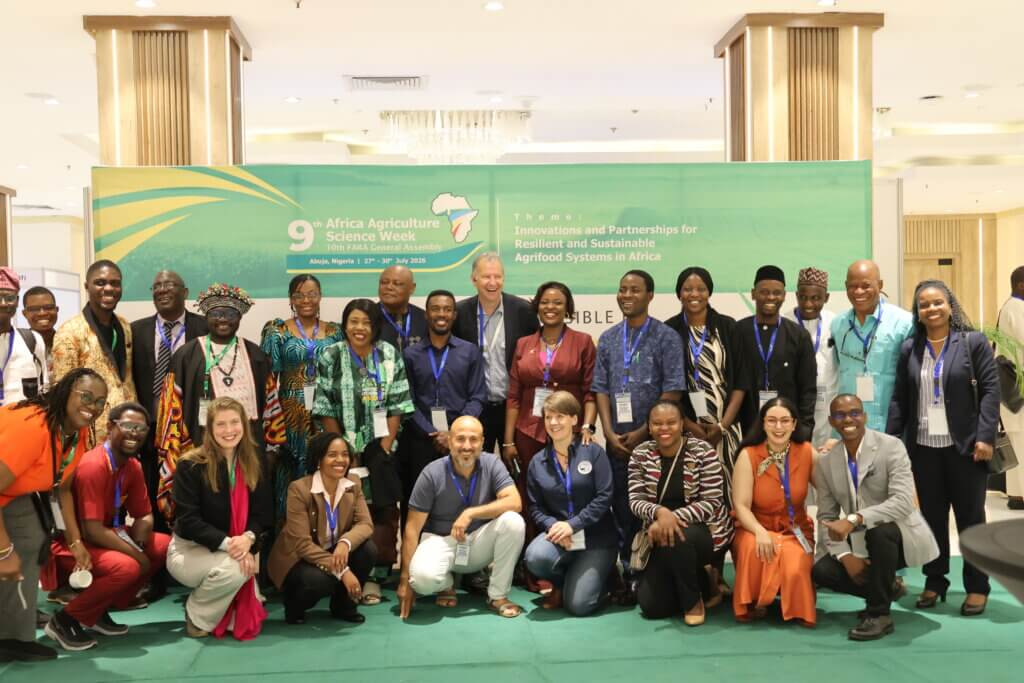
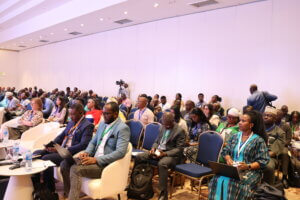
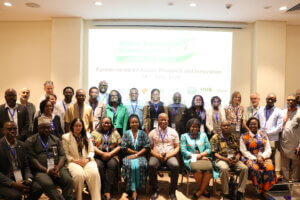
This was one of the key reflections from the 9th Africa Agriculture Science Week (AASW9) and 10th FARA General Assembly, held in Abuja from 27 to 30 July 2026 under the theme, “Innovations and Partnerships for Resilient and Sustainable Agrifood Systems in Africa.” The four-day continental gathering brought together researchers, policymakers, farmers’ organisations, development partners, private-sector actors, universities, youth, civil society and other stakeholders working across Africa’s agrifood systems.
For the Knowledge Centre for Organic Agriculture and Agroecology in Africa (KCOA), participation in AASW9 was an opportunity to contribute to these conversations while strengthening relationships and positioning organic agriculture and agroecology within broader discussions on Africa’s agricultural transformation.
Keeping Agroecology in the Agricultural Transformation Conversation
AASW9 showcased the breadth of approaches currently being considered to transform agriculture in Africa. From agricultural technologies and improved seed systems to fertilisers, biotechnology, climate-smart approaches and other innovations, the discussions reflected the complexity of the continent’s food and agricultural challenges.
For organisations working to advance agroecology and organic agriculture, this reinforces the importance of remaining actively engaged in mainstream agricultural platforms.
Agroecology is not a conversation that should happen separately from Africa’s wider agricultural transformation agenda. Questions around climate resilience, soil health, biodiversity, sustainable production, food security, farmer livelihoods and healthy diets are all connected. Ensuring that agroecological approaches, scientific evidence and farmers’ knowledge are represented in these conversations is therefore critical.
The challenge is not simply to promote agroecology, but to ensure that decision-makers, researchers, development partners and practitioners have access to credible evidence and practical knowledge that can inform choices about the future of African food systems.
From Research to Knowledge, and from Knowledge to Action
Another important lesson from AASW9 was the need to strengthen the relationship between agricultural research and the people who ultimately use that knowledge.
Africa has no shortage of agricultural research. Universities, research institutions, farmers and practitioners continue to generate valuable knowledge and innovations. The challenge is often what happens next.
How is research communicated beyond academic circles? How does a farmer access information that can help address a practical challenge? How does a policymaker find evidence relevant to a policy decision? How do development organisations identify approaches that can be adapted or scaled?
This is where knowledge management becomes more than documentation.
Effective agricultural knowledge management connects research, experience and evidence with the people and institutions that can use them. It involves documenting useful practices, translating technical information into accessible formats, creating opportunities for knowledge exchange and ensuring that relevant information can be found when it is needed.
This is central to KCOA’s work.
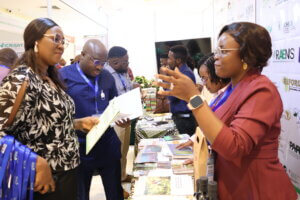
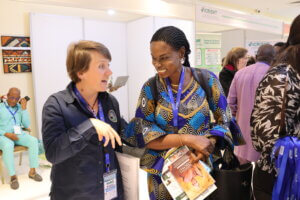
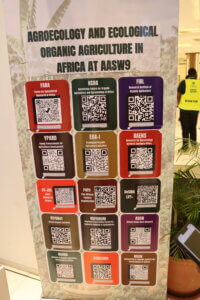
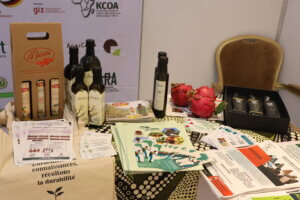
At AASW9, the Agroecology and Ecological Organic Agriculture in Africa (#AEOAinAfrica) exhibition booth provided an opportunity to showcase knowledge and experiences from across the continent. Scientific and indigenous knowledge videos produced by KCOA and consortium partners were displayed during the event, alongside factsheets, technical notes and other knowledge materials.
Approximately 80 knowledge products were distributed from KCOA, while new participants registered on KCOA’s digital platforms and others expressed interest in joining the network.
These interactions demonstrated an important point: people are not only looking for information. They are looking for relevant, accessible and practical knowledge that can help them make decisions, improve their work and connect with others.
Building Stronger Partnerships for Agroecology
Partnerships were at the heart of AASW9, and the event reinforced why collaboration is essential for advancing sustainable agrifood systems.
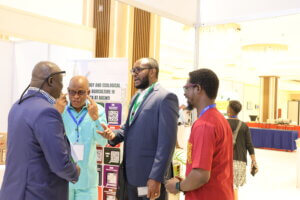
For KCOA, the exhibition and wider engagements created opportunities to connect with organisations working across research, education, policy and practice. Two Nigerian universities, in particular, expressed interest in collaborating with KCOA on research, knowledge sharing and capacity building in organic agriculture and agroecology.
These conversations are significant because universities and research institutions are important sources of agricultural knowledge, while knowledge platforms can help make that knowledge more accessible to a wider audience.
Stronger links between researchers, farmers, practitioners, universities, development organisations and knowledge platforms can help reduce the gap between what is known and what is being applied.
Partnerships therefore need to go beyond exchanging contacts at conferences. Their real value lies in what happens afterwards: joint research, knowledge exchange, capacity development, policy engagement and practical interventions that respond to the needs of farming communities.
Putting Farmers and Young People at the Centre
The transformation of Africa’s agrifood systems must also consider who is driving and benefiting from that transformation.
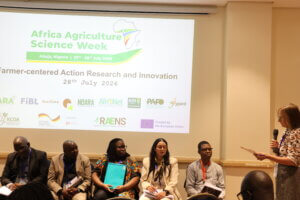
Farmers should not be viewed only as recipients of technologies or research findings. Their experiences, innovations and indigenous knowledge are valuable sources of evidence that can strengthen agricultural research and practice.
Farmer-centred research can help ensure that innovations respond to real challenges, including soil degradation, climate variability, access to markets, production costs and changing consumer demands. It can also create stronger feedback loops between research institutions and farming communities.
Young people are equally important to this conversation.
Africa’s youthful population presents an opportunity to rethink how young people participate in agriculture. Youth engagement should go beyond encouraging young people to become farmers. There are opportunities for young people as researchers, entrepreneurs, extension professionals, communicators, innovators, policymakers and leaders across the wider agrifood system.
Creating these opportunities will require intentional investment in skills, knowledge, networks, entrepreneurship and leadership.
Why Knowledge and Evidence Matter for Agroecology
One of the clearest lessons from AASW9 was that visibility matters.
For agroecology and organic agriculture to influence policy, research and investment decisions, there must be a strong and accessible evidence base. Experiences from farmers and practitioners need to be documented. Research findings need to be translated into usable knowledge. Innovations need to be shared in ways that allow others to learn from and adapt them.
This is particularly important as African countries work towards more resilient and sustainable agrifood systems.
The conversations at AASW9 showed that knowledge management is increasingly recognised as a strategic part of agricultural transformation. A related AASW9 session also highlighted efforts to reposition knowledge management as a driver of agricultural transformation rather than simply a function of documenting and disseminating information.
For KCOA, this reinforces the importance of continuing to build systems that connect knowledge with people, institutions and decisions.
Taking the Conversation Beyond AASW9
AASW9 was more than four days of presentations and discussions. For KCOA, it was an opportunity to listen, contribute, share knowledge and build relationships with actors shaping the future of African agriculture.
The experience reinforced several priorities: strengthening institutional partnerships, supporting farmer-centred research, creating meaningful opportunities for young people, improving agricultural knowledge management and ensuring that organic agriculture and agroecology remain visible within continental agricultural policy and research conversations.
Most importantly, the event reminded us that Africa already has significant knowledge to build on, from scientific research generated by institutions to indigenous knowledge developed and refined by farming communities.
The task ahead is to connect that knowledge.
Connect researchers with farmers. Connect evidence with policy. Connect innovation with practice. Connect institutions with communities. And connect the growing body of knowledge on agroecology and organic agriculture with the wider conversation about Africa’s agricultural transformation.
For KCOA, the work continues beyond AASW9: making relevant knowledge accessible, strengthening partnerships and contributing to a future where resilient and sustainable agrifood systems are informed by diverse forms of knowledge and grounded in the realities of African farming communities.

Author: Fidelis C. Ezegbogu
Fidelis is a passionate Agriculturist, Researcher, Project Manager and Data Analyst