Watch a woman shop at a market in Lagos, Abuja, or Dakar, and you will see food security explained in real time. She weighs the price of tomatoes against the cost of transport, chooses vegetables and other food items that will last several days, and decides what her household can afford. She does not need a report to tell her that food security is about more than whether food is available. It is about whether people can afford it, trust its quality, and access it consistently.
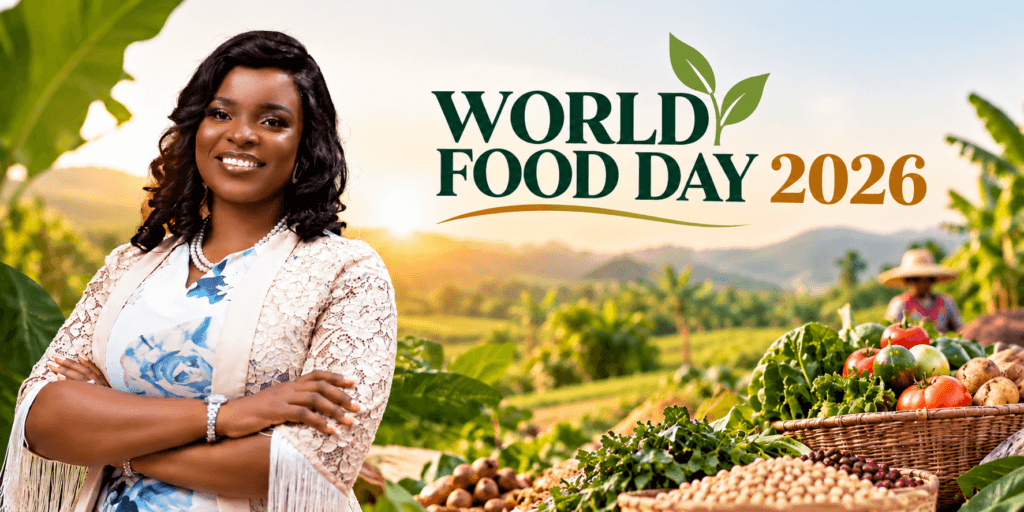
That question sits at the heart of World Food Day 2026, observed on 16 October. This year’s theme, “Innovate today. Nourish tomorrow,” highlights the importance of combining scientific innovation, traditional knowledge, and inclusive approaches to build food systems that nourish people while protecting the planet.
For Africa, some valuable innovations are already emerging from farmers’ fields and the knowledge they share. The challenge is to strengthen these solutions, make practical knowledge more accessible, and build food systems that can nourish people today and sustain future generations.
Food security is different from food supply
The State of Food Security and Nutrition in the World 2026 report highlights the high cost of healthy diets and the economic factors that limit access to nutritious food. Its estimates indicate that Africa’s hunger rate declined from 20.3 per cent in 2024 to 20.0 per cent in 2025, yet one in five Africans still experienced hunger. An estimated 56.6 per cent faced moderate or severe food insecurity, while 66.6 per cent could not afford a healthy diet.
Nigeria faces similar challenges. According to FAO’s September 2026 country brief, nearly 36.3 million people were estimated to face Crisis-level acute food insecurity or worse during the June to August 2026 lean season. The brief also highlighted elevated food inflation, high agricultural input costs, conflict-related disruptions, and dry spells affecting crops in parts of southwestern and central Nigeria.
These figures show why food security cannot be measured by harvest volumes alone. A farmer may produce a good harvest but struggle to reach a profitable market. A household may have food available nearby but lack the income to buy nutritious meals.
Building resilient food systems requires attention to the entire journey from production to consumption, including soil health, agricultural livelihoods, storage, processing, transport, and affordability.
Agroecology: Working with nature to grow food
Every meal begins with soil, water, and seed. When soil loses organic matter, its ability to retain moisture and support plant growth may decline. When farms depend on a narrow range of crops, farmers may become more vulnerable to pests, market fluctuations, and production losses.
Agroecology applies ecological principles to agriculture and food systems, recognising the relationships between soil, plants, water, biodiversity, farmers, and communities. Organic agriculture shares many of these sustainability goals but follows defined production standards that restrict synthetic fertilisers and pesticides. The two approaches overlap, but they are not identical.
In practice, agroecological approaches can include:
- Composting and mulching: Using suitable organic materials to improve soil structure, support fertility, and conserve moisture.
- Intercropping and crop rotation: Growing different crops, including cereals and legumes such as cowpea and groundnut, to diversify production and spread risk.
- Agroforestry: Integrating suitable trees into farmland to provide fruits, fodder, shade, and soil protection.
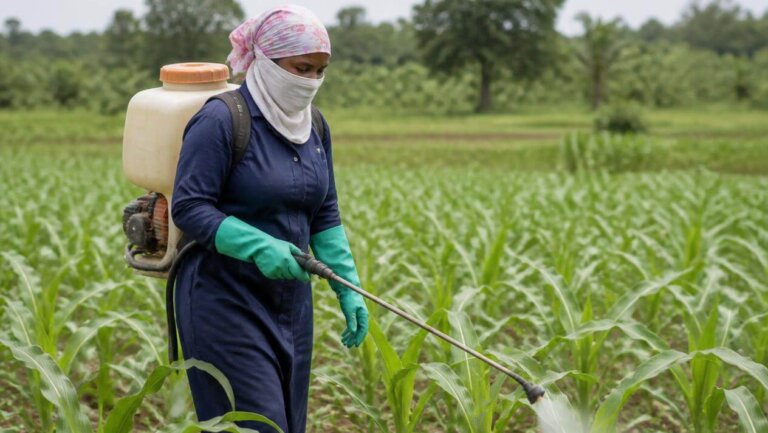
- Ecological pest management: Combining crop monitoring, field sanitation, crop diversity, and biological control to manage pests.
- Seed diversity: Conserving locally adapted varieties and indigenous vegetables such as ewedu, efo, and ugwu to support agricultural biodiversity and dietary diversity.
These practices can contribute to healthier soils and more resilient farming systems, although their effectiveness depends on local conditions, labour, resources, and management.
Evidence supports their potential. A 2021 review published in Global Food Security, examining 56 studies from low- and middle-income countries, found that 78 per cent reported positive outcomes for household food security and nutrition. The review also found that systems combining multiple agroecological practices were more likely to produce positive outcomes. Read the research review.
However, agroecology is not a guaranteed solution to every farming challenge. Composting requires labour and materials, agroforestry takes time to deliver some benefits, and market opportunities for organic produce vary. Farmers need practical guidance and the flexibility to adapt approaches to their circumstances.
Farmers need knowledge, resources, and markets
Across Africa, farmers hold valuable knowledge shaped by generations of experience with local soils, weather patterns, and crops. This knowledge can complement scientific research and help develop solutions suited to local conditions.
Yet good farming practices alone are not enough. Farmers also need access to land, finance, quality planting materials, extension services, storage facilities, processing equipment, and reliable markets.
Women contribute significantly to agricultural production, processing, and trading, while young agripreneurs bring new ideas and skills. However, both groups may face barriers to land, finance, training, and other productive resources.
Supporting sustainable agriculture therefore requires more than encouraging farmers to change their practices. Governments and development partners must strengthen extension services, invest in rural infrastructure, and support research that responds to farmers’ needs. Businesses and value-chain actors can help create fairer market relationships, reduce post-harvest losses, and strengthen connections between producers and consumers.
Consumers also have a role to play by reducing avoidable food waste, diversifying diets where possible, and supporting local producers when affordable and practical.
Innovation that reaches people
Innovation is not limited to new machinery or digital technology. It can also mean improving a traditional farming method, adapting research to local conditions, or finding a better way to share knowledge.
A farmer’s experience managing soil fertility, a researcher’s findings on crop production, or a community’s approach to conserving seeds can provide valuable lessons. Their impact, however, depends on whether the knowledge reaches the people who can use it.
This is where the Knowledge Centre for Organic Agriculture and Agroecology in Africa (KCOA) plays an important role. Through its five regional Knowledge Hubs, digital platform, knowledge products, and networks of knowledge multipliers, KCOA supports access to practical knowledge on organic agriculture and agroecology across Africa. Explore the KCOA platform.
Knowledge multipliers help extend the reach of useful information through training, farmer networks, advisory services, and community engagement. By connecting research, farmer experience, and locally relevant practices, knowledge-sharing helps agricultural actors learn from one another and make better-informed decisions.
For Africa’s food systems, innovation becomes more meaningful when knowledge is accessible, practical, and adapted to the realities of farming communities.
What can we do differently?
Building a sustainable food future requires collective action.
- Farmers and farmer organisations: Test locally appropriate practices on small plots, document results, and share lessons with other farmers.
- Extension workers and knowledge multipliers: Make information accessible in local languages and formats, while learning from farmers’ experiences.
- Consumers: Reduce food waste, plan purchases, and support local producers where possible.
- Researchers: Work with farmers to test solutions under real production conditions and document both successes and limitations.
- Policymakers and development partners: Strengthen extension services, invest in agricultural infrastructure, improve market access, and support inclusive agricultural innovation.
Each action contributes to food systems that support livelihoods, protect natural resources, and help communities access nutritious food.
Nourishing tomorrow begins today
World Food Day reminds us that the future of food is shaped by decisions made long before a meal reaches the table. How we manage soil and water, support farmers, protect biodiversity, and share knowledge will influence the resilience of our food systems for years to come.
Agroecology and organic agriculture offer important pathways towards this future, but their potential depends on practical knowledge, appropriate resources, supportive policies, and viable markets.
At KCOA, we recognise that knowledge is an essential part of this process. When useful agricultural knowledge reaches the people who need it, it becomes a resource for learning, innovation, and action.
This World Food Day, let us look beyond the food on our plates. Let us recognise the farmers who produce it, support the knowledge that strengthens their work, and promote agricultural practices that protect the foundations of future harvests.
Africa’s food future is growing in its farmers’ fields. What we learn, practise, and share today will help determine how we nourish tomorrow.
Explore practical resources on the KCOA platform, share useful knowledge with your networks, and help strengthen the connection between sustainable farming and food security.

Author: Hepzibah Ebe
Experienced and results-driven Communications expert with over nine (9) years of expertise in developing and executing effective communication strategies, including more than two (2) years of specialization in agroecology