Why Are Smallholder Farmers Stuck in a Cycle of High Costs and Low Returns?
Across Southern Africa, livestock farming is more than an income stream, it is a lifeline. From communal herds in Zambia to mixed smallholder plots in Malawi and South Africa, animals provide food, savings and cultural identity.
Yet, most smallholders face the same frustrating reality:
- Commercial feeds and veterinary inputs drain profits
- Middlemen capture the value while farmers sell live animals at rock-bottom prices
- Organic certification feels out of reach due to high audit costs and complex paperwork
- Climate shocks degrade pastures, making grazing unpredictable
Many assume that organic livestock production is only for large commercial farms in arid regions like Namibia. But what if the barrier is not capability or scale. It is knowledge, verificatio, and policy alignment?
The Hidden Cost of Ignoring What’s Already Working
Industrial livestock systems push farmers onto a costly circle: buy hybrid feed, apply synthetic treatments and sell to bulk buyers. Meanwhile, soil fertility declines, water cycles break down and market dependency grows.
As the Malawi Sustainable Food Systems Brief warns, industrial models prioritise yield at the expense of nutrition, environmental health and long-term farmer resilience. They trap smallholders in systems that are vulnerable to price volatility, climate shocks and corporate input dependency.
Yet, just across the border, Namibian farmers are accessing premium export and domestic markets by through practices they already use:
- Free-range grazing on natural veld
- Strict prohibition of growth hormones
- Highly regulated antibiotic use (only when necessary)
- Rotational grazing that prevents soil erosion
According to the KHSA Organic Meat Production in Namibia Factsheet:
“Namibian grass-fed beef production already complies with organic standards in many aspects; often just minor changes are needed to align existing production with organic principles.”
It is clear smallholders across Southern Africa are already farming close to organic standards, but without certification, verification, or policy support, they miss out on premium prices, market access and climate resilience.
5 Lessons Smallholders Can Adapt Today
You do not need vast rangelands or corporate backing to transition toward organic livestock production. Namibia’s model offers a practical, scalable model that smallholders can adapt using locally available tools and regional support networks.
Lesson 1: Recognise Your “Almost Organic” Advantage
Most smallholders already practice free-range grazing, avoid growth hormones and use antibiotics moderately. These are core organic standards. The first step is documentation: track grazing patterns, input use and animal health records. Small adjustments not overhauls are often all that is needed to meet certification thresholds.
Lesson 2: Cut Feed Costs with Organic Crop-Livestock Integration
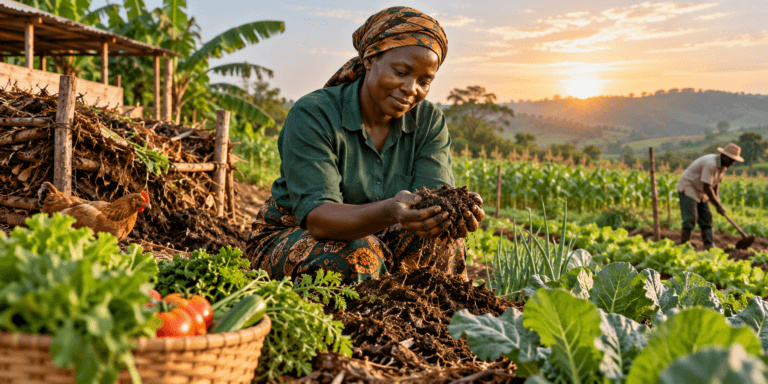
Commercial feed is a major expense. Instead, grow your own organic fodder using Fermented Liquid Bio-Fertilisers (FLBF) from the Kasisi Agricultural Training Centre (KATC). By applying cow dung, molasses, ash and yeast to fodder crops, you build nutrient-rich feed without synthetic inputs. This closes the nutrient loop and drastically reduces operational costs.
Lesson 3: Protect Feed Crops Naturally
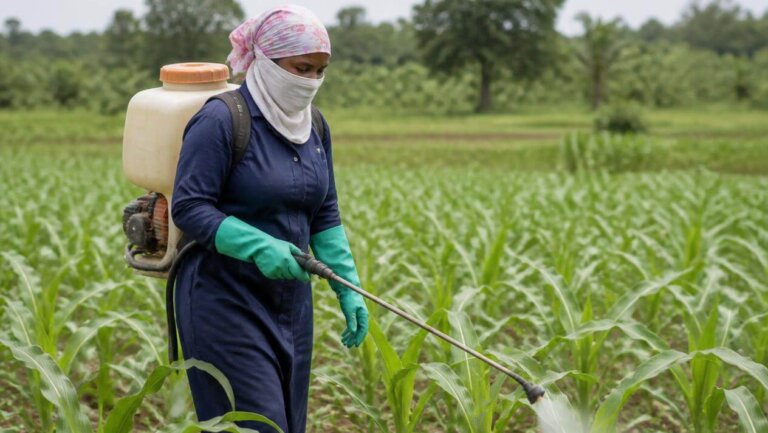
Organic standards prohibit synthetic pesticides. Use botanical sprays like mtetezga (Tephrosia vogelii) for legumes and chisoyo (Vernonia amygdalina) for maize, as tested by Soils, Food and Healthy Communities (SFHC) in Malawi. These plant-based sprays control fall armyworm, aphids and stalk borers safely, keeping feed crops chemical-free and livestock healthy.
Lesson 4: Certify Affordably for Local Markets
Third-party export certification can cost thousands. For domestic markets, use Participatory Guarantee Systems (PGS) a community-led, trust-based verification model endorsed by IFOAM and promoted across Southern Africa. As the PGS South Africa framework shows, farmer groups can verify each other’s practices, issue local organic labels and access premium retail buyers without expensive audits.
Lesson 5: Advocate for Integrated Policy Support
Organic livestock thrives when policies align across ministries. Zambia’s 2024 Multi-Ministerial Policy Briefing Pack highlights the need for:
- Redirecting subsidies like Farmer Input Support Programme (FISP) toward agroecological inputs
- Building rural processing and storage infrastructure
- Mainstreaming gender equity in livestock value chains
- Supporting climate-resilient grazing and early warning systems
When governments recognise and reward existing organic-aligned practices, smallholders scale faster and fairer.
A Proven Triple Win
Adapting Namibia’s lessons delivers exactly what the Malawi Sustainable Food Systems Brief calls a “triple win”:
- Economic: Higher margins through reduced input costs and premium market access.
- Environmental: Restored pastures, sequestered soil carbon and clean water cycles
- Social: Empowered farmers, safer food and resilient rural communities
Be Part of the Solution
The future of Southern Africa’s food system is in our hands.
Download Your Free Knowledge Product:
“Organic Meat Production in Namibia – KHSA Factsheet“

Author: Rabecca Mwila
Rabecca Mwila is a passionate advocate for sustainable agriculture and environmental stewardship. With a background in climate change and communications, she has spent years telling the untold stories of the realities of climate change, environmental and climate injustices and how they affect vulnerable communities in Africa and beyond