Value-add for viewers
- Discover how composting, agroforestry, livestock and resource recycling can be combined into one integrated farming system.
- See practical examples of agroecological principles at work and gain ideas that may be adapted to other farming contexts across Africa.
Agroecology is often described through individual practices such as composting, mulching, agroforestry or biological pest management. Visiting a working farm, however, makes it clear that these practices achieve their greatest impact when they are connected into one coherent system.
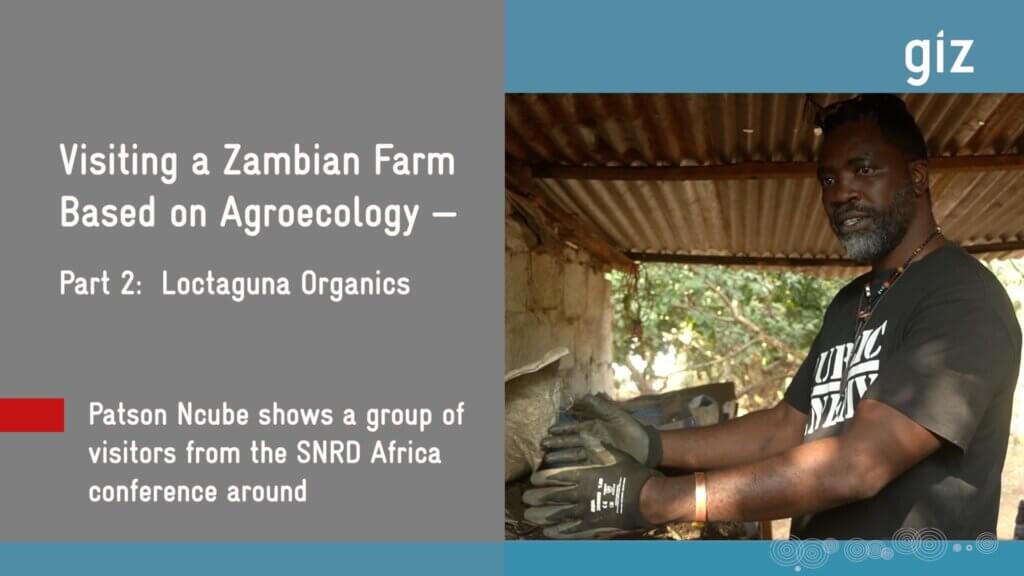
During the SNRD Africa Conference 2025 in Zambia, participants visited Loctaguna Organics, located just outside Lusaka. Guided by Patson Ncube, they explored how the farm combines soil fertility management, organic production methods and circular resource use into an integrated approach that supports both environmental sustainability and economic viability.
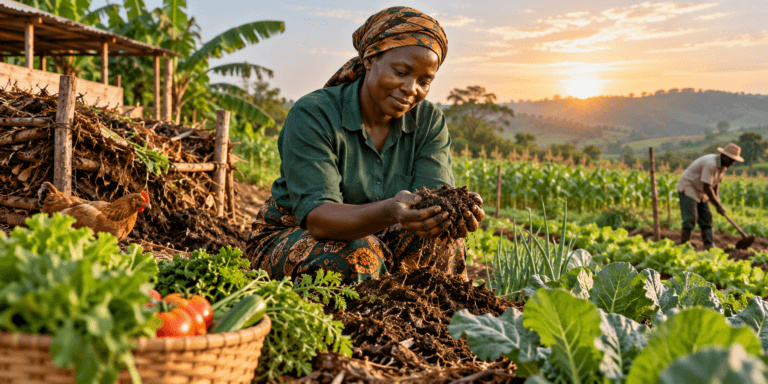
Throughout the visit, participants saw how organic matter is returned to the soil, how livestock contribute to nutrient cycling, how trees become part of the production system, and how materials that might otherwise become waste are transformed into valuable farm inputs. Rather than relying on isolated interventions, the farm demonstrates the value of thinking in terms of relationships between different farm components.
The visit also highlighted that agroecology is not only about ecological processes. Discussions covered market demand for organic products, opportunities for adding value, seed management and practical challenges associated with running a successful organic enterprise. The combination of environmental stewardship and commercial viability illustrates an important principle of agroecological farming: resilience depends on both healthy ecosystems and sustainable livelihoods.
The video below, produced by Corbecoms, offers a complete walkthrough of the farm. Unlike a short promotional film, it follows the visit much as conference participants experienced it themselves. Viewers can listen to the explanations, observe the farming practices in context and gain a realistic impression of how integrated agroecological systems operate in practice.
A similar article accompanying the video was first published on SNRD-Africa.net and is republished here because the field visit provides practical learning opportunities relevant to the Organic Agriculture Africa community.
Watch the full field trip
Chapters of the video
00:00 Introduction – Leaving Kasisi Farm
00:15 Road to L’Octagona Organics
01:20 Arrival and welcome by Patson Nkube
03:00 Soil fertility and organic practices
08:30 Integrated systems and learning on the farm
15:00 Market success and local demand
22:00 Seeds, compost and recycling methods
27:30 Livestock as part of a circular system
28:30 Johnson–Su bioreactor introduction
29:30 Closing remarks and reflections
What can you take away from this example?
One of the strongest messages from Loctaguna Organics is that successful agroecological farming is rarely built on a single innovation. Its strength lies in connecting many complementary practices into a system where soil, crops, trees, livestock and organic resources reinforce one another. While every farming context is different, this systems perspective can inspire farmers, advisors and practitioners across Africa to identify synergies that improve productivity, resilience and long-term sustainability.
More on Loctaguna Organics

Author: Pascal Corbé
Pascal is a communications for development all-rounder with 25+ years of experience in multicultural settings and cooperative network environments, ten of which in Africa