Across Africa, more farmers are asking a bold question:
Can organic farming make me financially successful?
It’s a fair question. With rising input costs, soil degradation, climate stress, and unstable markets, many farmers are looking for a production system that is both profitable and sustainable.
But here is the truth:
Organic farming is not a shortcut to quick money.
It is a long-term strategy for building soil, skills, systems, and stable income.
This article breaks down what it really takes to succeed in organic and agroecological farming and how African farmers can transition wisely.
1. Start by Feeding Your Household First
One of the biggest mistakes new farmers make is jumping straight into commercial production without experience.
Before you think about large-scale markets:
- Grow your own food.
- Observe at least four seasons.
- Learn how your crops respond to rain, heat, and pests.
- Understand your soil conditions.
- Practice pest management without synthetic chemicals.
Why is this important?
The transition to organic farming is not easy. When you stop using synthetic pesticides and fertilizers, your farm goes through an adjustment period. Pest pressure may increase temporarily. Yields may fluctuate. Your soil biology needs time to rebuild.
If you begin with commercial pressure, you may abandon organic principles too quickly.
Start small. Build competence. Then scale.
2. Soil Is Your Primary Investment
Healthy soil is the foundation of profitable organic farming.
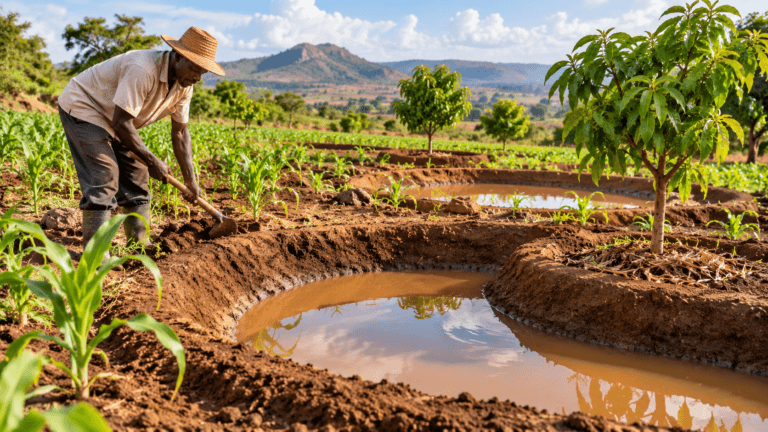
If your soil is degraded, compacted, or chemically imbalanced, no input will permanently fix it. You must rebuild it systematically.
Practical Steps to Rebuild Soil Health
a. Integrate Trees (Agroforestry)
Trees are essential in agroecological systems as they can significantly improve soil fertility over time. Trees:
- Improve microclimates
- Reduce heat stress on crops
- Provide mulch material
- Fix nitrogen (depending on species)
- Support beneficial insects and birds
b. Practice Green Manuring
Grow legumes and incorporate them into the soil before flowering. This adds organic matter and nutrients naturally.
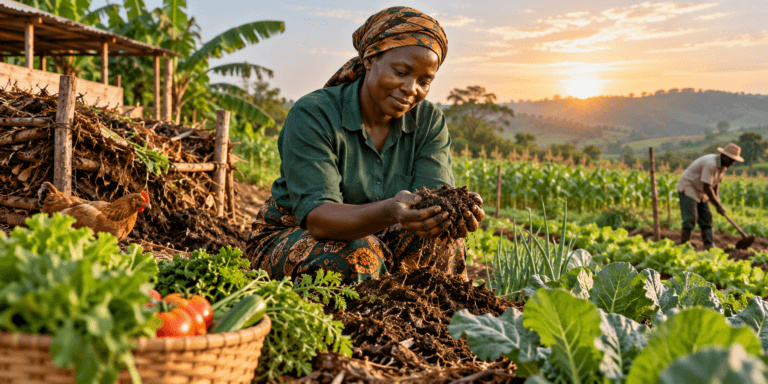
c. Compost Consistently
Composting is not a one-time activity. It must be regular. Well-matured compost improves:
- Soil structure
- Water retention
- Microbial diversity
- Nutrient availability
d. Diversify Crops
Monocropping weakens soil diversity. Rotating crops and practicing intercropping increases microbial life below the ground.
e. Be Patient
Transforming degraded soil may take up to five years of consistent practice. But the results are long-lasting:
- Higher productivity
- Better water retention
- Stronger plants
- Reduced pest pressure
Organic farming is not about quick yield spikes. It is about steady yield improvement over time.
3. Rethink Pest and Disease Management
Many farmers hesitate to transition because they fear pest outbreaks.
Organic pest management is not about “what can I spray?”
It is about “how do I design my system?”
Key Principles
a. Build a Microclimate
Trees and diversified planting reduce crop stress. Less stress means stronger plants and fewer pest attacks.
b. Use Crop Rotation
Do not plant the same crop repeatedly in the same location. This prevents pests and diseases from building up in the soil.
c. Encourage Beneficial Insects
Plant flowers between crops. Flowers attract pollinators and predatory insects that feed on pests like aphids and caterpillars.
d. Prevention Is Better Than Cure
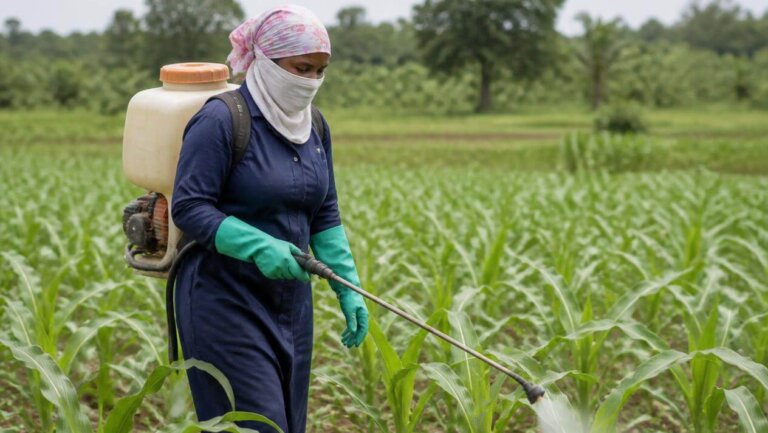
Farmers can prepare simple botanical solutions using locally available materials such as:
- Wood ash
- Neem
- Garlic
- Chili
- Indigenous bitter plants
These can be used as preventive sprays before infestations become severe.
The goal is balance, not elimination. In natural ecosystems, no one sprays forests. Balance controls pests.
4. Organic Farming Requires the Right Business Model
Yes, organic farming can be profitable. But profitability depends on how you structure your business.
Lessons for Agripreneurs
- Retail has high overhead costs.
- Perishable goods create waste risks.
- Small margins require large volumes.
- Logistics determine success.
If you are entering the organic space, consider:
- Aggregation models
- Business-to-business supply
- Pre-order systems
- Shared logistics
- Community-supported agriculture
Often, the biggest gap in Africa’s food system is not production. It is distribution.
Investing in logistics, storage, and aggregation can be more profitable than farming alone.
5. Consumer Education Shapes the Market
There is growing interest in safe, chemical-free food across Africa. However, demand is still inconsistent.
Many consumers:
- Want perfect-looking produce
- Do not ask about traceability
- Are unaware of chemical residue risks
Until consumers demand safer food, farmers remain under pressure to produce visually perfect crops using synthetic chemicals.
Organic farming success depends not only on farmers but also on awareness, advocacy, and education. Agroecology is both a production model and a movement for food system transformation.
6. The Emotional Side of Transition
Organic farming can feel lonely, especially in the beginning.
You may experience:
- Crop losses
- Skepticism from neighbors
- Financial strain
- Market rejection
- Infrastructure challenges
This is why mentorship matters.
If you are transitioning:
- Connect with experienced organic farmers.
- Join organic agriculture and agroecology networks.
- Participate in farmer training.
- Learn from those who have walked the journey.
Do not reinvent the wheel.
Start small. Learn deeply. Scale slowly.
7. So, Can Organic Farming Make You Wealthy?
Yes! But not in the way many expect.
Organic farming builds wealth through:
- Improved soil capital
- Reduced dependency on expensive inputs
- Stronger market trust
- Climate resilience
- Lower long-term risk
- Diversified income streams
It is not a seasonal gamble. It is a long-term asset-building strategy.
The farmers who succeed are those who:
- Invest in soil health
- Design resilient ecosystems
- Understand their markets
- Strengthen distribution systems
- Commit to continuous learning
Organic and agroecological farming offer Africa a path toward food sovereignty, climate resilience, healthier communities and sustainable rural livelihoods. But the transition must be intentional.
If you are ready to begin:
- Start with your kitchen garden.
- Observe and document what happens.
- Build soil before scaling.
- Join an agroecology network.
- Seek mentorship.
- Develop a clear business model before expanding.
The future of Africa’s food systems will not be built by shortcuts.
It will be built by farmers who understand that soil, systems, and sustainability are the true foundations of prosperity. At KCOA, we believe that organic agriculture and agroecology is not just an alternative, it is the future of farming on the continent.

Author: Hepzibah Ebe
Experienced and results-driven Communications expert with over nine (9) years of expertise in developing and executing effective communication strategies, including more than two (2) years of specialization in agroecology