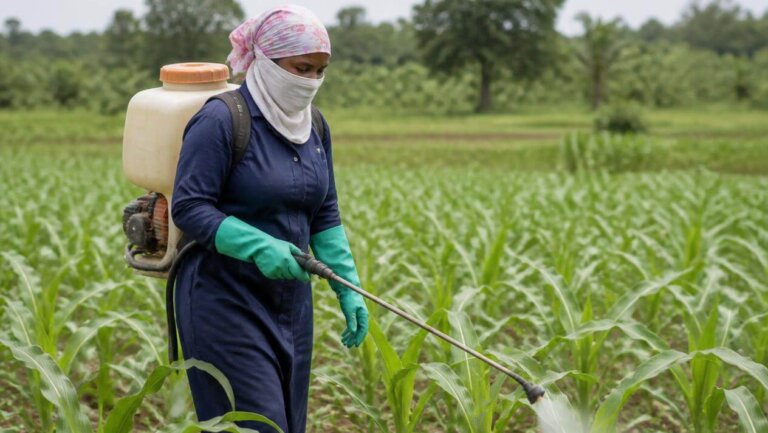
If you are a smallholder farmer in Southern Africa growing food without synthetic pesticides or fertilisers, you might assume you are “organic.”
However, if you try to sell your produce as organic or access government support, you will quickly hit a wall:
“You need certification.”
That is where things get complicated, because while traditional (third-party) organic certification works well for large export farms, it often excludes the very farmers who form the backbone of Africa’s food system: women, youth, and rural smallholders.
Enter Participatory Guarantee Systems (PGS), a locally rooted, low-cost, and farmer-led alternative that is gaining momentum across Southern Africa.
So which model is right for African farmers?
Let us break it down fairly, clearly, and with real-world context.
The Core Difference: Who Holds the Power?
At its heart, the choice between PGS and traditional Organic certification is not just about cost or paperwork.
It is about who decides what “organic” means and who gets to verify it.
| Feature | Conventional (Third-Party) Certification | Participatory Guarantee System (PGS) |
| Who verifies? | External auditors (often from cities or abroad) | Fellow farmers in your community |
| Cost | $500–$2,000+ per farm per year | Minimal (group shares transport, printing, training) |
| Language & literacy | Requires English forms, technical jargon | Uses local languages, oral agreements, and visual tools |
| Focus | Compliance with global standards | Learning, trust, and continuous improvement in local context |
| Decision-making | Top-down (auditor decides pass/fail) | Horizontal (group decides by consensus) |
| Market access | Primarily export or high-end urban | Local markets, schools, cooperatives, and regional trade |
For a farmer managing 1 – 2 hectares on a tight budget, conventional traditional certification is often impossible, not because they are not organic, but because the system was not designed for them.
Why traditional Certification Fails Most African Smallholders
Let us be honest: third-party certification has serious limitations in the African context.
1. It is Too Expensive
Certification fees, travel costs for auditors, and annual renewal fees add up fast. For a farmer earning US$250/year, spending US$400 on a certificate makes no economic sense even if yields are higher.
2. It Ignores Local Knowledge
Global organic standards rarely account for indigenous practices like intercropping with wild edible plants, using botanical sprays (mtetezga, chisoyo), or integrating livestock in ways that build soil health.
3. It Creates Dependency
Farmers must wait for an auditor to “approve” them. There is little room for dialogue, learning, or adaptation. Mistakes lead to rejection, not coaching.
4. It Excludes Women and Youth
Many women lack formal land titles, yet do most of the farming. Conventional systems often require legal ownership documents, shutting them out entirely.
Why PGS Works Better for African Realities
PGS flips the script. Instead of asking farmers to fit into a rigid global box, it builds a system around their lives, knowledge, and communities linked to local context.
1. It is Affordable and Scalable
Groups share costs. A single field visit by 3 – 5 peers replaces a costly external audit. Many PGS groups operate with less than $50/year per farmer.
2. It is a Learning Process, Not a Pass/Fail Test
As the PGS South Africa poster states:
“PGS is conceived as a learning process through knowledge exchange.”
Mistakes become teaching moments. New farmers get mentored. The whole group grows stronger together.
3. It Empowers Marginalised Voices
In PGS, your word matters as much as your title deed. Women, youth, and elders all participate equally in inspections and decisions, building gender equity and social cohesion.
But Isn’t PGS “Less Rigorous”?
A common myth, but false.
PGS isn’t less rigorous, it’s more rigorous.
- Conventional certification = snapshot audit (one day per year)
- PGS = continuous peer oversight (regular visits, shared responsibility)
In fact, studies show PGS can be more effective at preventing fraud, because neighbours know each other’s fields, production practices and reputations matter.
And crucially, both models can coexist:
- Use PGS for domestic and regional markets,
- Pursue third-party certification only when exporting.
The Bottom Line: Right Tool, Right Context
| Choose Conventional Certification If… | Choose PGS If… |
| You are a large commercial farm exporting to Europe | You are a smallholder selling to local markets |
| You have staff to manage paperwork | You want a simple, community-based system |
| You can afford recurring fees | You need affordability and flexibility |
| Your buyers require ISO or EU Organic labels | You value trust, transparency, and peer learning |
For the vast majority of African farmers, PGS is not just an alternative; it is the only viable path to organic recognition.
Bring PGS to Your Community!
Download the Official PGS Guide from the link below:

Author: Rabecca Mwila
Rabecca Mwila is a passionate advocate for sustainable agriculture and environmental stewardship. With a background in climate change and communications, she has spent years telling the untold stories of the realities of climate change, environmental and climate injustices and how they affect vulnerable communities in Africa and beyond