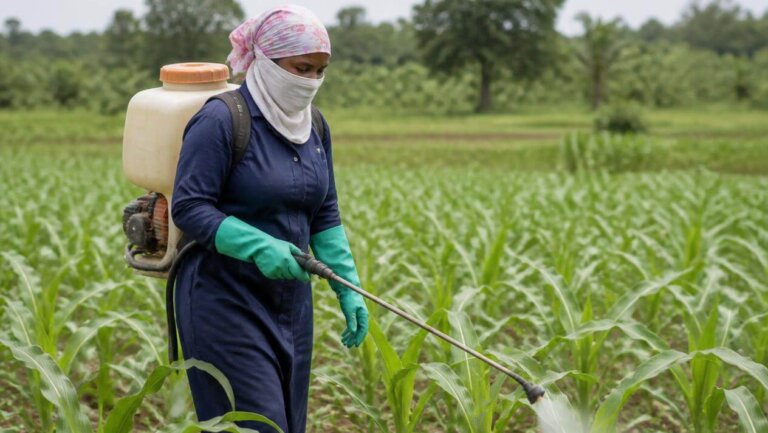
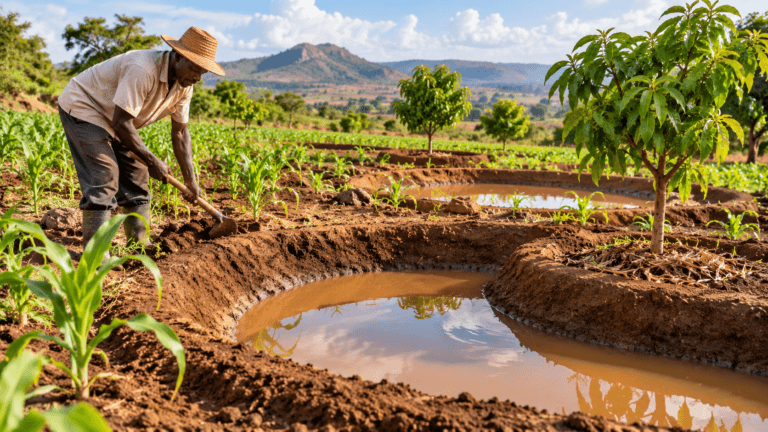
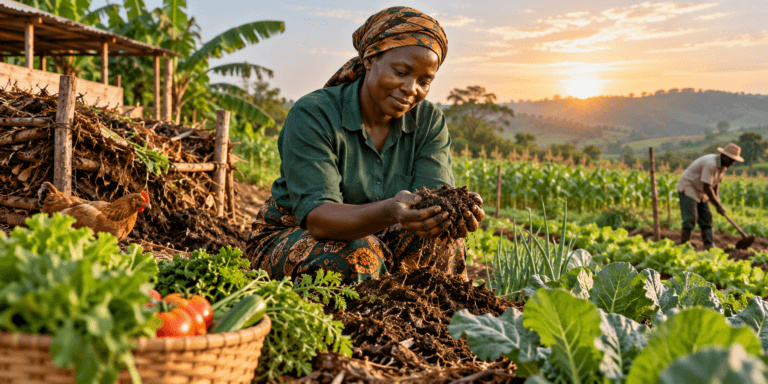
The sun beats down on the dusty fields of Chikankata, where rain has become a rare visitor. For years, farmers like Hillary Moono watched their maize wilt before harvest, their hopes for food security fading with each failed season. But today, Moono walks through rows of resilient sorghum, a crop born not in distant laboratories but in the hands of farmers themselves, the result of Participatory Plant Breeding (PPB).
Farmers at the Center of Innovation
PPB is a collaborative approach that brings farmers, researchers, and agricultural institutions together to develop crop varieties tailored to local conditions. Unlike traditional top-down methods, PPB places farmers at the heart of innovation, ensuring that new seeds reflect the realities of their soil, climate, and daily struggles.
“The PPB enhances genetic diversity by encouraging the use of local plant varieties and improving the adaptability of crops to local environments,” Moono explains.
In Chirundu, where rainfall is erratic and droughts frequent, this approach has allowed farmers to cultivate crops that thrive despite harsh conditions.
Seeds of Resilience
Through a project supported by the Community Technology Development Trust (CTDT) in collaboration with Oxfam Novib, farmers have successfully developed a drought-tolerant sorghum variety with high yields. More than 3,500 farmers are expected to benefit from the initiative, which is already changing lives across Zambia’s drought-prone regions.
“The project will assist farmers to adapt to changing climate conditions by identifying and promoting seed varieties that are drought-tolerant and heat-resistant,” Moono adds, his voice carrying both pride and relief.
For smallholder farmer Mary Sibamakawa in Chirundu District, the impact has been equally transformative.
“As a smallholder farmer, I now grow crops that can withstand drought and perform well in our local conditions,” she says. For Mary, PPB is not just about seeds, it is about survival and hope.
Walking through her thriving fields, Mary reflects on the difference PPB has made. “It gives us confidence that even when the rains fail, we can still harvest something,” she says.
Science Meets Tradition
Agricultural experts emphasize that PPB is more than an experiment; it is a partnership. Joseph Mwitumwa, Seed Production and Marketing Officer at CTDT, explains how the process strengthens collaboration between farmers and research institutions such as the Zambia Agricultural Research Institute (ZARI).
“Government institutions like ZARI work with breeders to develop new varieties by combining desirable traits from locally available crops,” Mwitumwa says. “They take the good traits from one variety and combine them with the good traits from another to create a stronger, improved variety.”
This ensures that farmers are not passive recipients of technology but active contributors to solutions that directly affect their livelihoods.
A Pathway to Food Security
As climate change continues to disrupt rainfall patterns across Zambia, initiatives like PPB are proving to be more than agricultural innovations. For thousands of farmers, they are becoming pathways to food security, resilience, and sustainable livelihoods.
Download the sustainable organic agriculture manual by Kasisi Agricutural Training Centre for details of sustainable agriculture.