The Anxiety of the Wilting Maize
Every farmer in Southern Africa knows the feeling. You have planted your maize, applied the fertiliser and weeded the fields. Unexpectedly, the mid-season dry spell hits. The sun beats down relentlessly, the soil cracks and you watch helplessly as the maize leaves curl up and turn yellow.
For decades, our agricultural systems have pushed maize as the ultimate staple. However as the Kusamala Institute’s Why Sustainable Food and Farming Systems Matter for Malawi brief warns, industrial farming systems are “vulnerable to environmental stress (droughts/floods).”
When the rains fail, the maize fails which leads to food and nutrition insecurity and loss of household income. We cannot control the weather but we can control what we plant and how we cook it.
The High Cost of the “Maize Trap”
When we rely almost exclusively on a single, water-thirsty crop, we are farming without a safety net. The anxiety of a failed maize harvest does not just boader around an empty granary but include:
Financial Ruin: The money spent on hybrid seeds and synthetic fertilisers is washed away with the topsoil.
Nutritional Gaps: When the staple crop fails, families are forced to eat less or rely on highly processed, nutrient-poor foods, leading to the “micronutrient deficiencies (wasting/stunting)” highlighted in the Malawi Sustainable Food Systems Brief.
Soil Exhaustion: Maize strips the soil of nutrients. When it fails, it leaves behind degraded, compacted earth that struggles to absorb rain when it eventually falls.
We need climate insurance and crops that survive and thrive in the drought. We also need the knowledge on how to turn those resilient harvests into delicious, family-friendly meals.
The Heroes of the Dry Season
Meet our ancestral drought-tolerant crops: Sorghum, Millet, Bambara nuts and Groundnuts. These traditional crops are the ultimate climate-smart solution. Sorghum and Millet have deep, extensive root systems that can reach water far below the surface.
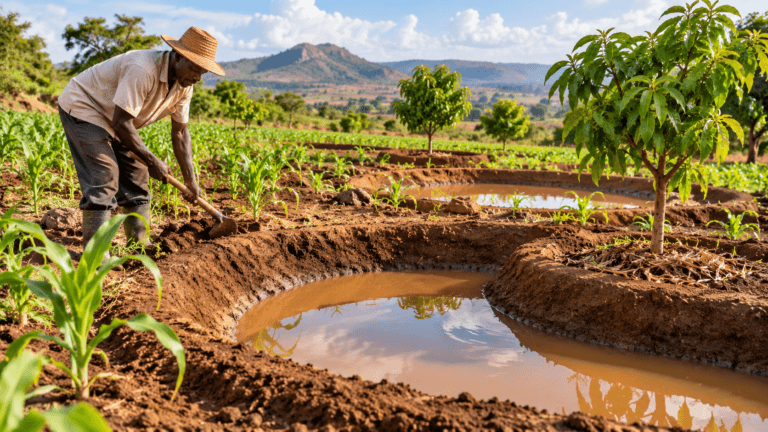
Bambara nuts and Groundnuts are legumes that not only survive dry spells but fix nitrogen in the soil, naturally fertilising the land for the next season. To maximise their potential, pair these crops with KATC’s contour farming practices. By using an A-frame to dig contour ditches and planting grass strips, you force every precious drop of rain to sink into the soil profile, giving these resilient crops the moisture they need to produce a bumper harvest even in a dry year.
However, growing them is only half the battle. How do we cook them so our families actually want to eat them?
The Soils, Food and Healthy Communities (SFHC) Indigenous Recipe Book holds the answer. Here are three delicious, climate-smart recipes to transform your drought-tolerant harvest into nutritional gold.
- Sorghum Donas with Banana (The Energy Snack)
Sorghum is a vital food security crop in marginal rainfall areas. When mixed with bananas, it creates a sweet, energy-dense snack that perfectly balances the Staples and Fruits food groups.
Ingredients:
- 3 ripe bananas
- 2 cups sorghum flour
- 1 cup wheat flour or cassava flour
- 2 eggs
- 2 cups milk
- 1-2 tablespoons sugar (optional)
- ¼ tablespoon salt & 1 tablespoon baking powder
- 1 litre cooking oil (for frying)
Instructions: Peel the bananas and mash them into a smooth puree using a cooking stick. In a mixing bowl, combine the sorghum flour, wheat/cassava flour, salt, and baking powder. Add the mashed banana puree, eggs, milk and sugar (if using). Mix thoroughly until you have a moldable paste. Heat the cooking oil in a pan. Roll or mould the paste into small doughnut shapes (donas). Fry in the hot oil until golden brown. Serve warm as a snack or with a main meal.
2. Millet Porridge Seasoned with Groundnut Flour (The Brain Food)
Millet is an incredible source of potassium (vital for the heart and kidneys) and Vitamin B (essential for brain function and reducing fatigue). When seasoned with groundnut flour, it becomes a rich, creamy and highly nutritious breakfast.
Ingredients:
- ½ cup millet flour
- ½ cup maize flour
- 1 tablespoon roasted groundnut flour
- 3 cups water
- ½ cup milk (optional)
- Sugar and a pinch of salt (to taste)
Instructions: In a separate bowl, mix the maize flour, millet flour and groundnut flour with a little cold water or milk to create a smooth paste (this prevents lumps). Bring the 3 cups of water to a rolling boil in a pot. Pour the flour mixture into the boiling water while stirring continuously. Reduce the heat and continue stirring until the porridge starts to boil slowly. Cook on low heat for about 30 minutes until the porridge is fully done and thick. Add a pinch of salt and sugar (if available). Serve warm.
- Mashed Bambara Nuts (The Ultimate Survival Relish)
Bambara nuts are a powerhouse of carbohydrates, crude protein and fat. They are incredibly drought-tolerant and can be stored for years without losing their nutritional value.
Ingredients:
- 1 cup Bambara nuts
- 1 medium onion (cut into pieces)
- 2 medium tomatoes (cut into pieces)
- 1 garlic clove (optional)
- 2 tablespoons cooking oil
- A pinch of salt
- 3 cups of water
Instructions: Soak the Bambara nuts in cold water overnight to soften them. Remove the outer skin/layer of the nuts. Bring the 3 cups of water to a boil and add the skinned nuts. Boil until they are well done and soft enough to mash easily. In a separate pan, fry the onion, tomato and garlic in the cooking oil until soft. (Alternatively, you can just add them directly to the boiling nuts. Mash the cooked Bambara nuts. Stir the mashed nuts into the tomato/onion mixture. Cook on low heat for a few minutes to blend the flavours. Serve hot with rice, nsima or even mashed into children’s porridge for a massive protein boost!
Plant for the Climate You Have, Not the Climate You Wish For
We can no longer afford to risk our family’s food security on a single, vulnerable crop. By integrating sorghum, millet and Bambara nuts into our farms and our kitchens, we build resilience against drought, improve our soil health and nourish our bodies with the diverse nutrients they require.
Download the free Knowledge Products:
Get over 30 traditional, drought-resistant recipes featuring beans, soybeans, sorghum, millet, groundnuts, and Bambara nuts.
Contour Practices for Soil & Water Conservation – KATC
Learn how to build an A-frame and dig contour ditches to trap rainwater and help your drought-resistant crops thrive.
Why Sustainable Food Systems Matter for Malawi – Kusamala Institute
Understand the urgent need to transition away from vulnerable maize monocultures toward diverse, climate-tolerant agroecology.

Author: Rabecca Mwila
Rabecca Mwila is a passionate advocate for sustainable agriculture and environmental stewardship. With a background in climate change and communications, she has spent years telling the untold stories of the realities of climate change, environmental and climate injustices and how they affect vulnerable communities in Africa and beyond