Africa’s food systems sit on a deep reserve of agricultural biodiversity. Across the continent, communities have cultivated, gathered, processed and consumed thousands of plant species over generations, crops that have provided food, nutrition, medicine, income, cultural identity and ecological value, often under difficult conditions.
Yet only a fraction of this diversity receives real attention from modern agriculture. Maize, rice, wheat and a handful of other staples dominate research, investment, markets and policy, and rightly so, given how central they are to food supplies and livelihoods. But something has been lost along the way. Many crops that once anchored local food systems have become marginalised, under-researched, poorly commercialised or increasingly absent from diets and farms.
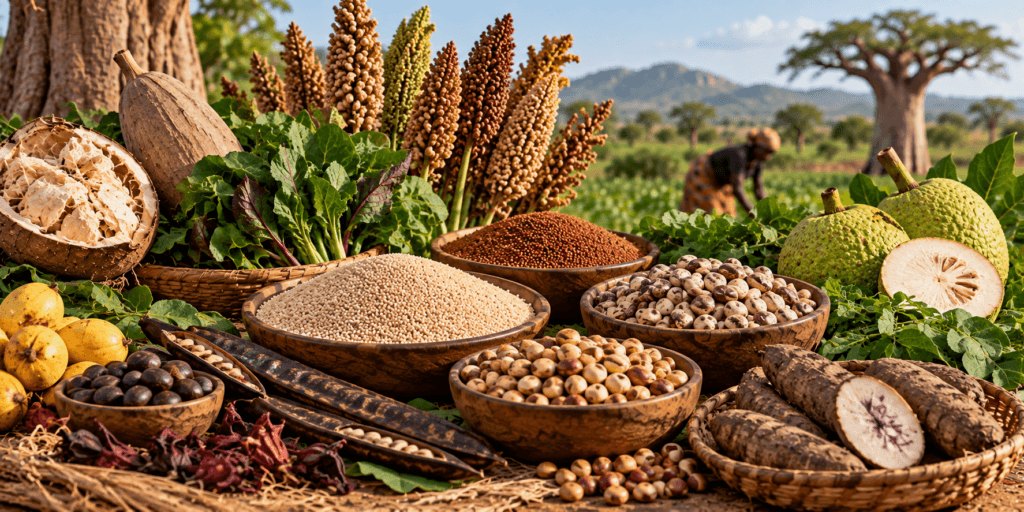
These are Neglected and Underutilised Species, or NUS: crops and plant species that remain important locally but have received comparatively little attention from mainstream research, breeding programmes, extension services, markets and policy. Fonio, Bambara groundnut, African yam bean, indigenous leafy vegetables, finger millet, cowpea, African breadfruit, African walnut, baobab and moringa are among the better known examples, and the list runs much longer.
The question worth asking is no longer why these crops were neglected. It is what Africa stands to gain by paying them proper attention now.
What Are Neglected and Underutilised Species?
NUS is a broad category covering crops and useful plants that communities have long cultivated, harvested or consumed, but that remain marginal within mainstream agricultural systems. They are sometimes called orphan crops, forgotten foods, minor crops, traditional crops or opportunity crops. The terms overlap but are not identical; what unites them is a shared history of being overshadowed by crops that attracted far greater investment in breeding, research, processing and policy support.
A crop does not become underutilised because it lacks value. Often the opposite is true: a crop can matter enormously to a community while remaining almost invisible in national statistics, formal value chains or investment priorities. FAO has pointed to the rich diversity of African crops that remain under-researched despite their nutritional, environmental, cultural and economic importance. Neglected, in other words, rarely means unimportant. More often it means the systems around a crop failed to recognise, develop or scale what it already offered.
How Did Valuable Crops Become Neglected?
This is not simply a story of farmers walking away from useful crops. Agricultural systems respond to incentives, and as research and development concentrated on a smaller number of major crops, those crops gained improved varieties, fertiliser recommendations, mechanisation, extension support, processing technology, infrastructure and established markets. Productivity and commercial value grew accordingly.
Everything outside that mainstream received less. A crop with little research behind it has few improved varieties. Without improved varieties, yields are lower and less predictable. Without reliable production, processors struggle to source raw material. Without processing and storage, products stay difficult to commercialise. Without markets, farmers have little reason to grow more. And without evidence of demand, investment and policy attention stay thin.
The pattern is self-reinforcing: limited research leads to limited production, which weakens markets, which limits investment, which entrenches neglect. The problem was never that these crops lacked potential. It is that most never received the systems-level support major crops did.
Why NUS Matter Now
The case for NUS is strengthening because several pressures are converging at once. Climate change is straining production. Diets remain exposed to price and supply shocks. Malnutrition persists even as consumption patterns shift. Biodiversity is under pressure, and rural livelihoods need new options. A food system built around a narrow set of crops simply has fewer biological and nutritional options when conditions change, and NUS can widen that range.
A 2024 systematic review of underutilised crops in sub-Saharan Africa found evidence that they can contribute to more diverse, resilient and healthy agri-food systems under climate change, while cautioning that NUS should not be treated as replacements for major staples but as part of a broader diversification strategy. That distinction matters. The point is not whether Africa should stop growing maize or rice. It is what happens if the continent stops assuming that a small number of crops should carry so much of the burden of feeding it.
Diversity as a Climate Asset
Different crops carry different biological strengths. Some tolerate drought, heat or salinity better than mainstream staples; some mature quickly; others provide food at different points in the season. None of this means every NUS is automatically climate resilient, and resilience claims still depend on the specific species, variety, location and management practice. But a wider pool of crops gives farmers more ways to respond when conditions turn unpredictable, which climate change is making the norm rather than the exception.
A more diverse crop portfolio also spreads risk. If drought, flooding, pests or disease hit one crop, another may hold up. At landscape level, that diversity supports broader ecological function and reduces dependence on a single production pathway. The same 2024 review lists climate adaptation, environmental resilience and diversification among the strongest contributions NUS can make.
From Climate Resilience to Nutrition Resilience
A resilient food system needs to produce not just enough food, but varied and nutritious food. Many NUS carry strong nutritional profiles and have historically shaped local diets, which matters because agricultural diversity and dietary diversity move together. When a food system narrows its crop base, consumer diets tend to narrow with it.
FAO reported in 2026 that more than half the world’s daily calories now come from just four crops: rice, maize, wheat and potatoes, while also highlighting the nutritional and biodiversity potential of overlooked and wild foods. The opportunity here goes beyond adding another crop to a farmer’s field. It is about broadening what actually ends up on the plate. A crop that supplies key nutrients, fills a seasonal gap, complements existing staples or offers a fallback when another crop fails is doing the work of what might be called nutrition resilience.
NUS and Livelihoods
Food security is only half the equation; smallholder farmers also need a crop that pays. Some NUS carry real income potential through fresh produce, processed foods, beverages, flours, snacks, oils and other value-added products, which matters most for farmers overly dependent on one or two commercial crops. Diversification opens additional income streams and reduces exposure when a single crop or market fails.
That potential should not be mistaken for guaranteed profitability. No farmer will plant an underutilised crop at scale simply because it tests well nutritionally or performs under drought. There has to be a market, reliable seed or planting material, production know-how, appropriate harvesting and storage technology, consumer recognition, and economics that actually work. This is why unlocking NUS potential needs a value-chain approach, not a production campaign alone.
The Women and Communities Already Keeping These Crops Alive
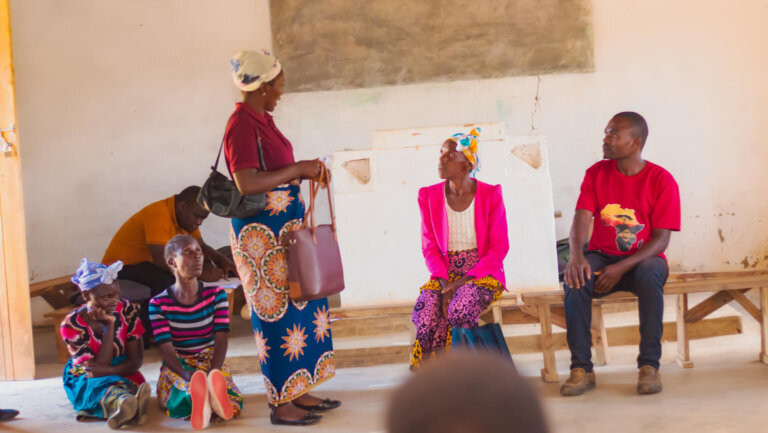
Many neglected crops have survived precisely because communities kept cultivating, saving, exchanging, processing and consuming them long after formal agricultural systems stopped paying attention. Women, in particular, play a central role in conserving seed, holding knowledge and managing household use of these crops, a role that research on NUS in sub-Saharan Africa has repeatedly documented.
That means NUS are not commodities waiting to be discovered by science. Much of the relevant knowledge already exists, held by the people who kept these crops going. What is needed is recognition of that knowledge, responsible documentation, useful pairing with scientific research, and systems that let communities actually benefit from what they preserved.
Indigenous Knowledge Is Part of the Resource
When a crop becomes neglected, the loss is not only genetic. Knowledge disappears with it, knowledge of when to plant, which soils suit a crop best, how seed should be selected and stored, which varieties perform where, how crops are combined and processed, which plant parts are usable, and how a crop fits into local culture and practice.
Supporting NUS therefore carries a knowledge-preservation responsibility, one that has to be handled ethically. Communities should not become sources of information or genetic material to be extracted from; their participation, recognition and share of any benefit need to be built into how NUS are developed and commercialised.
The Agroecology Connection
NUS fit naturally within agroecology, which seeks to strengthen the interaction among crops, animals, people and environment while conserving biodiversity and respecting local knowledge. A farm growing multiple crops creates different ecological functions, spreads production risk and offers several sources of food and income at once, whether that means integrating a locally adapted legume into a cereal system, keeping indigenous vegetables alongside major crops, or conserving varieties with particular cultural or environmental value.
The goal is not diversity for its own sake. It is understanding exactly what each species contributes to the system, and that is where agroecological thinking earns its place.
Why Aren’t We Seeing More NUS?
Potential alone does not transform food systems. Several barriers keep NUS on the margins:
Weak seed systems. Many NUS rely on informal seed exchange and farmer-saved seed, which preserves diversity but makes consistent scale-up difficult.
Limited research and breeding. Decades of investment gave major crops improved varieties and reliable agronomic guidance. Most NUS never received a comparable share.
Processing challenges. Long cooking times, difficult dehulling and limited storage options raise labour and energy costs and dampen consumer appeal.
Weak markets. Farmers need buyers, and without predictable demand, scaling an underutilised crop is a risk few can afford.
Consumer perception. Some NUS carry social associations with poverty or rural deprivation, which discourages younger consumers even where the nutritional or cultural value is strong.
Policy and institutional gaps. Agricultural policy tends to concentrate on major staples. Research from Benin found a wide gap between how important NUS are at community level and how visible they are in agricultural policy and institutional support, a reminder that diversification cannot rest on farmers alone. The enabling environment has to do its part too.
From “Neglected” to “Opportunity Crops”
The word neglected accurately describes a crop’s history, but it can also reinforce the idea that the crop is marginal. A more useful question is what happens when a neglected species becomes an opportunity crop instead, not necessarily a new national staple, but a crop with a specific, well-defined use: suited to dry environments, nutritionally distinct, viable in a niche market, supportive of women-led processing, useful for diversifying a farming system, valuable for genetic conservation, or simply well matched to a particular agroecological zone.
Not every species needs to scale nationally. The task is identifying which species, varieties and uses make sense in which places, and developing those deliberately.
What Would It Take to Unlock Their Potential?
Turning NUS from overlooked resources into working parts of resilient food systems takes coordinated action on several fronts:
- Invest in research on agronomy, nutrition, climate performance, genetics, seed systems, processing, storage and markets, developed with farmers rather than around them.
- Strengthen seed and planting-material systems so farmers get reliable access to quality material without losing the genetic diversity that makes these crops valuable, through community systems, farmer networks and formal institutions working together.
- Improve processing and value addition, since processing often decides whether a crop stays a household food or becomes a commercial product.
- Build markets around real demand, starting with what people actually want to eat, what’s convenient, what they will pay, and how traditional foods can appeal to changing lifestyles without losing their identity.
- Integrate NUS into extension and education, reaching farmers, extension workers, nutrition professionals, chefs and food entrepreneurs, since NUS cannot go mainstream while knowledge stays confined to small communities or research projects.
- Create supportive policy, since government choices about research funding, extension, seed systems, market infrastructure and nutrition programmes determine whether diversification is possible at all.
- Put communities at the centre, so the development of NUS does not become another externally driven intervention. The farmers and communities who conserved these species should have a real say in how they are developed, commercialised and used.
The Future May Not Need More Crops. It May Need More of the Crops We Already Have.
Conversations about Africa’s agricultural future tend to chase the next innovation: a new technology, a new seed, a new platform, a new production system. Those matter. But innovation can also mean looking again at what already exists.
Across the continent are crops that have survived changing environments, shifting diets, cultural transitions and generations of experimentation. Some have been pushed to the margins. Some remain in household gardens and small farms, kept alive mainly through informal seed systems. Some appear in local markets but rarely in national statistics. Some are finding new consumers through food entrepreneurs and value-added products. And some risk disappearing altogether if their knowledge and genetic diversity are not maintained.
The point is not to romanticise these crops or claim that every neglected species holds the answer to climate change, food insecurity or malnutrition. It is to recognise that agricultural diversity is itself a resource, and that resilient food systems will depend not only on improving the crops that already dominate agriculture, but on broadening the range of crops the sector is willing to value, research, finance, produce, process and consume.
A Call to Reconsider What We Value
NUS challenge the usual measures of agricultural progress. If success is judged only by the size of the fields, the volume of commercial output or the scale of research investment, many valuable species stay invisible. But measured against resilience, nutritional diversity, biodiversity, livelihood opportunity and cultural relevance, the picture looks different, and some of the crops long dismissed as minor stop looking minor at all.
The task ahead is not simply to bring forgotten crops back. It is to build the conditions in which valuable species move from neglected to recognised, from underutilised to strategically used, and from local knowledge to supported innovation, without losing the diversity and community knowledge that made them valuable in the first place.
Africa’s food future does not have to be built from a smaller basket of crops. It can be built from a richer one. Sometimes the first step toward agricultural innovation is simply to look again at what is already there.

Author: Hepzibah Ebe
Experienced and results-driven Communications expert with over nine (9) years of expertise in developing and executing effective communication strategies, including more than two (2) years of specialization in agroecology