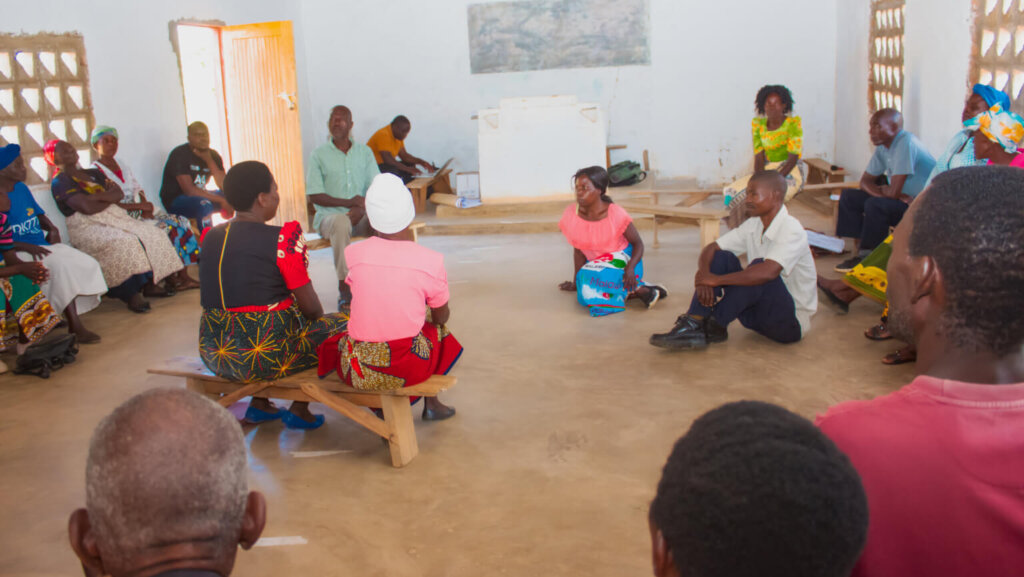
What If the Most Effective Way to Train Farmers Was not a Lecture, But a Performance?
As an extension officer, you have probably tried it all:
- Classroom-style workshops that leave farmers bored,
- Handouts in English that few can read,
- Demonstrations that feel disconnected from daily realities.
Yet adoption of agroecological practices like making fermented liquid bio-fertilisers (KATC model) or using botanical sprays remains slow.
What if the barrier is not farmer resistance, but how we teach?
Enter participatory theatre, a powerful, low-cost, culturally oriented method pioneered by Soils, Food and Healthy Communities (SFHC) in Malawi and now scaling across the Knowledge Hub for Organic Agriculture and Agroecology in Southern Africa (KHSA) network.
This guide shows you how to use theatre to teach agroecology step by step.
Why Theatre Works for Agroecology Training
- Traditional extension often fails because it:
- Talks at farmers, not with them,
- Ignores local knowledge and lived experience,
- Makes sensitive topics (gender, power, climate ) hard to discuss openly.
Participatory theatre flips this. It:
- Builds trust:
- Farmers see their stories reflected on the “stage.”
- Makes complex ideas tangible: Instead of explaining “soil health,” act out a scene where compost revives a tired field.
- Creates safe spaces: Role-play lets farmers rehearse new behaviours without real-world risk.
- Drives action: Performances end with co-created plans, not just applause.
“Participatory theatre is a collaborative process that engages participants in creating and performing theatrical pieces to explore and address real-world issues.” – SFHC Facilitator’s Guide, 2023
The 5-Step Process:
From Planning to Impact Adapted from the SFHC Facilitator’s Guide, here’s how to run a participatory theatre session for agroecology training.
Step 1: Plan Your Intervention Before gathering farmers, clarify:
- What outcome do you want? (e.g., increased adoption of botanical sprays; more equitable labour sharing)
- What’s the “lever” for change? (policy shift? community norm change? individual behaviour?)
- Who is your audience? (women’s group? youth? mixed community?)
- What resources do you have? (time, space, materials, co-facilitators?)
Quick Checklist:
- Issue identified (e.g., post-harvest loss, gender inequity, climate adaptation) Target audience defined
- Theatre type selected (see table below)
- Venue secured (shaded, comfortable, accessible)
Step 2: Choose Your Theatre Approach
The SFHC guide outlines three types, pick based on your goal:
| Type | Best For | Target Audience | Sample Agroecology Topic |
| Legislative Theatre | Policy change | Policymakers, chiefs, extension supervisors | “Why FISP should support bio-fertilisers, not just chemicals” |
| Theatre for Justice | Shifting social norms | Community members, families, neighbours | “The Girl Who Wanted to Go to School” (gender + labour) |
| Theatre for Behaviour Change | Personal practice shifts | Individual farmers, small groups | “The Charcoal Family” (deforestation → erosion → crop loss) |
Step 3: Form Your Ensemble & Devise the Story
Recruit 10–30 farmers willing to co-create. Host a story-devising workshop:
- Warm up: Use simple games to build comfort and energy.
- Share stories: Ask: “What challenges do you face in adopting agroecology?”
- Brainstorm scenes: Turn real experiences into short skits.
- Assign roles: Let farmers choose characters based on interest/skill.
- Rehearse: Keep it loose. Improvisation is powerful.
Sample Script Starter: “The Botanical Spray Debate” Scene:
Two neighbours argue. One uses chemical pesticides; the other uses mtetezga spray. A facilitator invites the audience to step in and role-play solutions.
Content Ideas from Your Knowledge Library:
- Use the KHSA Botanicals Flyer to script a scene on making chisoyo spray for fall armyworm.
- Adapt the KATC Bio-Fertiliser Guide into a scene showing a farmer switching from synthetic fertiliser to fermented liquid brew.
- Reference the 2024 Agroecology Policy Brief to frame a scene on why multi-ministerial collaboration matters.
Step 4: Host the Performance & Facilitate Discussion
Perform for your target audience community members, local leaders, or policymakers. During the performance:
- Keep it simple: no props needed, just bodies and voices.
- Encourage audience interaction: “What would you do here?”
After the performance, facilitate discussion with open questions:
- “What did you see that reflects your own experience?”
- “What could be done differently?”
- “Who in this room could help make that change happen?”
Facilitation Tips:
- Create a safe space: “No wrong answers; all voices matter.”
- Summarise key points periodically.
- End with a call to action: “What’s one thing we can do this week?”
Step 5: Monitor, Reflect, Improve
Participatory theatre is interactive. Use simple tools to track impact:
Pre/Post Self-Assessment (rate 1–5):
- Confidence discussing agroecology topics
- Knowledge of specific practices (e.g., botanical sprays)
- Willingness to try new methods
Group Reflection Questions:
- “What worked well in our performance?”
- “What would we change next time?”
- “Did this help us move closer to our goal?”
Longer-Term Indicators:
- Number of farmers adopting featured practices
- Policy commitments made after legislative theatre
- Formation of farmer groups or PGS clusters
Bring Theatre to Your Next Training
You don’t need a stage, a budget or acting experience. You just need curiosity, a group of farmers and this guide.
Download Free Knowledge Products: SFHC Facilitator’s Guide to Participatory Theatre
KATC Fermented Liquid Bio-Fertiliser Guide

Author: Rabecca Mwila
Rabecca Mwila is a passionate advocate for sustainable agriculture and environmental stewardship. With a background in climate change and communications, she has spent years telling the untold stories of the realities of climate change, environmental and climate injustices and how they affect vulnerable communities in Africa and beyond