When you walk through an African village at sunrise, you can almost hear the rhythm of life in the soil. The cock crows, the farmer shoulders his hoe, and the air smells of damp earth. Farming, for us, has never been just an occupation. It is a rhythm, a lifestyle, and a heritage passed from generation to generation.
Yet, something has changed. Over time, our connection to the land has weakened. The use of chemicals has replaced compost, imported seeds have replaced our own, and farming is no longer seen as a proud calling but a hard struggle. Still, a quiet revolution is taking root again across the continent; one that reminds us of who we are and what we can become. That revolution is agroecology.
Back to Our Roots, Forward to Our Future
Agroecology is simply farming with nature, not against it. It is about working with the rhythms of the soil, the climate, and biodiversity to produce food that sustains both people and the planet. Our grandparents knew this truth long before it was given a name. They rotated crops, used compost, planted trees around their farms, and respected the land.
Agroecology is not a strange new science from somewhere else. It is a rediscovery of our ancestral knowledge, supported today by modern innovations and scientific understanding. The real question is how we can make Africans see this again, not as a theory, but as a lifestyle and a solution.
Changing the Conversation
To make agroecology appealing, we must start with language that connects. A maize farmer in Nigeria does not need a lecture on carbon sequestration or biodiversity indices. He wants to know if this practice will help his soil stay fertile, reduce his spending on fertilizers, and increase his harvest.
Likewise, when we speak to consumers, we must emphasize benefits that touch their hearts: safe food for their children, fresh produce in their markets, and the pride of supporting local farmers. People are not motivated by technical terms; they respond to meaning.
When we talk about agroecology, we should speak of good food, thriving families, and healthy communities. That is the message that resonates.
Making Green Farming Make Sense
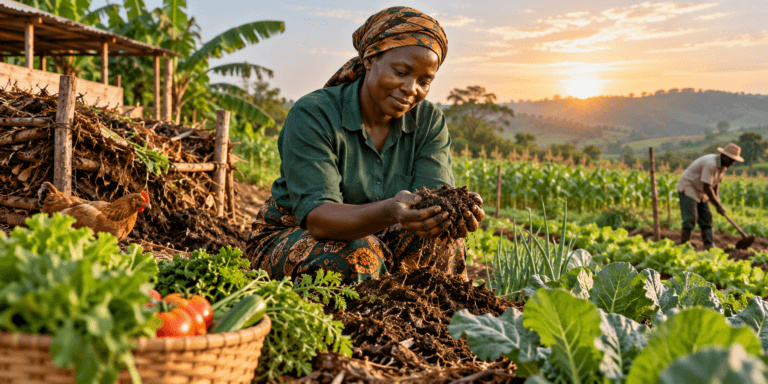
If agroecology is to thrive, it must make financial sense. Farmers need to see that the soil can feed both their households and their hopes. Across Africa, many are already discovering new opportunities through ecological farming. Compost producers are turning waste into wealth. Local seed enterprises are helping farmers become independent. Women’s cooperatives are creating income through organic markets and eco-friendly packaging.
Governments and development partners have a crucial role to play in this shift. Policies that support green credit schemes, organic certification, and fair market access can help make agroecology an attractive and sustainable venture. Once farmers see profit in purpose, they will never go back.
Telling the Story in a Digital Age
The new generation of Africans lives online, where trends move faster than policies. To reach them, agroecology must be made visible and exciting. Social media can turn farming into a movement. Short videos of lush farms, vibrant produce, and passionate young farmers can do more than long lectures.
Imagine campaigns with hashtags like #SoilToSoulAfrica or #GrowGreenEatClean, filled with real people sharing their organic journeys. When agroecology becomes part of pop culture, it stops sounding like a project and starts feeling like a pride.
People Convince People
One farmer’s success is more convincing than a thousand flyers. When a neighbor’s farm is flourishing without chemical fertilizers, others pay attention. That is why agroecology must grow from one community to another through stories of real transformation.
Building local champions; farmers, youth, and extension officers who live the example, is the most powerful way to spread the message. When people see what works, they naturally follow. Change travels fastest through proof, not persuasion.
Turning Passion into Policy
While passion moves hearts, evidence moves systems. To embed agroecology into national development strategies, we must speak the language of results. Policymakers need to see that agroecology is not just good for the soil; it is good for the economy.
It reduces import dependency, cuts input costs, creates rural jobs, and saves nations millions in health expenses. It supports food sovereignty and builds resilience against climate shocks. When leaders see that agroecology can build both GDP and green growth, they begin to listen.
The Heart of the Matter
Agroecology is more than a farming system; it is a story of people rediscovering their connection to the land. It is about a mother who can now trust the food she gives her child. It is about a young person finding purpose and profit in the soil. It is about communities rebuilding dignity and health through what they grow and eat.
To sell agroecology to Africans is not to impose something new, but to remind us of who we are people of the soil, custodians of life.
Africa’s future does not need to be imported. It is already growing here, quietly, in the soil beneath our feet.

Author: Olusola Oludayo Sunday
Sunday Olusola Oludayo is an agriculture extensionist, health practitioner, and passionate advocate of organic and sustainable farming. She promotes agroecology as a pathway to healthier communities and resilient food systems. Through her work, she blends practical agricultural knowledge with health awareness to inspire positive change across Africa