As climate change intensifies, crop diseases are becoming more frequent, more aggressive, and more unpredictable. For farmers across Africa, this is no longer just an agronomic problem. It is a food security issue, a public health concern, and an economic risk.
Organic farming offers a powerful but often misunderstood response. Contrary to the idea that organic farms simply avoid chemicals and accept losses, organic systems actively manage pests and diseases through prevention, ecology, and knowledge.
Understanding how organic farms control crop diseases reveals lessons that go far beyond agriculture. It shows how resilient systems are built.
Organic farming does not begin with pesticides. It begins with the question: Why do pests and diseases thrive here in the first place? Instead of reacting to outbreaks, organic systems are designed to make farms less hospitable to pests and pathogens from the start. This approach is commonly organized into three management levels: Level A, Level B, and Level C. Each level escalates intervention only when the previous one is insufficient.
Level A: Prevention Through System Design
Level A is the backbone of organic disease management. It focuses on creating healthy plants, living soils, and diverse ecosystems where disease pressure remains low.
- Crop Varieties Adapted to Local Conditions
Organic farms prioritize varieties that are well adapted to local climates and resistant to prevalent pests and diseases. A locally adapted crop grows stronger, experiences less stress, and is naturally more resilient.
This mirrors traditional farming systems where seeds were saved from the healthiest plants, gradually improving resistance over generations.
- Clean Seeds and Planting Materials
Diseases often enter fields through contaminated seeds. Organic standards require clean, pathogen-free planting material, reducing disease risk before crops even emerge. This simple principle has massive implications for yield stability.
- Crop Rotation and Biodiversity
Repeatedly growing the same crop allows pests and pathogens to build up. Organic farms disrupt this cycle through crop rotation, ensuring crops from different plant families follow one another. Legumes are central to these systems. They fix atmospheric nitrogen, improve soil fertility, and break disease cycles. Many organic standards require at least one legume in every rotation. Intercropping further enhances biodiversity by growing multiple crops together. This confuses pests, limits host availability, and reduces large-scale disease outbreaks.
- Balanced Nutrition Instead of Excess Fertilization
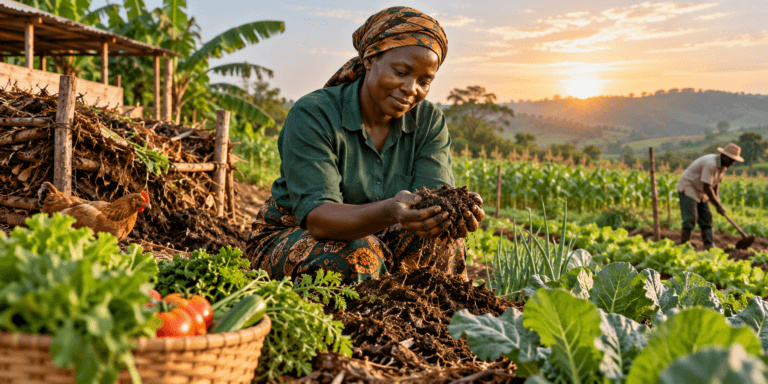
Excess nitrogen produces lush, soft plant tissue that attracts pests and disease. Organic systems rely on compost, vermicompost, and biofertilizers that release nutrients slowly and evenly. This balanced nutrition stimulates the production of phytohormones and secondary metabolites that strengthen plant immunity. Healthy growth, not rapid growth, is the goal.
- Soil Organic Matter as Disease Suppression
Soils rich in organic matter support diverse microbial life. Beneficial microbes compete with and suppress disease-causing organisms. High organic matter also improves soil structure, water retention, and nutrient availability, creating conditions where crops thrive and pathogens struggle.
- Water and Field Management
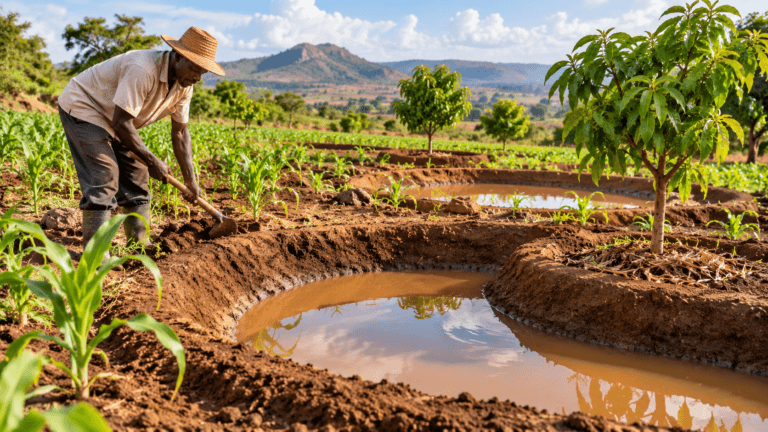
Waterlogged fields and wet foliage promote fungal diseases. Organic farms emphasize proper drainage, aeration, and efficient irrigation systems such as drip or sprinkler irrigation. Even crops like rice perform well under controlled saturation rather than constant flooding.
- Supporting Natural Enemies
Organic systems actively conserve beneficial organisms like ladybugs, parasitic wasps, and soil microbes such as Trichoderma. These natural enemies regulate pest populations without damaging ecosystems or pollinators.
Level B: Physical and Mechanical Controls
When preventive strategies are not enough, organic farms apply non-chemical physical and mechanical methods.
- Mulching: Organic and plastic mulches suppress weeds, reduce soil splash, and limit disease spread. Organic mulches also improve soil fertility over time.
- Canopy Management: Pruning and thinning improve airflow and light penetration, reducing humidity and fungal disease risk, especially in orchards and vineyards.
- Soil Solarization: Covering soil with plastic during hot periods raises temperatures enough to kill many soil-borne pathogens.
- Traps for Monitoring and Control
- Light traps capture night-flying insects
- Yellow sticky traps attract aphids, whiteflies, and leaf miners
- Pheromone traps disrupt mating and monitor pest populations.
These tools are affordable, scalable, and widely used by organic farmers.
- Fruit Bagging
Bagging fruits like mango, banana, guava, and melon prevents fruit flies from laying eggs. Though labor intensive, it significantly reduces losses in high-value crops.
Level C: Biological Control and Biopesticides
Only when Levels A and B are insufficient do organic systems use Level C interventions.
These include:
- Neem-based products
- Microbial sprays
- Biological control agents
All inputs are strictly regulated to protect pollinators, soil life, and water systems. Unlike synthetic pesticides, these tools work with ecological processes rather than disrupting them. Check the knowledge database section on the www.kcoa-africa.org platform for a rich resource of verified biological control and biopesticides.
What Ancient Farming Still Teaches Us
Long before synthetic chemicals, ancient farmers controlled crop diseases through ecological intelligence. They practiced:
- Crop rotation and polyculture
- Seed selection from healthy plants
- Controlled burning of infected residues
- Natural seed treatments using ash, cow dung, honey, salt, and copper compounds
- Agroforestry and terracing to manage water and humidity
- Removal of infected plants to prevent spread
These practices reduced disease by making environments hostile to pathogens, not by poisoning them.
Why This Matters for Policy, Climate, and Development
Organic disease management is not just a farming technique. It is a systems solution.
For Africa, it offers:
- Reduced dependence on imported agrochemicals
- Lower production costs for smallholder farmers
- Safer food and healthier ecosystems
- Greater resilience to climate variability
- Protection of pollinators and water systems
In a future defined by climate stress and rising food demand, disease prevention through ecological design is not optional. It is strategic.
Final Reflection
Organic farms do not eliminate pests and diseases. They manage them intelligently.
By designing systems where plants are strong, soils are alive, and ecosystems are balanced, organic farming demonstrates that resilience is built, not sprayed.
For farmers, policymakers, and development leaders, the lesson is clear:
The future of food security lies in systems that work with nature, not against it.

Author: Hepzibah Ebe
Experienced and results-driven Communications expert with over nine (9) years of expertise in developing and executing effective communication strategies, including more than two (2) years of specialization in agroecology