What If the best weapon against fall armyworm is already growing in your backyard?
In the fields of Mzimba, northern Malawi, farmers are responding to pest attacks in a different way.
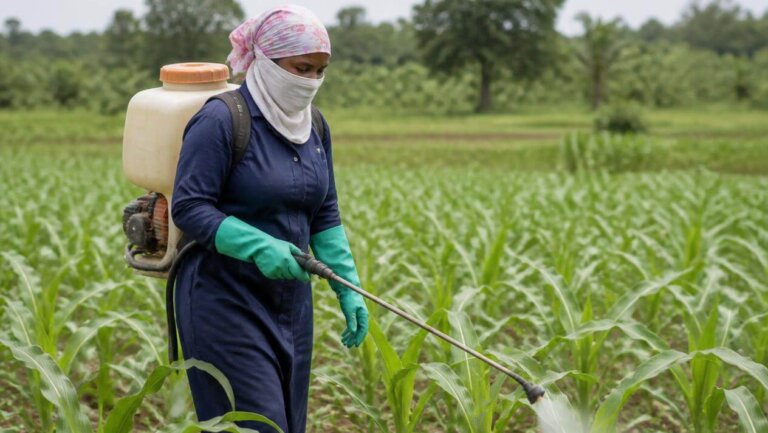
When fall armyworm or aphids appear in their maize or beans, they don’t rush to buy expensive chemical sprays. Instead, they walk to the edge of their farms and pick leaves from mtetezga (Tephrosia vogelii) or chisoyo (Vernonia amygdalina).
Back home, the process is simple. The leaves are dried, pounded into powder, mixed with water and a small amount of soap. By afternoon, farmers are spraying their crops with a natural pesticide that drives away fall armyworm, stalk borers, aphids, and weevils.
There is no coughing, no burning eyes, and no fear of poisoning the soil or water.
Through field trials supported by Soils, Food and Healthy Communities (SFHC), farmers tested these sprays and proved they work. The knowledge is now shared across the region through the Knowledge Hub for Organic Agriculture and Agroecology (KHSA).
The lesson is clear: the same plants grow wild in Zambia, Zimbabwe, Namibia, and beyond.
When Tradition Meets Innovation, Everyone Wins
For generations, smallholder farmers across Southern Africa have used plants to protect crops and stored grain. Elders passed down practical instructions:
- Use chisoyo for maize
- Use mtetezga for beans
- Spray in the afternoon
- Store the powder in a dark place
For years, this knowledge was dismissed as old-fashioned or unscientific.
Today, research is catching up with what farmers already knew.
Tephrosia vogelii contains rotenone, a natural compound that is toxic to insects but safe for people and pollinators when used correctly. Vernonia amygdalina contains phytochemicals that repel pests and disrupt their life cycles.
In SFHC trials, farmers recorded fewer pests and less crop damage, without harming their families, soils, or water sources.
This matters because synthetic pesticides often:
- Cost more than smallholders can afford
- Lose effectiveness as pests develop resistance
- Kill beneficial insects like bees and ladybirds
- Pose serious health risks, especially to women and children
Botanical sprays offer a safer alternative. They are affordable, biodegradable, and locally available.
They are not just about controlling pests. They protect health, support climate resilience, and respect farmers’ knowledge.
A Region-Wide Movement Is Growing
What started in Malawi is spreading across Southern Africa.
Zambia faces similar challenges. Since 2016, fall armyworm has damaged maize crops nationwide. At the same time, nearly half the population struggles to meet daily calorie needs, while large sums are spent on chemical inputs that degrade soils and deliver limited gains.
Botanical sprays offer another path.
If farmers in Eastern, Southern, or Luapula Province of Zambia adopted these methods, they could:
- Reduce production costs
- Limit exposure to toxic chemicals
- Produce safer food for their families and markets
- Protect biodiversity and water sources
Through KHSA partners such as PELUM Zambia, Kasisi Agricultural Training Centre, and SFHC Malawi, farmers are already:
- Training neighbours to make botanical sprays
- Setting up community botanical gardens
- Documenting which plants work best for different crops
This is agroecology in practice, where science supports tradition and innovation grows from the ground up.
Download the free guide by SFHC from the link below.

Author: Rabecca Mwila
Rabecca Mwila is a passionate advocate for sustainable agriculture and environmental stewardship. With a background in climate change and communications, she has spent years telling the untold stories of the realities of climate change, environmental and climate injustices and how they affect vulnerable communities in Africa and beyond