Tired of expensive chemical sprays that don’t work or leave your family coughing and your soil lifeless?
There is a better way, and it’s growing right outside your door.
Farmers in Mzimba, Malawi, have tested local plants, such as mtetezga (Tephrosia vogelii) and chisoyo (Vernonia amygdalina), and found that they effectively control fall armyworm, aphids, stalk borers, caterpillars, and weevils naturally, safely, and at almost no cost.
You can make your own spray in just 6 simple steps.
This guide, based on real farmer trials by Soils, Food and Healthy Communities (SFHC) and shared by the Knowledge Hub for Organic Agriculture and Agroecology in Southern Africa (KHSA), shows you exactly how.
Why Use Botanical Pesticides?
Affordable: No need to buy imported chemicals.
Safe: Biodegradable and non-toxic to humans, bees, and birds when used properly.
Effective: Field-tested against major pests in maize and beans.
Sustainable: Protects soil health and biodiversity.
Tip: Mtetezga works best on beans. Chisoyo works best on maize.
How to Make Your Own Botanical Spray: 6 Easy Steps
Follow this method, tested and trusted by smallholder farmers across Southern Africa.
Step 1: Gather Fresh Leaves
- Collect mature leaves of Tephrosia vogelii (mtetezga) or Vernonia amygdalina (chisoyo).
- Use gloves or wash hands after handling (some plants can irritate skin).
These plants grow wild in many parts of Zambia, Malawi, Zimbabwe, and Namibia. You can also plant them around your field as a living pest barrier.
Step 2: Dry the Leaves
- Spread leaves in a cool, dry, shady place (not in direct sun).
- Turn them daily until completely dry (usually 2–3 days).
- Drying preserves the active compounds and prevents mould.
Step 3: Pound into Powder
- Use a mortar and pestle or clean stone to grind the dried leaves into a fine powder.
- Store in an airtight container (like a clean plastic bottle or tin) in a dark, dry place.
- Properly stored powder can last up to 3 months.
Step 4: Mix the Solution
- 1 kg of botanical powder
- 5 litres of clean water
- 1 tablespoon of soap shavings (or liquid soap), which helps the spray stick to leaves
Soap is not a chemical, it’s a natural wetting agent that improves coverage.
Step 5: Soak and Strain
- Let the mixture soak overnight (8–12 hours).
- The next day, strain through a clean cloth (like a cotton T-shirt or muslin).
- Keep only the liquid. This is your botanical pesticide.
Step 6: Apply to Your Crops
- Best time to spray: Late afternoon (after 4 PM), when the sun is low, and bees are less active.
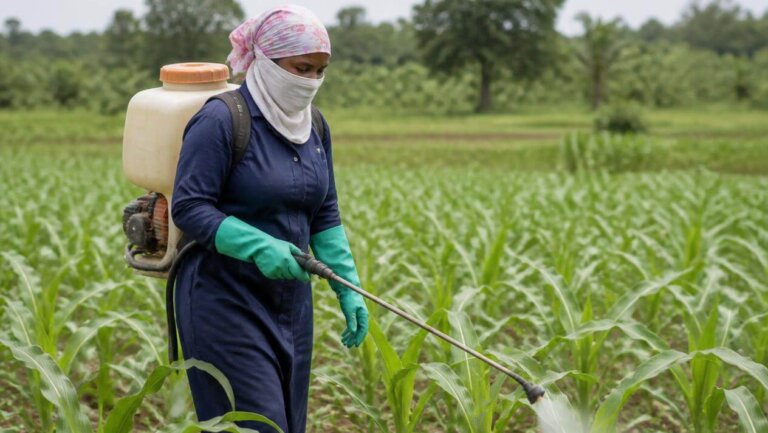
- Use: A clean plastic bottle with holes in the cap, a knapsack sprayer, or even a broom dipped in the solution and swept over plants.
- Reapply: Every 5 – 7 days, or after heavy rain.
Safety First!
- Wear a cloth over your nose and mouth when mixing and spraying.
- Wear old clothes or gloves (e.g., cut-up sugar bags) to protect your skin.
- Wash hands thoroughly after handling.
- Never store spray mixture. Make only what you’ll use in one day.
Tips for Best Results
- Combine with other agroecological practices:
→ Rotate crops
→ Plant diverse crops (intercropping)
→ Use mulch to retain moisture
→ Encourage natural predators like ladybugs and birds
- Test on a few plants first before spraying your whole field.
- Keep notes: Which plant worked best? When did pests decline? Share your results with your farmer group!
Why This Matters for Southern Africa
Chemical pesticides are expensive, often fake, and dangerous. They kill beneficial insects, pollute water, and degrade soil while pests like fall armyworm keep evolving resistance.
But botanicals are part of our heritage. They’re low-cost, locally controlled, and ecologically sound.
By making your own botanical spray, you’re not just protecting your crops, you’re building food sovereignty, climate resilience, and community knowledge.
Download the Free Farmer Guide from the link below:

Author: Rabecca Mwila
Rabecca Mwila is a passionate advocate for sustainable agriculture and environmental stewardship. With a background in climate change and communications, she has spent years telling the untold stories of the realities of climate change, environmental and climate injustices and how they affect vulnerable communities in Africa and beyond