INTRODUCTION
Soil is the foundation of agricultural production, and remains the primary source of income for farmers around the world. Beyond the farm, soil plays a critical role in sustaining the environment and has direct relevance to seven Sustainable Development Goals. Efficient soil management is not just a good practice, but a necessity against soil degradation. Recognising soil as a finite asset is the first step toward protecting it against degradation. Soil degradation undermines the productive capacity of agricultural land and is a threat to food security globally. The economic consequences vary widely, but studies estimate that land degradation can slash agricultural production between 1-40%. These figures underscore why protecting soil health is not just an environmental issue, but an economic and food security priority.

Access to Pedodata is one of the most effective ways to maintain soils sustainably; otherwise, efforts to protect the land remain hypothetical. Soil data provides details on the factors that determine production activities, management activities and where targeted soil interventions are required. Pedodata represents the quantitative and qualitative data about soil properties, processes, and spatial distribution. Soil data supports better decision‑making for sustainable agriculture and concurrently strengthens environmental protection. Soil data does more than provide numbers; it answers the critical questions that make or interrupt an agroecological system. Soil data identifies soil type, provides an overview of land capability, and highlights specific strengths and vulnerabilities, such as susceptibility to erosion, compaction, or nutrient leaching, that determine how soils respond to different land use.
Agroecology is a knowledge-driven approach to food production that requires precise information about a complex ecosystem on Earth: the soil. Agroecological principles are inherently universal, yet their efficacious implementation thrives on ecologically specific adaptation, a process fundamentally enabled by soil data. Soil information obtained from scientific and indigenous knowledge offers a credible foundation that aligns closely with existing practices in every ecology, thereby increasing the likelihood of adoption. Additionally, the efficient use of locally available resources requires appropriate soil knowledge to enhance management of inputs. By supplying the empirical basis for productive, resilient and self‑sustaining agroecological systems, soil data becomes a decisive factor in on‑farm processes. The ultimate purpose of soil data is to enable users to understand soil behaviour, enhance management, and develop locally inclusive guidelines that blend scientific insight with practice. In developing economic and social integration, such information is indispensable for sound policy decisions.
Agricultural soils in Nigeria are mostly degraded. The Food and Agriculture Organisation estimates that approximately 65% of Nigeria’s agricultural land is affected by degradation, primarily due to erosion, nutrient depletion, and loss of soil organic carbon. The consequences are tangible in declining yields due to soil fatigue. Also, the Federal Government spends billions of Naira annually on fertiliser. However, without soil data, these fertilisers are often applied at blanket rates, leading to inefficiency, acidification, and the destruction of beneficial soil microbiomes essential for agroecology. Degraded soils have reduced water infiltration and carbon storage capacity, making smallholder farmers exceptionally vulnerable to floods and droughts. Also, the current agricultural extension system lacks the capacity to conduct site-specific soil analysis. Consequently, farmers practice on probability rather than by science, making the transition to knowledge-intensive agroecological practices imperative.
PEDODATA IN NIGERIA
Smallholder farmers constitute over 80% of agricultural production in Nigeria. Investing in soil data is the foundational step to making agroecology scalable, profitable, and resilient. When farmers, extension agents, and policymakers have reliable soil information, good agroecological decisions become a path to sustainable food systems. Soil data in Nigeria exists in a fragmented state. Research institutes, universities, state and federal ministries carry out unilateral research on soil with no common goal to harness soil data nationally and have no repository or interoperability standard of data that is available to end users. Additionally, the available data are outdated; the last soil classification study was carried out in the 1970-80s for Northern and Western Nigeria. While the Nigerian Agricultural Soil Information System, supported by the World Bank, has made strides since 2020, its coverage remains incomplete, and data accessibility for grassroots users is limited.
The cost of analysing a single soil sample is high and may be unaffordable for most farmers, which is prohibitive for the average smallholder farmer. This limits the capacity of most farmers to evaluate the potential of their soils for sustained productivity. There is limited knowledge on the value of soil science in economic building and environmental sustainability. People seldom go into universities in Nigeria to study soil science; they happen to be in those departments by chance. Hence, there is a capacity deficit of experts in soil science and pedology within the state/regional Agricultural Development Programs who can interpret complex soil data into actionable agroecological advice.
THE ROLE OF PEDODATA IN AGROECOLOGY
- Soil data provides a farmer with knowledge for accurate nutrient management and allows agroecology to be practised in a manner where nutrient flows are managed locally.
- Pedodata on suitability classification provides farmers with information on crops or tree species that are best suited to specific soil types, reducing the risk of crop failure.
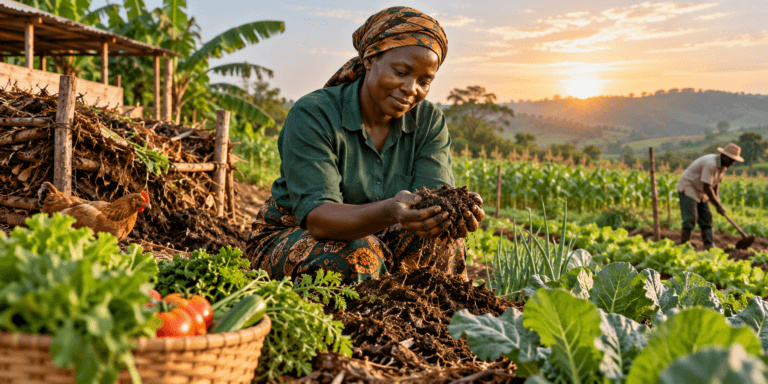
- Soil data better informs the best soil restoration practices to implement for any soil condition. In situations where there are soils with poor aggregate stability, a multi‑year rotation of grass‑legume mixtures can be recommended to rebuild soil organic matter and stabilise the soil surface before reintroducing annual crops.
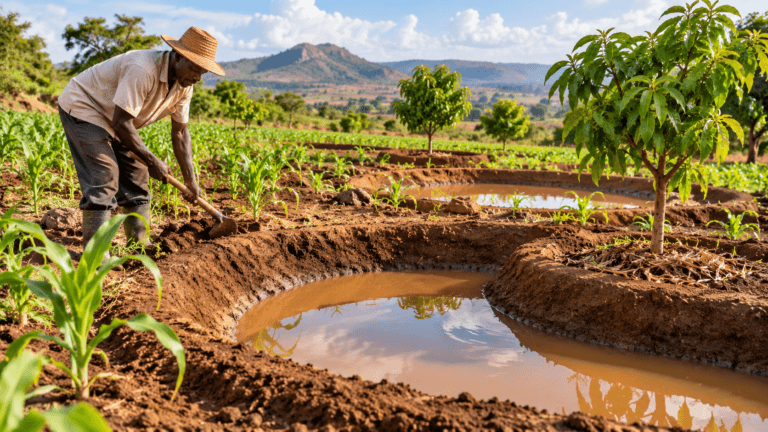
- Soil data helps in designing water‑harvesting structures, selecting drought‑tolerant systems, or managing drainage. If data reveals slow infiltration, it directs farmers to construct raised beds combined with drainage channels and the integration of water‑tolerant crops in the lower zones. A landscape‑scale agroecological zoning enabled by soil information.
- The use of soil data in agroecology informs a preventive system‑based pest management rather than reactive pesticide use. Soil data showing high nematode populations and low organic matter may require rotating nematicide cover crops like Marigold rather than using chemical nematicides, restoring soil biology while controlling pests.
- Access to carbon finance can be improved with soil data. Data allows a farmer or cooperative to decide which practices will most efficiently build carbon. Monitoring soil organic carbon provides the evidence needed to participate in carbon credit schemes, creating a new revenue stream that rewards soil stewardship.
- Soil data in agroecology accommodates validating indigenous knowledge in soil classification, suitability and fertility management. When soil data is translated into visual, locally relevant formats, farmers become co‑researchers. Farmers used this data to prioritise which fields to transition and to compare the performance of different organic practices. Validating this knowledge helps to resolve conflicting traditional knowledge.
RECOMMENDATIONS
- An institutionalised National Soil Information System should be created. The government can pass a legislative act designating a lead agency as the custodian of pedodata, an open-access National Soil Data Repository. Additionally, the government must partner with research institutes in funding soil surveys, fertiliser subsidy programs, and research projects that can contribute to a soil data repository. This will result in the creation of a database that allows for the generation of high-resolution digital soil maps for all Local Government Areas in Nigeria.
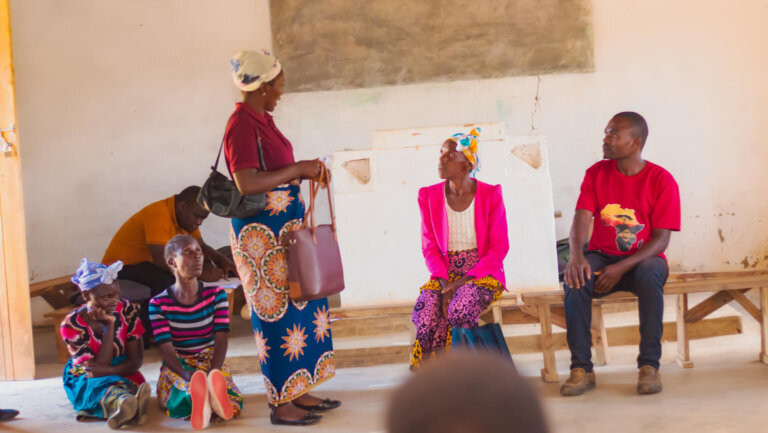
- Reform the agricultural extension system to have soil health as a core competence. This would entail training cohorts of Agroecological Extension Agents within the existing Agricultural Development Programmes. Provide them with soil testing kits and digital tablets connected to the central database. Extension services would grow beyond crop-specific advice to provide precision in agroecological prescriptions. Enhancing extension services also implies creating awareness of career opportunities in soil science/agroecology to improve the numerical capacity.
- Subsidy in agriculture should not be limited to inputs only, but also to soil diagnostic processes. This subsidy can be managed by the government and research institutes. Governing bodies can create a system that provides a Soil Health Voucher where farmers redeem these vouchers for comprehensive soil testing at accredited public/private laboratories. The list of accredited soil laboratories should be accessible. This will create a visible market for soil testing services, empowering farmers to apply the right inputs, ensuring that any fertiliser application is targeted towards soil deficiencies, drastically reducing waste and environmental damage.
- Agroecology is a key strategy for climate mitigation (carbon sequestration) and adaptation. However, carbon credits require verifiable soil organic carbon data. Within a structured Soil Information System, baseline frameworks can be established for soil carbon across major agroecological zones. This will enable Nigerian farmers practising agroecology to access international carbon markets, creating a new revenue stream that rewards soil stewardship. Without this data, Nigeria is locked out of the multi-billion-dollar carbon finance market.

5. Establish research hubs in each agroecological zone in Nigeria that will focus on the specific agroecological challenges of the region. These centres can serve as hubs for detailed soil analysis, participatory research with farmers, and the production of region-specific organic inputs and recommendations comprehensible to end users. This should not nullify the existence of soil laboratories and research institutes in each state, but rather complement the contributions of each agroecological centre as reference hubs.
CONCLUSION
For Nigeria, the current lack of soil data perpetuates the inefficiency of agricultural subsidies, increasing the risk for farmers attempting to transition to sustainable practices in Nigeria. Investing in a sturdy and accessible soil data infrastructure is a foundational to national food security, climate resilience, and economic diversification. By making soil data the foundation of agricultural policies, Nigeria can create a viable path to sustainable food sovereignty through agroecology.

Author: UTIBEABASI BROWNSON
Utibeabasi is passionate about bridging the gap between scientific research and practical agricultural solutions to advance food security, soil health, and sustainable farming practices. With a PhD in Agriculture (Soil Science) and a decade of hands-on experience, she specializes in Soil fertility evaluation, agroecology, knowledge transfer through training, capacity development and data-driven value chain analysis