The Fields Look Green – But the Soil Is Dying
Across Southern Africa, farmers spread synthetic fertilisers and pesticides on their fields each planting season, trusting that these inputs will deliver the yields they need to feed their families and earn an income.
For a season or two, the crops may look healthy. However, beneath the surface, something alarming is happening.
Soils are losing organic matter. Earthworms are disappearing. Water runoff carries chemicals into rivers and lakes. Season after season, farmers must increase the amount of inputs to get the same yields, increasing their dependency on costly chemical inputs.
The cycle of dependency on chemical inputs is not an accident. It is the outcome of industrial farming systems that prioritise short-term yield over long-term soil health – systems. Governments in Africa have implemented national policies that promote the use of synthetic inputs. Zambia’s Farm Input Support Programme (FISP) and Malawi’s Agricultural Input Programme is among the policies.
The cost? Poisoned soils, contaminated water, lost biodiversity and farmers bearing the burden while corporations profit.
What Chemical Farming Is Really Doing to Our Land and Lives
The Kusamala Institute of Agriculture and Ecology’s 2023 policy brief lays bare the damage industrial agriculture inflicts on Malawi’s ecosystems. These patterns repeat across Zambia, Zimbabwe, Namibia and beyond:
1. Agrochemicals Poison Soils and Water Bodies
- Synthetic fertilisers acidify soils, killing beneficial microbes that recycle nutrients naturally.
- Pesticides do not just target pests; they wipe out pollinators, soil organisms, and natural predators that keep ecosystems in balance.
- During rains, chemical-laden runoff flows into rivers, lakes and groundwater, contaminating drinking water and aquatic life.
In Malawi, water bodies show high chemical residues from agricultural runoff, contributing to cholera outbreaks and ecosystem collapse.
2. Deep Ploughing and Monocultures Accelerate Erosion
- Turning soil deeply exposes it to wind and water erosion, especially on slopes common in Eastern Zambia and Malawi’s highlands.
- Growing only maize season after season depletes specific nutrients, leaving the soil vulnerable and lifeless.
- Without diverse root systems to hold soil in place, topsoil washes away, taking fertility with it.
3. Water Cycles Break Down
Industrial systems waste water through:
- Inefficient flood irrigation on megafarms,
- Runoff from bare, compacted soils,
- Loss of soil organic matter that normally acts like a sponge holding moisture during droughts.
The result? Flash floods during rains, drought stress between showers and farmers caught in climate vulnerability they did not create.
4. Human Health Pays the Price
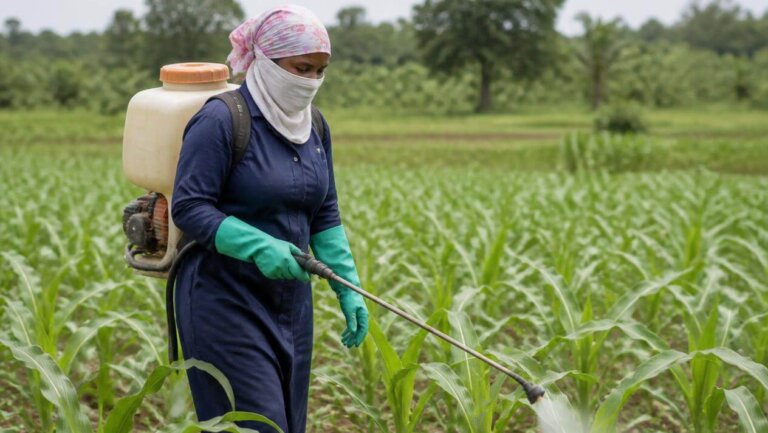
- Pesticide residues end up in food, water and the air farmers breathe.
- Globally, 385 million cases of unintentional pesticide poisoning occur yearly, with 44% of farmers poisoned annually (Christian Aid, 2021).
- In Zambia, women and children face disproportionate exposure when mixing sprays without protective gear or washing clothes contaminated with chemicals.
And for what? Maize yields that decline. Soils that require more inputs. Families are spending scarce cash on chemicals instead of food or school fees.
Agroecology Heals Soils, Protects Water, and Frees Farmers
The good news? We already have the solutions rooted in African knowledge, validated by science and practised by farmers across the region.
Agroecology is not just “farming without chemicals.” It is a food system that works with nature, not against it. It delivers measurable benefits:
1. Rebuild Soil Life with Fermented Bio-Fertilisers
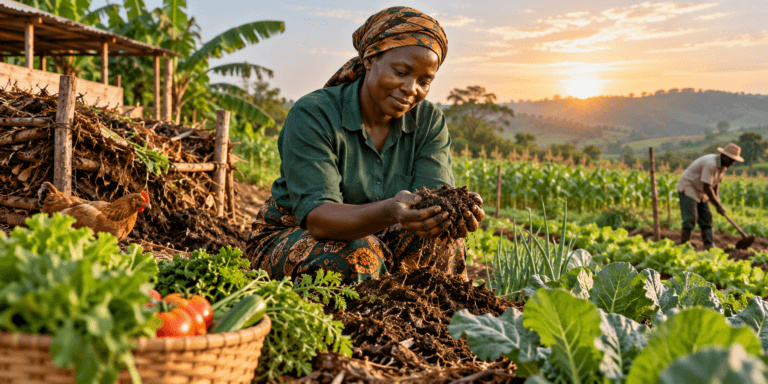
At Kasisi Agricultural Training Centre (KATC) in Zambia, farmers make fermented liquid bio-fertiliser (FLBF) from cow dung, ash and molasses, creating a microbe-rich brew that:
- Feeds soil organisms that recycle nutrients naturally,
- Improves water retention (critical in drought-prone areas),
- Cuts input costs by $123 per 2500 square meters compared to conventional farming (PELUM Zambia, 2024).
Unlike synthetic fertilisers that “burn” soil over time, FLBF builds fertility season after season.
2. Protect Crops Without Poisoning Water
Farmers in Mzimba, Malawi, use botanical sprays from mtetezga (Tephrosia vogelii) and chisoyo (Vernonia amygdalina) to control fall armyworm, aphids, and weevils without toxic runoff.
These plants grow wild across Southern Africa. Their sprays break down naturally, protecting crops and waterways.
3. Restore Water Cycles Through Soil Cover
Agroecological practices like:
- Cover cropping (e.g., legumes between maize rows)
- Mulching with crop residues
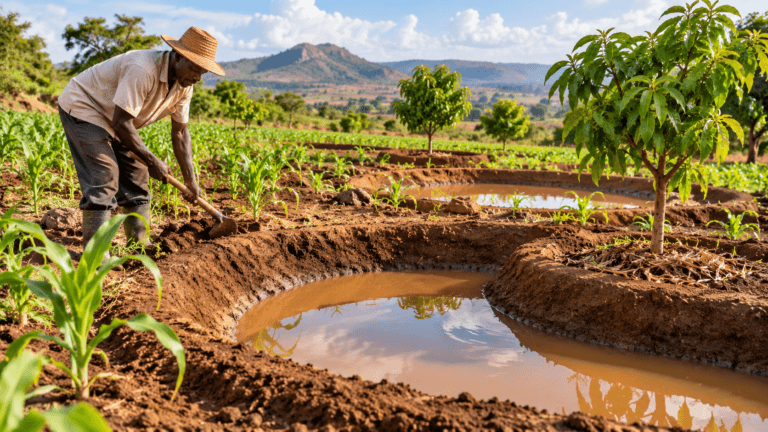
- Contour farming on slopes
4. Diversify Crops to Break Monoculture Dependence
Instead of maize alone, agroecology promotes:
- Intercropping maize with beans, pumpkins, and leafy greens,
- Rotating with nitrogen-fixing legumes,
- Growing indigenous crops like amaranth and bambara nuts.
Result? Healthier diets, stable yields during climate shocks, and soils that stay fertile without chemicals.
The Bottom Line: Soil Health Is National Security
Zambia has 42 million hectares of medium-to-high potential farmland, but only 15% is cultivated. Why?
Because farmers can’t afford inputs. Because soils are degraded. Because climate shocks wipe out monocultures.
But agroecology changes the equation.
The 2024 Agroecology Policy Briefing Pack shows agroecological maize farming delivers $320 profit per 2500 square meters, nearly double conventional methods ($197) by cutting input costs while maintaining yields (PELUM Zambia, 2024).
This is not theory. It is farmer-proven economics.
When we invest in soil health, not chemical dependency, we:
- Boost food security for 48% of Zambians who can’t meet caloric needs,
- Protect water sources for future generations,
- Empower women farmers with affordable, safe practices,
- And build climate resilience from the ground up.
Be Part of the Solution
The future of Southern Africa’s food system depends on the choices we make today.
Download Key Resources from the links below:

Author: Rabecca Mwila
Rabecca Mwila is a passionate advocate for sustainable agriculture and environmental stewardship. With a background in climate change and communications, she has spent years telling the untold stories of the realities of climate change, environmental and climate injustices and how they affect vulnerable communities in Africa and beyond