Growing up in a household where coffee and banana farming paid school fees and sustained livelihoods, she developed a deep appreciation for agriculture and the role it plays in transforming lives and communities.
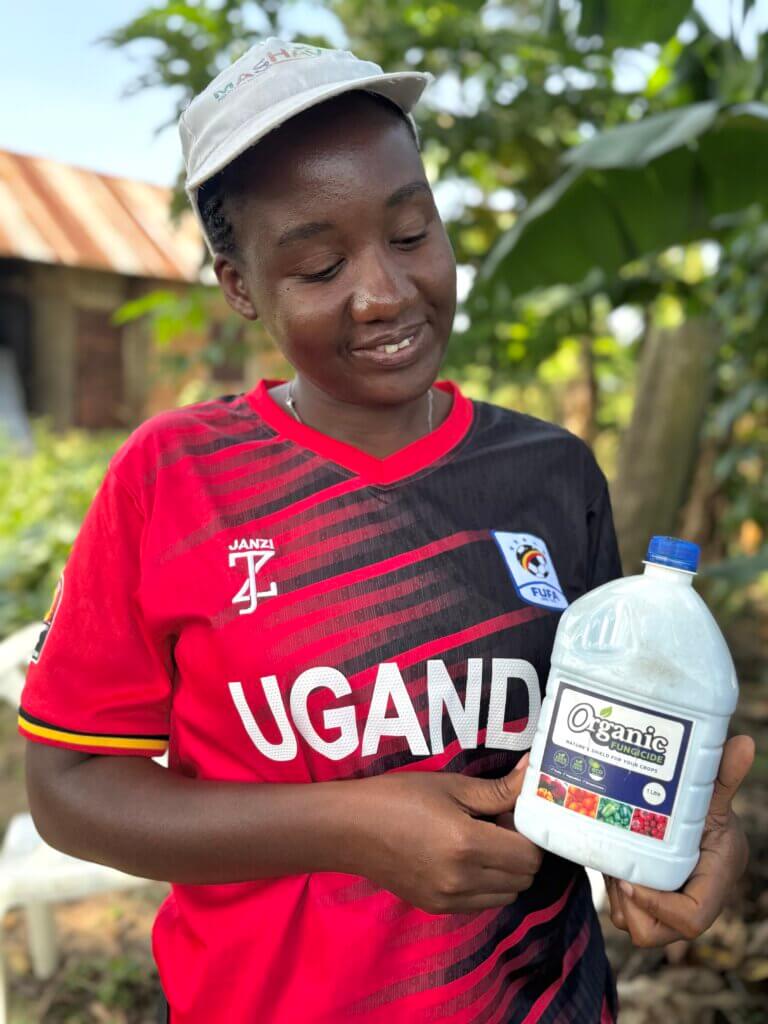
Today, Diana is the Director and Co-founder of Raj Garden Fresh, where she is pioneering the development of plant-based organic agricultural inputs that help farmers manage crop diseases sustainably. Her journey illustrates how knowledge, innovation, and entrepreneurship can drive the transition towards resilient food systems.
Building a Foundation in Agriculture
Determined to pursue her passion, Diana studied Biological Sciences at Advanced Level before enrolling for a Bachelor’s Degree in Agricultural Mechanization and Irrigation Engineering, graduating in 2014.
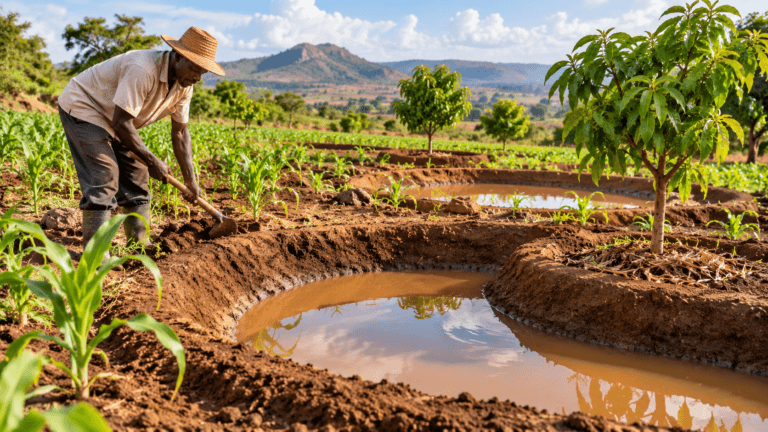
Like many young graduates, finding formal employment was not easy. Rather than waiting for opportunities, Diana created her own. She began supporting farmers through irrigation system installation, water harvesting initiatives, and climate-smart agriculture projects.
Over the years, she worked with several development programmes, training farmers across Uganda on sustainable agricultural practices and water management.
Recognizing a Challenge in Farming Systems
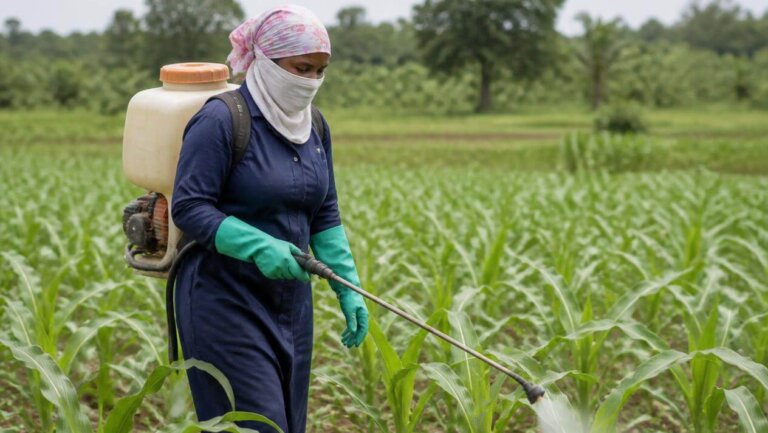
While working closely with farming communities, Diana repeatedly observed significant crop losses caused by pests, diseases, and poor post-harvest management. At the same time, she became increasingly concerned about the widespread reliance on synthetic agrochemicals.
“I would visit farms and find farmers heavily relying on chemicals. The smell of chemicals was everywhere. Deep inside, I felt there had to be a safer and more sustainable way of producing food,” Diana recalls.
— Diana Annet Nanono
Her search for alternatives led her to agroecology and climate resilience training programmes, where she discovered ecological farming practices capable of producing healthy crops with little or no dependence on synthetic chemicals.
KHEA Multiplier Training: A Turning Point
A defining moment came in June 2022 when Diana was selected to participate in the KHEA Multiplier Training, hosted by St. Jude Family Projects under the coordination of PELUM Uganda.
The practical training introduced participants to a range of agroecological technologies and innovations, including:
- Biochar production
- Vermiculture
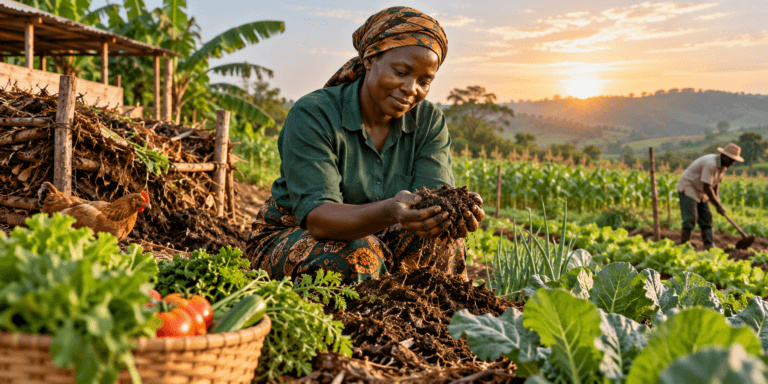
- Composting
- Bokashi manure production
- Botanical pesticides
- Biological crop protection methods
While appreciating the accessibility of many of these technologies, Diana identified a critical gap.
“I realized that while farmers could prepare many organic inputs themselves, producing effective fungicides required precision in measurements, formulations, and handling. I saw both a challenge and an opportunity.”
— Diana Annet Nanono
The training inspired her to begin exploring the development of an organic fungicide capable of helping farmers manage fungal diseases while reducing dependence on synthetic products.
Transforming Knowledge into Innovation

Shortly after the KHEA training, Diana joined an entrepreneurship incubation programme organized by Rootical Ventures Uganda.
There, she connected with fellow innovators committed to reducing losses in fruit and vegetable production. Together, they established a multidisciplinary team dedicated to research and product development.
Their innovation journey included:
- Partnering with biochemists
- Conducting laboratory experiments
- Testing plant-based extracts including neem, ginger, and lemongrass
- Refining product formulations
- Improving extraction techniques
- Strengthening product stability and effectiveness through research partnerships and innovation grants
What started as a simple idea gradually evolved into a promising organic agricultural solution.
Raj Garden Fresh: Delivering Sustainable Solutions
Today, Diana serves as the Director and Co-founder of Raj Garden Fresh, a company producing organic agricultural inputs designed to support healthier and more sustainable farming systems.
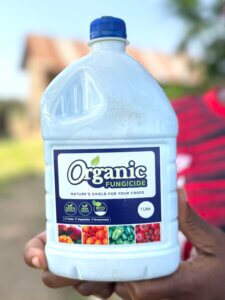
Their flagship innovation is a plant-based organic fungicide developed to safely manage fungal diseases affecting fruits and vegetables.

Following extensive field trials with farmers, the product has demonstrated encouraging results. The team is now focused on:
- Expanding farmer validation
- Product certification
- Compliance with national quality standards
- Scaling production for wider adoption
Putting Farmers at the Centre of Innovation
One lesson has remained central throughout Diana’s innovation journey: meaningful agricultural innovation begins with farmers.
“We innovate with farmers, not for farmers. Their feedback helps us improve our products. When farmers invest even a small amount to test a product, they attach value to it and provide honest feedback that strengthens the innovation.”
— Diana Annet Nanono
Farmer participation continues to shape product refinement, ensuring that the solutions developed respond directly to the realities experienced on farms.
The Impact of KHEA Capacity Building
Beyond developing an innovative product, Diana has become a passionate advocate for agroecology, farmer education, and sustainable food systems.
Her journey demonstrates how the Knowledge Hub for Organic Agriculture and Agroecology in Eastern Africa (KHEA) is empowering practitioners with practical knowledge that can be transformed into entrepreneurship, innovation, and locally driven solutions for agricultural challenges.
Through continuous learning and collaboration, Diana has successfully turned a challenge affecting farmers into an opportunity that contributes to healthier crops, safer food systems, and improved livelihoods.
Diana’s Reflection
“The KHEA multiplier training did not only equip me with agroecological knowledge; it transformed the way I see agriculture. It inspired me to turn a farmer’s challenge into an innovation that promotes healthier crops, safer food systems, and sustainable livelihoods.”
— Diana Annet Nanono
Knowledge Products
This success story highlights the practical application of knowledge gained through the Knowledge Hub for Organic Agriculture and Agroecology in Eastern Africa (KHEA) multiplier training and demonstrates how capacity building can stimulate innovation, entrepreneurship, and sustainable agricultural development.
Related Agroecological Practices
- Biochar production : https://kcoa-africa.org/wp-content/uploads/2025/10/Biochar-Fertilizer-6.pdf
- Vermiculture: https://kcoa-africa.org/wp-content/uploads/2025/10/KP-3-VERMICULTURE-1.pdf
- Composting: https://kcoa-africa.org/wp-content/uploads/2025/10/KHNA-EG-28-Composting-tutorials-for-beginners-by-EBDA-5.mp4
- Bokashi manure : https://view.officeapps.live.com/op/view.aspx?src=https%3A%2F%2Fkcoa-africa.org%2Fwp-content%2Fuploads%2F2025%2F10%2FKP-Making-BOKASHI-4.docx&wdOrigin=BROWSELINK
- Botanical pesticides: https://kcoa-africa.org/wp-content/uploads/2025/10/Homemade-organic-pesticides-based-on-local-plant-materials-for-pests-control-for-strawberry-farming-2.pdf
- Biological crop protection: https://kcoa-africa.org/wp-content/uploads/2025/10/Poster-5_Crop-rotation-vegetables_Print-2.pdf
- Organic crop disease management: https://kcoa-africa.org/wp-content/uploads/2025/10/Poster-4_Disease-management-vegetables_Print-2.pdf
For Diana Annet Nanono, agriculture is more than a profession,it is a lifelong passion rooted in her family’s farming heritage.
Disclaimer:
– To learn about the KCOA Project: https://kcoa-africa.org/
– To learn about the KHEA Project: https://khea-africa.org/
– For more details on this article, please reach out to; ezrakalule@pelumuganda.org OR pmagino@biovisionafrica.org
– See the license statement of all KCOA content: https://kcoa-africa.org/license-statement/ , which applies to all content from hubs implementing the KCOA project.