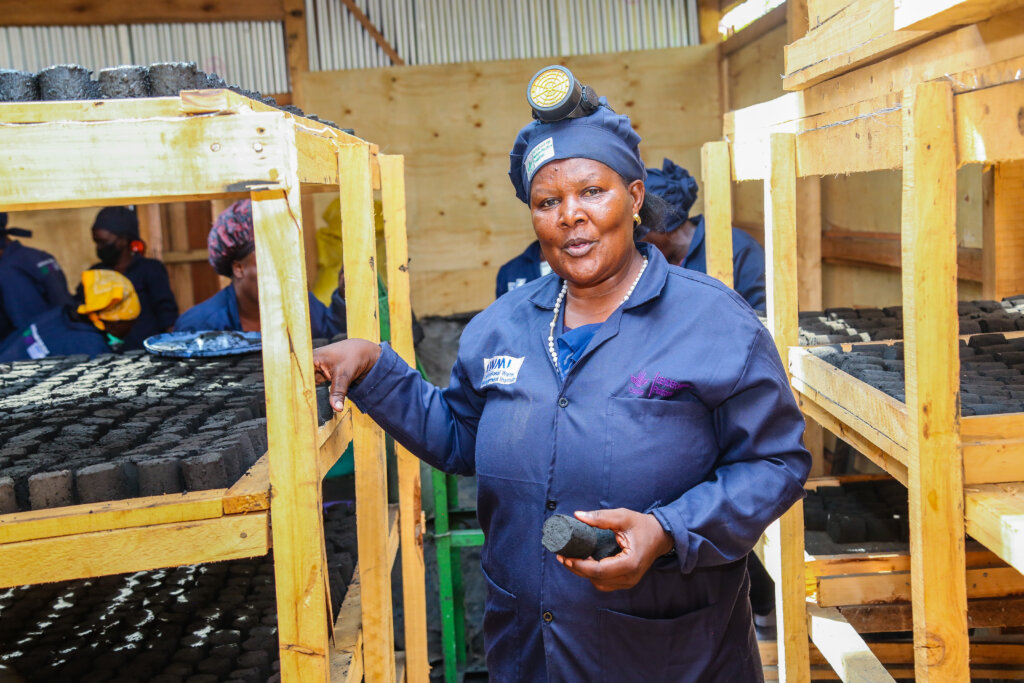
In Manyata B in Kisumu – Kenya, near Kwoyo Health Centre, a dedicated group of women is reshaping their community and advocating for environmental conservation. Jacinta Adhiambo, a passionate member of the Makwangla Women Group, shares an inspiring success story of resilience, innovation, and sustainability.https://youtu.be/OvdAv1AkXi0?si=Q7zXTB8boCTnUrRL
Makwangla Women Group, based in Manyata B Kisumu County, is leading a green revolution by producing high-quality briquettes using locally available, carbonized raw materials. These briquettes not only provide an eco-friendly alternative to traditional charcoal but also help combat deforestation and promote waste management.
Twice a week, Jacinta and her team gather at their production site, a workspace equipped with essential tools such as mixers, presser machines, and designated drying areas. The process begins with mixing carbonized materials, compressing them into briquettes, and carefully drying them on transparent iron sheet trays to retain maximum heat.
Jacinta highlights the group’s commitment to innovation, explaining how they convert agricultural waste, and other biomass into briquettes. This process not only reduces environmental pollution but also creates a sustainable energy source that retains heat longer than traditional charcoal.
The Role of Collaboration and Support

Jacinta thanks their donors, STIPA, in collaboration with International Water Management Institute and PELUM Kenya. Previously, the group faced numerous challenges working in an open environment under harsh sunlight, leading to fatigue and inefficiencies. With the construction of their new workspace, equipped with a separate drying area, the group now operates comfortably and efficiently.
“This building has changed everything for us,” Jacinta says. “We no longer face the challenges of breakages during drying, and we’ve eliminated losses. The sheltered environment ensures a seamless production process and significantly boosts our output.”
— Jacinta Abiambo
Jacinta emphasizes that their work supports climate change initiatives, turning waste materials into valuable resources.
“Waste management can be economically beneficial,” she notes. “We convert heaps of waste into briquettes, reducing environmental litter and creating a cleaner, more sustainable future.”
— Jacinta Abiambo
Growing Impact and Community Recognition
The briquettes produced by Makwangla Women Group have garnered widespread recognition for their quality and efficiency. Customers frequently commend their superior performance compared to traditional biomass products, fueling the group’s motivation to expand.
As the only group in Manyata B engaging in briquette production, Jacinta and her team are proud to serve their community. Their products are readily available at their site in Manyata B Located in Kisumu next to Awuji and Kwoyo Health Centre.
The success of Makwangla Women Group demonstrates the power of innovation, collaboration, and dedication to sustainability. If you’re in Manyata B or surrounding areas, consider supporting their eco-friendly briquettes.

Author: Brian Juma
I am a communications specialist focused on organic agriculture and sustainable development. I create impactful messaging to raise awareness of eco-friendly practices, using storytelling to connect farmers, consumers, and organizations. My goal is to foster understanding of organic agriculture's benefits and drive positive change