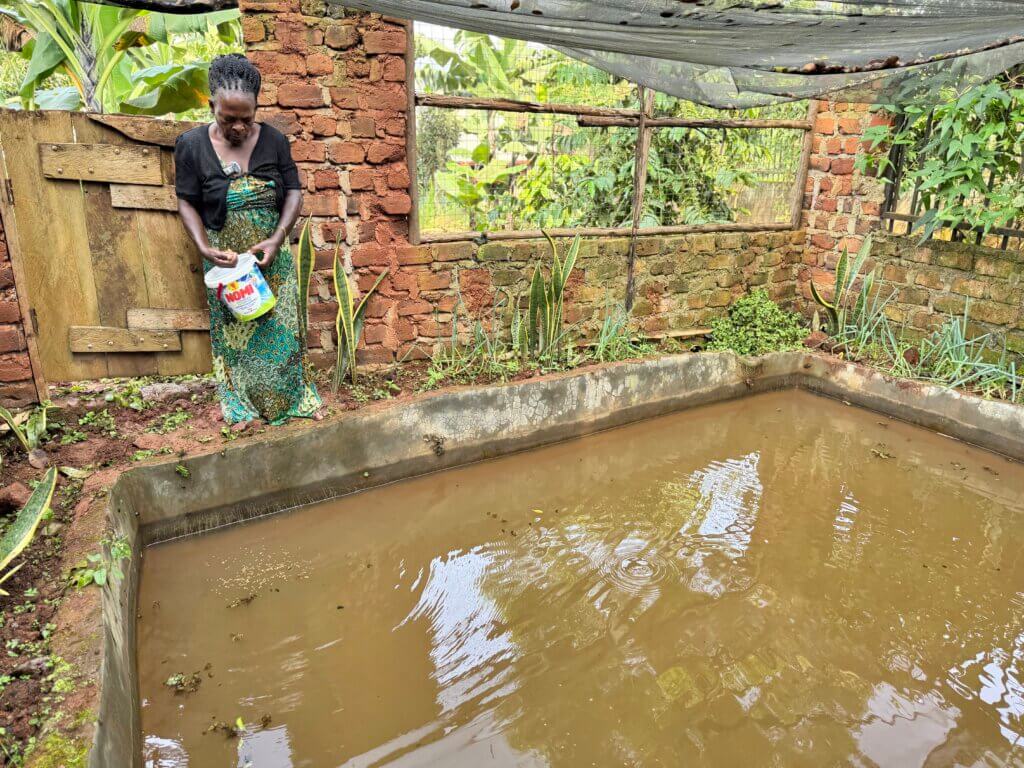
For Joy Katabaire, a farmer from Ssanda Village in Mende Parish, Mende Sub-county, Wakiso District, organic agriculture is more than a farming practice, it is a pathway towards healthier households, improved nutrition, and a cleaner environment.
A farmer attached to the Agency for Integrated Rural Development (AFIRD), Joy has worked with the organization since 2014. Through a partnership between AFIRD and PELUM Uganda, she was selected to participate in multiplier training in agroecology and organic agriculture.
The training equipped her with practical skills that she could apply on her own farm and share with fellow farmers in her community.
Her journey demonstrates how the multiplier approach can transform knowledge into practical action, enabling farmers to adopt safer farming practices while improving household nutrition and strengthening community resilience.
From Farmer to Community Multiplier
Through the partnership between AFIRD and PELUM Uganda, Joy was selected to become a Multiplier in agroecology and organic agriculture under the KHEA Hub.
The objective of the training was not only to equip participants with knowledge but also to prepare them to become community trainers who could cascade what they had learned to other farmers.
After completing the training, Joy was tasked with training 50 fellow farmers.

The training introduced farmers to organic farming practices that reduce dependence on synthetic fertilizers and pesticides. Participants learned how to produce organic fertilizers and natural pest repellents using materials that are readily available within their communities.
For Joy, the training provided an opportunity to take practical knowledge directly to farmers and demonstrate that organic agriculture can be accessible, affordable, and achievable using locally available resources.
Turning Local Resources into Organic Solutions
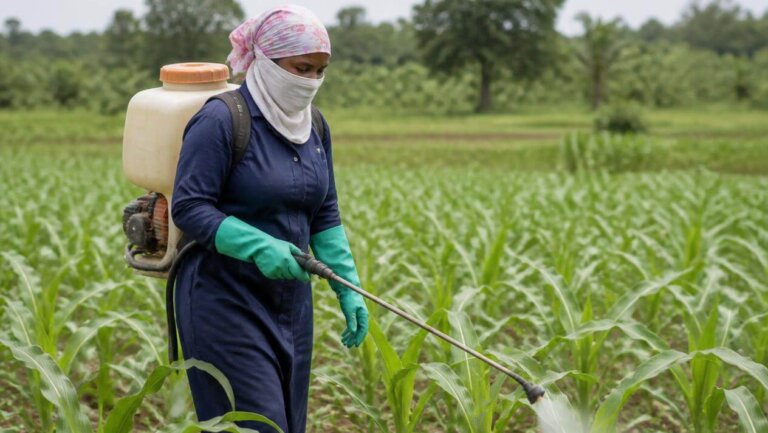
One of the key practices Joy shared with farmers was the preparation of natural pest repellents.
Farmers learned how to combine locally available ingredients such as hot pepper, garlic, and other plants to prepare natural crop protection solutions.
These botanical repellents offer farmers an alternative to synthetic chemical pesticides, helping protect crops while reducing potential exposure to harmful chemicals for farmers, consumers, and the environment.
The approach also encourages farmers to make use of resources that are readily available around their homes and farms, reducing the cost of agricultural inputs.
Promoting Organic Food for Healthier Households
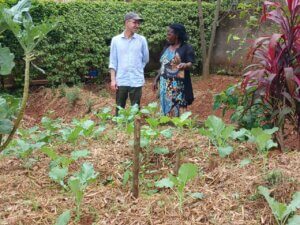
Joy’s work goes beyond how food is produced. She also emphasizes the importance of what families consume.
Farmers were encouraged to grow and consume organically produced food as part of efforts to improve household nutrition and promote healthier diets.
On her own farm, Joy grows indigenous tomato varieties and avoids the use of chemical sprays.
Her experience has strengthened her belief that organic agriculture can contribute to healthier food systems by reducing exposure to synthetic chemicals while encouraging families to grow fresh and nutritious food for their own consumption.
Establishing Organic Home Gardens
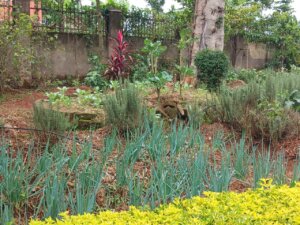
After completing her training, Joy returned to her community and began mobilizing local farmers.
She initially worked with a group of 25 farmers who were supported and supervised through the project.
The farmers were trained to establish simple home gardens where they could grow nutritious vegetables such as:
- Spring onions
- Nakati
- Dodo
- Indigenous tomato varieties
- Other locally suitable vegetables
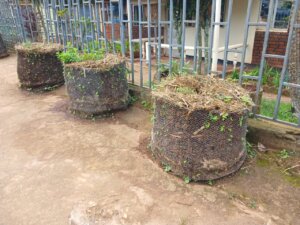
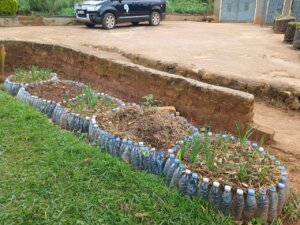
The training emphasized that even households with limited land can establish productive gardens using organic farming methods.
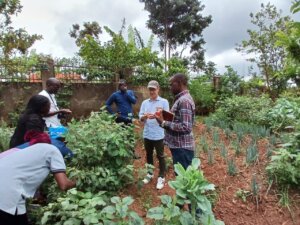
By growing vegetables close to their homes, families can improve access to fresh food while reducing the cost of purchasing vegetables from the market.
Organic Farming for Improved Nutrition
The home garden initiative focused not only on food production but also on household nutrition.
Farmers were encouraged to grow a variety of vegetables that could contribute to more diverse and nutritious diets.
They were also trained to produce organic pesticides and organic manure using locally available materials.
This integrated approach helped farmers understand the connection between healthy soils, healthy crops, healthy food, and healthy families.
For Joy, the ability to grow nutritious food using safe and environmentally friendly practices is one of the most important benefits of organic agriculture.
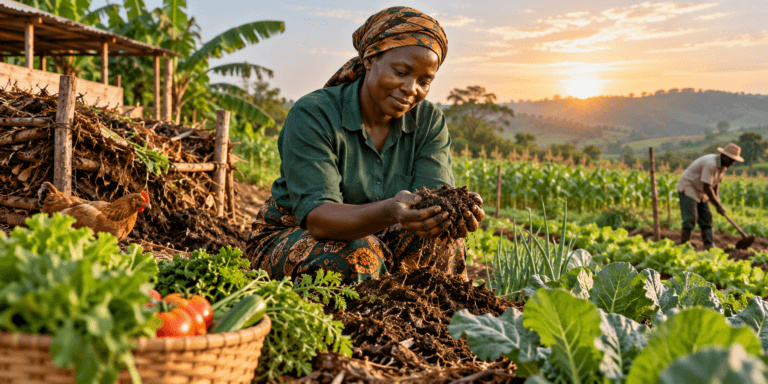
Producing “Green Tea” Organic Manure
One of the organic fertilizers promoted through the training is commonly known as “green tea” manure.
The process involves collecting soft plant materials and weeds that decompose easily and placing them in a drum filled with water.
The mixture is then left to ferment for approximately 21 to 30 days.
Once fermentation is complete, the resulting liquid fertilizer is diluted before application.
Farmers mix approximately one litre of the fermented solution with three litres of water before applying it to their crops.
The practice provides farmers with a low-cost source of organic plant nutrients while making use of locally available plant materials that might otherwise be discarded.
Monitoring Adoption Through Farmer Follow-Up
To understand whether farmers were applying the knowledge they had received, a three-member monitoring and evaluation team was established.
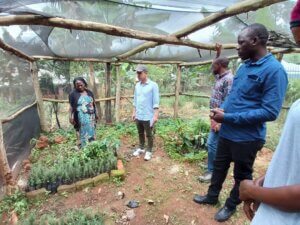 The team conducted follow-up visits to assess the progress of trained farmers and determine whether they had adopted the organic farming practices introduced during the training.
This follow-up approach was important in ensuring that the training translated into practical changes at household level.
The results were encouraging.
Of the 25 farmers initially trained, 15 successfully established home gardens and were actively applying organic farming practices.
These farmers were growing vegetables and other crops without relying on synthetic chemicals, demonstrating that the knowledge gained through the training could be translated into practical action.
The Power of Training, Follow-Up, and Support
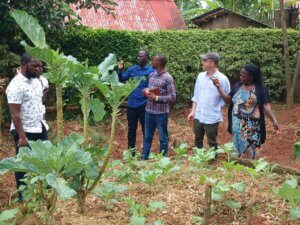 Joy’s experience demonstrates that successful adoption of organic agriculture requires more than simply providing farmers with information.
Training must be complemented by practical demonstrations, follow-up, monitoring, and continued support.
The experience of the 25 farmers shows how community-based training can create tangible changes at household level. Through home gardens, farmers are producing nutritious food, reducing dependence on synthetic agricultural chemicals, and making use of locally available materials to produce their own farm inputs.
The journey also demonstrates the value of the multiplier approach. By equipping farmers like Joy with knowledge and training skills, the approach enables knowledge to move beyond the initial training room and reach households and communities.
In conclusion, Joy Katabaire’s story demonstrates how knowledge can become a powerful tool for transforming household food systems and community health.
Through multiplier training supported by the partnership between AFIRD and PELUM Uganda, Joy gained the skills to promote organic agriculture and share practical knowledge with fellow farmers.
Her work has helped farmers establish home gardens, produce organic fertilizers and natural pest repellents, and adopt farming practices that support healthier diets and a cleaner environment.
The adoption of organic practices by 15 of the 25 farmers initially trained demonstrates the potential of combining training with follow-up and community support.
Joy’s experience is a reminder that meaningful agricultural transformation can begin at household level. When farmers are equipped with practical knowledge and supported to apply it, they can become active agents of change improving nutrition, protecting the environment, and contributing to healthier and more sustainable communities.
Knowledge Products
This success story highlights the role of the KHEA multiplier approach in promoting practical organic agriculture knowledge at community and household level.
Key Knowledge Areas
- Organic agriculture ; https://kcoa-africa.org/wp-content/uploads/2025/10/PNUD_Organic-Agriculture-and-Food-Security-in-Africa_Summary-2008-1.pdf
- Agroecology ; https://kcoa-africa.org/wp-content/uploads/2025/10/The-10-Elements-of-Agroecology-2.pdf
- Household nutrition ; https://kcoa-africa.org/wp-content/uploads/2025/10/SNM-Part-2-Food-Water-Agriculture-Environment-2018.11.28-small.pdf
- Natural pest management ; https://kcoa-africa.org/wp-content/uploads/2025/10/Lindle-biological-pest-control-_-digital-2.pdf
- Botanical pesticides ; https://kcoa-africa.org/wp-content/uploads/2025/10/KATC-PostcardBooklet_Pesticides-2.pdf
- Organic fertilizer production; https://kcoa-africa.org/wp-content/uploads/2025/10/KATC-PostcardBooklet_LiquidBio-2.pdf
- Green tea manure;https://kcoa-africa.org/wp-content/uploads/2025/10/Concetrated-Plant-Liquid-Manure-7.pdf
-
Disclaimer:
– To learn about the KCOA Project: https://kcoa-africa.org/
– To learn about the KHEA Project: https://khea-africa.org/
– For more details on this article, please reach out to; ezrakalule@pelumuganda.org OR pmagino@biovisionafrica.org
– See the license statement of all KCOA content: https://kcoa-africa.org/license-statement/ , which applies to all content from hubs implementing the KCOA project.