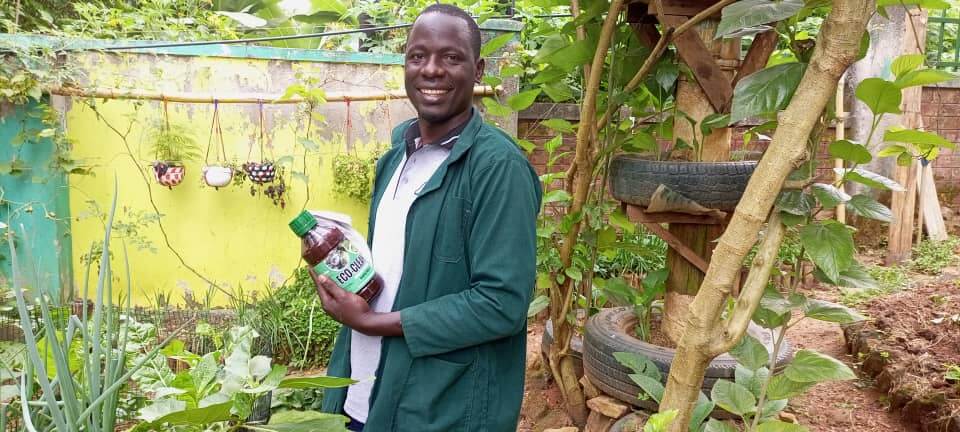
For Wasswa Faizo, Program Manager at the Agency for Integrated Rural Development (AFIRD), knowledge sharing has become a powerful pathway for advancing organic agriculture and agroecology across Uganda.
As an associated partner under the KHEA project, implemented through PELUM Uganda, AFIRD works with communities to promote organic agriculture among schools, prisons, and smallholder farmers.
Wasswa also serves as a Master Trainer under the KCOA network under the KHEA Hub, where he has played a key role in building a network of multipliers who are taking organic agriculture knowledge directly into their communities.
Building Capacity to Share Organic Agriculture Knowledge
 Wasswa’s journey as a Master Trainer began in 2019, when he participated in training conducted by a consultant from IFOAM Organics International(IFOAM).
The training focused on organic agriculture and knowledge dissemination, equipping him with the skills and capacity needed to effectively transfer knowledge to multipliers and farming communities.
The experience strengthened his ability to cascade knowledge and support communities in understanding and applying practical organic agriculture principles.
Creating a Multiplier Effect
As a Master Trainer, Wasswa has successfully trained 60 multipliers who are now actively sharing organic agriculture knowledge and practices within their respective communities.
Through this multiplier approach, the knowledge has reached more than 300 farmers, creating a growing network of informed practitioners who are adopting and promoting organic farming methods.
This approach demonstrates the power of investing in knowledge dissemination. Rather than limiting training to a small number of direct beneficiaries, the multiplier model enables knowledge to travel further, reaching more farmers and communities through locally embedded trainers.
Establishing Organic Agriculture Learning Centres
One of the most encouraging outcomes of the multiplier training has been the establishment of several organic agriculture learning centres by trained multipliers.
These centres serve as practical demonstration and learning hubs where farmers can:
- Access information on organic agriculture;
- Observe practical organic farming techniques;
- Learn about sustainable agricultural practices;
- Exchange experiences with fellow farmers;
- Gain practical knowledge that can be applied on their own farms.
By bringing learning closer to farming communities, these centres are helping to increase awareness and encourage the adoption of organic agriculture practices, particularly across Central Uganda.
Taking Knowledge to Communities
Most of the multipliers trained by Wasswa are based in Wakiso, Mukono, Gomba, Mubende, and Mityana districts.
Through their work, more farmers are gaining access to practical knowledge that supports:
- Sustainable agricultural production;
- Improved soil health;
- Environmental conservation;
- Adoption of organic farming practices;
- Increased availability of organic products in local and national markets.
The growing network of multipliers and learning centres demonstrates how community-based knowledge sharing can help bridge the gap between agricultural knowledge and practical application.
The Power of Farmer-to-Farmer Learning
For Wasswa, the progress achieved so far demonstrates the value of investing in local knowledge networks and farmer-to-farmer learning.
“I am grateful to PELUM Uganda and the Agency for Integrated Rural Development for providing this opportunity and for their continued commitment to promoting organic agriculture and Agroecology. The progress achieved so far demonstrates the power of knowledge sharing and farmer-to-farmer learning in transforming agricultural systems and livelihoods.”
— Wasswa Faizo
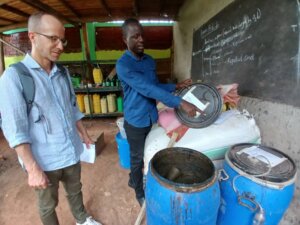
Through the multiplier approach, farmers are not only receiving knowledge but are becoming active participants in sharing, demonstrating, and promoting sustainable agricultural practices within their communities.
Expanding the Reach of Organic Agriculture Knowledge
Despite the progress achieved, Wasswa believes there is a need to expand the initiative to reach more communities.
The demand for organic agriculture knowledge continues to grow, alongside increasing consumer interest in organic products. More farmers require access to the skills, knowledge, and innovations needed to improve their productivity, resilience, and incomes.
“I believe this initiative should continue and be expanded to reach more communities. The demand for organic agriculture knowledge is steadily growing, alongside increasing consumer demand for organic products. More farmers need access to these skills and innovations to improve their productivity, resilience, and incomes.”
— Wasswa Faizo
He therefore calls for continued investment in farmer training programmes, particularly those that strengthen the multiplier approach and community-based learning.
“By supporting more trainings and knowledge-sharing platforms, we can ensure that organic agriculture knowledge reaches even the most remote rural communities across Uganda and beyond.”
— Wasswa Faizo
A Growing Network of Knowledge Promoters
Wasswa’s experience demonstrates how strategic investment in knowledge dissemination can create a ripple effect that extends far beyond the initial training.
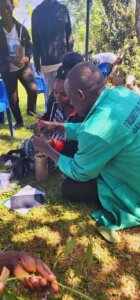 From one Master Trainer, 60 multipliers have been equipped to share knowledge with their communities, reaching more than 300 farmers and contributing to the establishment of organic agriculture learning centres.
The story highlights the importance of strengthening local knowledge networks and creating opportunities for farmers to learn from one another. As these networks continue to grow, they can play an important role in accelerating the adoption of organic agriculture, strengthening sustainable livelihoods, and supporting the transition towards resilient food systems.
Conclusion
Wasswa Faizo’s journey as a Master Trainer demonstrates the transformative power of knowledge when it is deliberately designed to be shared and multiplied.
Through the KCOA-KHEA Hub, training has moved beyond individual capacity building to create a growing network of multipliers, farmers, and community learning centres. This approach is helping to make organic agriculture knowledge more accessible while supporting farmers to adopt practical solutions for sustainable production and environmental conservation.
The experience also reinforces an important lesson: when communities are equipped with knowledge and the capacity to share it, they become active drivers of agricultural transformation.
As demand for organic agriculture knowledge and products continues to grow, strengthening multiplier networks and community-based learning platforms will be essential to ensuring that more farmers across Uganda and beyond can access the knowledge and skills needed to build productive, resilient, and sustainable livelihoods.
Knowledge Products
This success story demonstrates the impact of the KCOA-KHEA knowledge dissemination and multiplier approach, highlighting how trained Master Trainers can cascade knowledge to multipliers, farmers, and wider communities.
Key Knowledge Areas Promoted:
- Organic agriculture : https://kcoa-africa.org/wp-content/uploads/2025/11/KHSA-Factsheet_What-is-organic-agriculture-4.pdf
- Agroecology : https://kcoa-africa.org/wp-content/uploads/2025/10/The-10-Elements-of-Agroecology-2.pdf
- Soil health management : https://kcoa-africa.org/wp-content/uploads/2025/10/Soil-Health-6.pdf
- Environmental conservation : kcoa-africa.org/wp-content/uploads/2025/10/SNM-Part-2-Food-Water-Agriculture-Environment-2018.11.28-small.pdf
- Organic market development : kcoa-africa.org/wp-content/uploads/2025/10/Farmers-Market-Manual-online.pdf
Disclaimer:
– To learn about the KCOA Project: https://kcoa-africa.org/
– To learn about the KHEA Project: https://khea-africa.org/
– For more details on this article, please reach out to; ezrakalule@pelumuganda.org OR pmagino@biovisionafrica.org
– See the license statement of all KCOA content: https://kcoa-africa.org/license-statement/ , which applies to all content from hubs implementing the KCOA project.