Soil Health: The Foundation of Africa’s Food Future
Africa’s food security depends on far more than high yields. It relies on the health of our soil, our ecosystems, and our communities. As climate change, soil degradation, and water pollution intensify, farmers need solutions that protect both people and the environment.
Organic farming offers exactly that. It is not just an alternative technique—it is a way of regenerating the land while producing safe, nutritious food. It promises cleaner water, stronger harvests, and healthier communities.
The Living Soil Beneath Our Feet
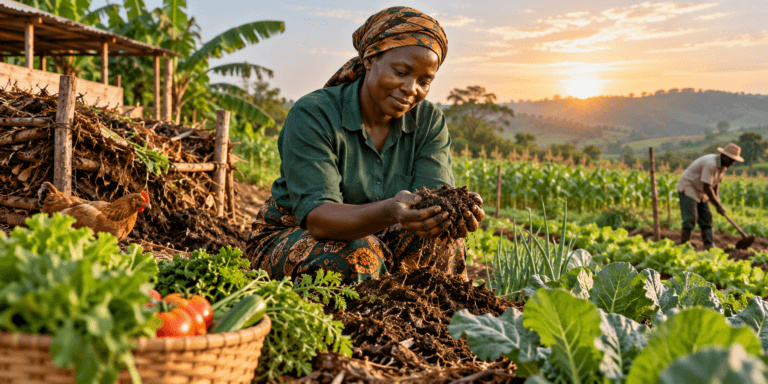
Imagine walking through a field where the soil is dark, rich, and full of life. Earthworms, microbes, and fungi work together to create a natural engine of fertility. This living soil is what makes farms more resilient during droughts, floods, and heatwaves.
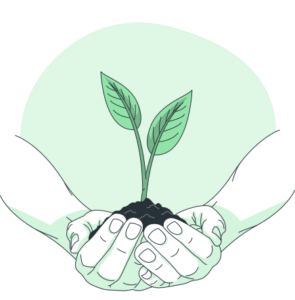
Organic farming rebuilds this life in the soil. By adding compost, rotating crops, and avoiding harmful chemicals, farmers allow nature to restore its own balance. Healthy soil stores more carbon, holds more water, and recovers faster from climate shocks—making it one of the most powerful tools in fighting food insecurity.
Growing Diversity Above and Below Groun
Biodiversity is essential for a stable farming system. On organic farms, different crops grow side by side, each playing a role: one attracts pollinators, another repels pests, another improves soil nutrients. This natural diversity reduces the need for chemical pesticides and fertilisers.
Beneficial insects, birds, and microorganisms return to these landscapes, helping control pests and enrich soil. When biodiversity flourishes, farms become stronger, more productive, and more resilient.
Farming Without Harmful Chemicals
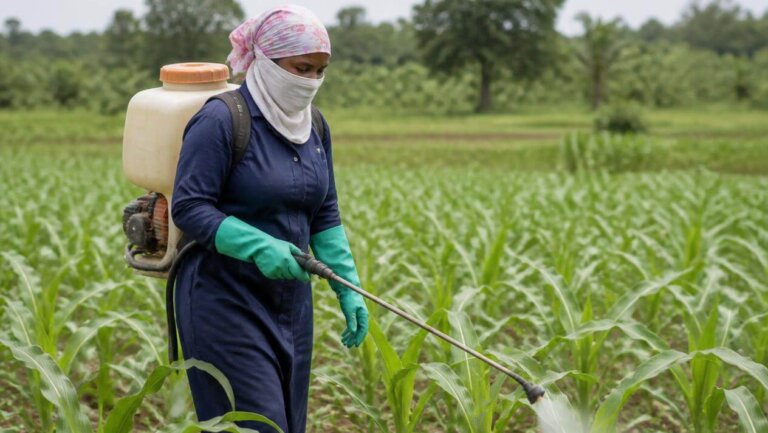
Many African farmers and consumers face growing concerns about synthetic pesticides and herbicides. These chemicals can contaminate water sources, harm soil life, and increase health risks for farmers who handle them daily.
Organic farming removes this threat. With no synthetic chemicals allowed, farmers protect their own health and provide food that is free from harmful residues. This creates safer communities and healthier ecosystems.
Climate Resilience Starts in the Soil
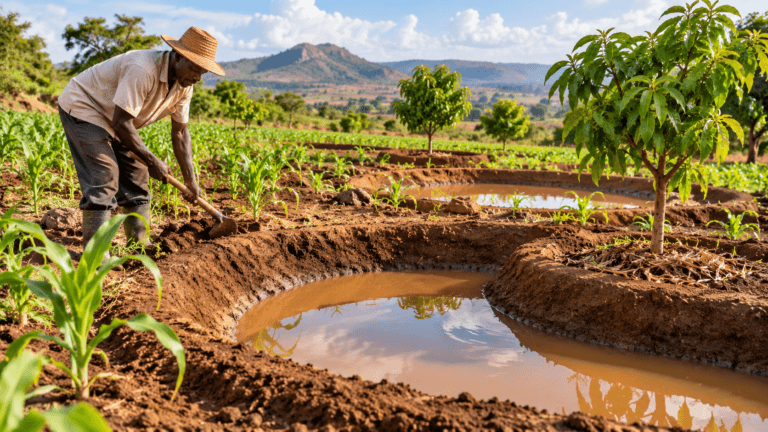
Unpredictable rainfall, longer droughts, and rising temperatures are already affecting African farmers. Organic farming helps them adapt by:
- Increasing soil organic matter, which traps moisture
- Boosting soil structure, reducing erosion
- Improving water infiltration and storage
- Enhancing carbon capture in the soil
These qualities make farms better able to withstand climate shocks and bounce back after difficult seasons.
A System That Benefits Everyone
Switching to organic farming is not only an environmental decision—it is a social and health investment. Healthier soils mean healthier crops. Cleaner water means healthier communities. More biodiversity means stronger ecosystems.
Building this future requires cooperation between farmers, consumers, policymakers, researchers, and educators. Agriculture cannot stand alone. Health and environmental sectors must play an equal role in shaping the policies that determine how we grow food.
Be Part of the Change
Africa needs farming systems that heal the soil, protect biodiversity, and secure livelihoods for generations to come. Organic farming creates this foundation.
You can help drive this transformation through your voice, your choices, and your engagement.
Together, we can build a food system rooted in resilience, justice, and ecological health.
Download the policy brief “Sustaining our food system with organic farming from the link below”

Author: Rabecca Mwila
Rabecca Mwila is a passionate advocate for sustainable agriculture and environmental stewardship. With a background in climate change and communications, she has spent years telling the untold stories of the realities of climate change, environmental and climate injustices and how they affect vulnerable communities in Africa and beyond