In many farming conversations, especially around dry and semi-arid regions, a common belief persists: “It is not possible to grow high-value crops like tomatoes without greenhouses or heavy chemical inputs.”
But in Chamwino, Dodoma (Tanzania), one farmer is quietly rewriting that narrative.
Breaking the Myth in a Harsh Climate
 Yohana Augustino Lugalo, a KHEA Multiplier under the Tanzania Organic Agriculture Movement (TOAM), is demonstrating that organic tomato production is not only possible but it can be highly productive, even in challenging climatic conditions.
Despite the hot and semi-arid environment of Dodoma, Yohana consistently produces tomatoes across seasons using purely organic methods. His farm stands as a practical example that resilience in agriculture is not about expensive infrastructure, but about smart, sustainable practices.
How He Does It: Simplicity Meets Sustainability
 In Photo; Following the recent KHEA M&E visit to TOAM under the KCOA framework by Biovision Africa Trust and PELUM Kenya representatives, Yohana hosted the team at his farm
 Instead of relying on chemical fertilizers or greenhouse systems, Yohana applies:
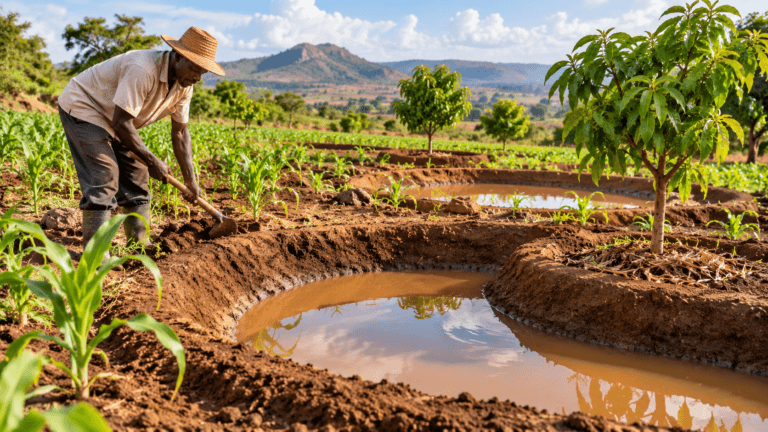
- Affordable drip irrigation systems that optimize water use in a dry climate
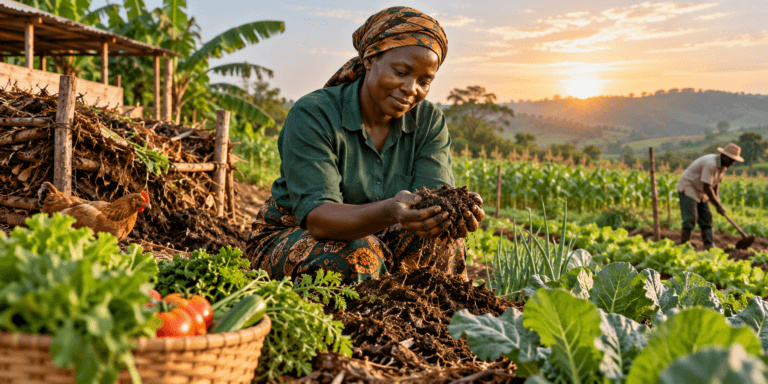
- Natural soil management practices to maintain fertility and structure
- Purely organic production methods that support both crop health and environmental sustainability
This approach not only ensures steady production but also reduces production costs while improving soil health over time.
Farming Practices Behind Yohana’s Success
Soil Health Management

Access the Knowledge product; Management-of-soil-fertility.pdf
The practices used by Yohana include:
- Animal manure application
- Ploughing under (incorporating soil and plant residues), which helps moisture retention and improves soil health
- Crop rotation : 08-FTK_tanety_Mucuna_ENG_V2-1.pdf
- Inter-cropping (supports soil health and moisture retention) : COMPANION-PLANTING_to_Eddy.pdf
Pest and Disease Control
 Control-of-pests-and-diseases-with-Sulphur.docx
For pest and disease management, Yohana uses:
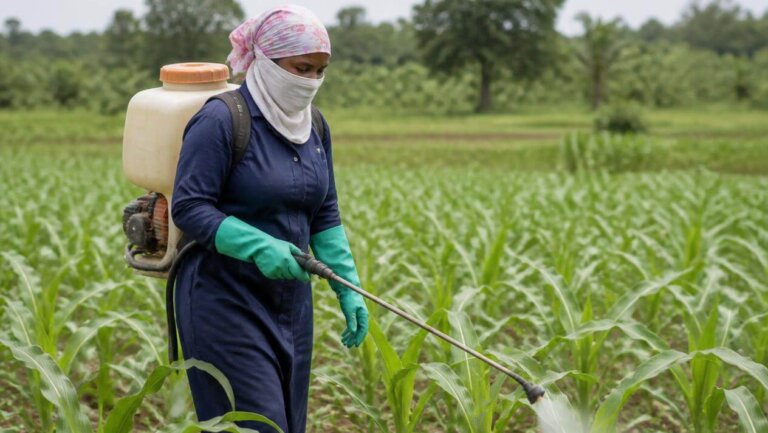
- Botanical extracts such as neem extract, chilli and garlic sprays, Tephrosia and tobacco extracts, and soap solution
- Mechanical and physical control methods including hand picking and mulching
Income and Market Engagement
- The income from his 1/4 acre is approximately 2 to 3 million per season/harvest.
- He mainly sells to local market retailers around his village/ward.
Why This Matters for Farmers
Yohana’s story is more than just a success story, it is a learning opportunity for farmers across similar environments. It challenges long-held assumptions about what is required to grow tomatoes successfully and opens up possibilities for:
- Smallholder farmers in dry regions
- Youth and women in agriculture seeking low-cost entry points
- Farmers transitioning into agroecological and organic systems
His work shows that sustainable agriculture can be practical, scalable, and locally adapted.
Learn More: A Practical Knowledge Resource
Farmers and practitioners interested in replicating this approach can explore practical guidance in the knowledge product:
“How to Grow Tomatoes Organically” ;

This resource is available on the KCOA Digital Knowledge Platform, designed to share accessible, practical agroecological knowledge across Africa.
Yohana’s experience in Chamwino is a powerful reminder that innovation in agriculture does not always come from complex technology, it can come from working with nature, adapting to local conditions, and applying knowledge effectively.
His farm is not just producing tomatoes—it is producing proof that organic farming works, even in the most unlikely places.


Disclaimer:
– To learn about the KCOA Project: https://kcoa-africa.org/
– To learn about the KHEA Project: https://khea-africa.org/
– For more details on this article, please reach out to pmagino@biovisionafrica.org
– See the license statement of all KCOA content: https://kcoa-africa.org/license-statement/ , which applies to all content from hubs implementing the KCOA project.

Author: Pamella Magino
Ms. Magino Pamella joined PELUM Uganda on 1st Oct 2021 as Communications Officer for the KCOA-KHEA project. With 9+ years in Communications and Marketing, she specializes in Public Relations, Business Development, and Marketing. Pamella holds a Bachelor’s in Mass Communication (Public Relations) and is a Certified Member of PRAU. She has worked with organizations like The Nile Basin Initiative and Victoria University Kampala, crafting strategies that drive positive change